Dwara
Nathan Auyeung
—
Elicit vs SciSpace: Papers se data extract karne me kaun zyada accurate hai?

Nathan Auyeung
Senior Accountant EY mein
Bachelor ka Accounting mein Graduation kiya, aur ek Postgraduate Diploma of Accounting bhi poora kiya
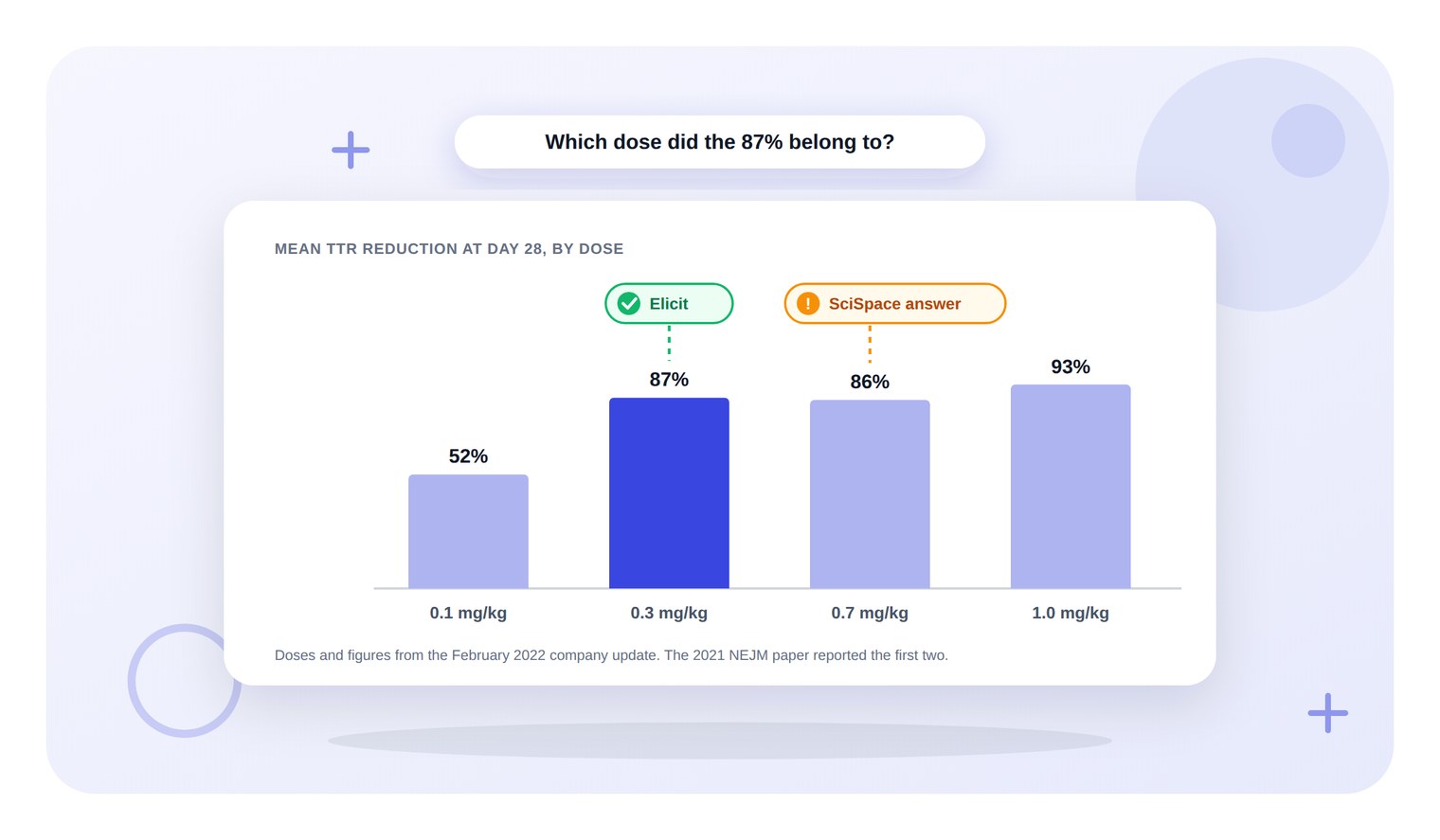
Wahi trial sentence dono tools me ek hi shaam ko, kuch hi minutes ke farq par dala gaya tha. Elicit ne ek 3-row wali table di jisme sabse pehle 2021 ki NEJM report thi, aur iske extraction column ne 0.1 mg/kg ke liye 52% aur 0.3 ke liye 87% diya, jo paper se match karta hai.
Apne top 5 papers se answer dete hue, jinme se koi bhi wo report nahi tha, SciSpace ki summary ne 87% ko 0.7 mg/kg par rakha. Ek literature review ke liye jo primary trial ko cite kare, Elicit se shuru karein, aur scoping ke liye wider SciSpace table ko rakhein.
<CTA title="Apne saved papers ko PDF text tak search karein" description="Jenni Library titles, authors, abstracts aur full PDF text ko meaning ya keyword ke zariye search karti hai, taaki ek checked figure ko fir se dhoodhna aasan ho" buttonLabel="Jenni Free Try Karein" link="https://app.jenni.ai/register" />
Elicit ya SciSpace: decision pehle hi
Elicit chunein - jab koi draft claim karta hai aur uske peeche ka primary paper dhoodhna aur quote karna ho. Isne trial ko sabse pehle rakha aur dono dose figures ko isme se sahi tarike se nikala.
SciSpace chunein - jab kaam kisi topic ka ek bada pehla sweep karna ho. Isne 100 me se 10 papers dikhaye, ek summary likhi, aur ready-made columns jaise Conclusions, Methods Used aur Limitations offer kiye.
Dono me se koi bhi ho - har extracted figure ko chapter me daalne se pehle paper se check karein. SciSpace ke ek cell me aisi figure thi jo uske paper me nahi hai.
The run, step by step
Input in tool reviews me use kiye gaye CRISPR paragraph ka ek sentence tha: "The first in-human systemic trial of an LNP delivered CRISPR therapy reported a mean reduction in serum transthyretin of 87 percent at the higher dose after a single infusion."
Iske peeche ka paper New England Journal of Medicine me Gillmore et al. (2021) hai, jo day 28 tak 0.1 mg per kilogram par 52% aur 0.3 mg per kilogram par 87% ki mean fall report karta hai, jaisa ki PubMed record ke mutabiq hai.
Dono me wahi same sentence
Elicit - Find papers chip, fir sentence. Iski pehli status line ne read kiya "Searched for the clinical trial paper behind the reported TTR reduction".
Yeh 30.5-second ke check par abhi bhi retrieve kar raha tha, aur table 66.9-second ke check par complete hui thi.
Isme 3 rows thi, har ek me Summary aur Relevance columns the:
Row 1 - 2021 NEJM trial report, 1,204 citations, Full text available marked tha. Relevance: "Direct match to the reported 87% result."
Row 2 - Fontana et al. (2024), cardiomyopathy me usi therapy ka ek baad ka NEJM study, jise subsequent clinical follow-up label kiya gaya.
Row 3 - Molecular Therapy me trial par ek 2021 commentary, Abstract only marked tha. Relevance: "Secondary perspective on the original trial; use the primary NEJM paper for the result."
SciSpace - Literature Review page, jiska head Literature Search tha, Standard mode me, jo iske 3 modes me se ek hai. High Quality aur Deep Review nahi chalaye gaye the. Answer aur table pehle check par screen par the, click karne ke lagbhag 16 seconds baad.
Table ne 100 me se 10 papers dikhaye. 2021 NEJM report in 10 me nahi thi, aur ek company press release, Intellia and Regeneron Announce Updated Phase 1 Data, sabse pehle thi. Ek dusri press release 5th par thi.
Baqi me ek 2023 Kotit paper, 2024 Fontana study, polyneuropathy me ek 2025 NEJM follow-up, ek book chapter, 2 anya papers aur ek alag gene target par conference abstract shamil the.
Har row me ek Insights cell hota hai jo batata hai ki paper query se kaise related hai. Row 2, ek preclinical lipid study, ko flag kiya gaya tha: "The paper's title matches your query, but it doesn't address your specific question."
Table ke upar ka toolbar Open Access, Top papers, Filters aur ek relevance sort offer karta hai, aur Load more papers baqi 90 ko page karta hai.
<ProTip title="🏛️ Journal article ke liye puchein:" description="Agar top result koi press release hai, to trial name aur journal ke sath fir se search karein. 2021 NEJM report wahi citation hai jo ek supervisor is figure ke liye expect karta hai" />
Dono tools ne jo answer likha
Elicit ke chat answer ne paper aur dose ko sahi tarike se name kiya: "The statement matches Gillmore et al.'s 2021 primary report", aur "reports an 87% mean serum TTR reduction at day 28 in the 0.3 mg/kg cohort after a single dose."
Isne fir do follow-ups offer kiye, ek 2021 paper ke liye full text aur DOI dhoodhne ke liye aur ek first trial ko baad ke NTLA-2001 results se compare karne ke liye.
SciSpace ka answer, jo iske top 5 papers se bana tha, ne kaha ki trial "reported a mean reduction of 93% in serum TTR at the highest dose of 1.0 mg/kg". Iske dose-response bullet ne fir read kiya "Lower doses also showed significant reductions, with 87% at 0.7 mg/kg", updated-data release ko cite karte hue.
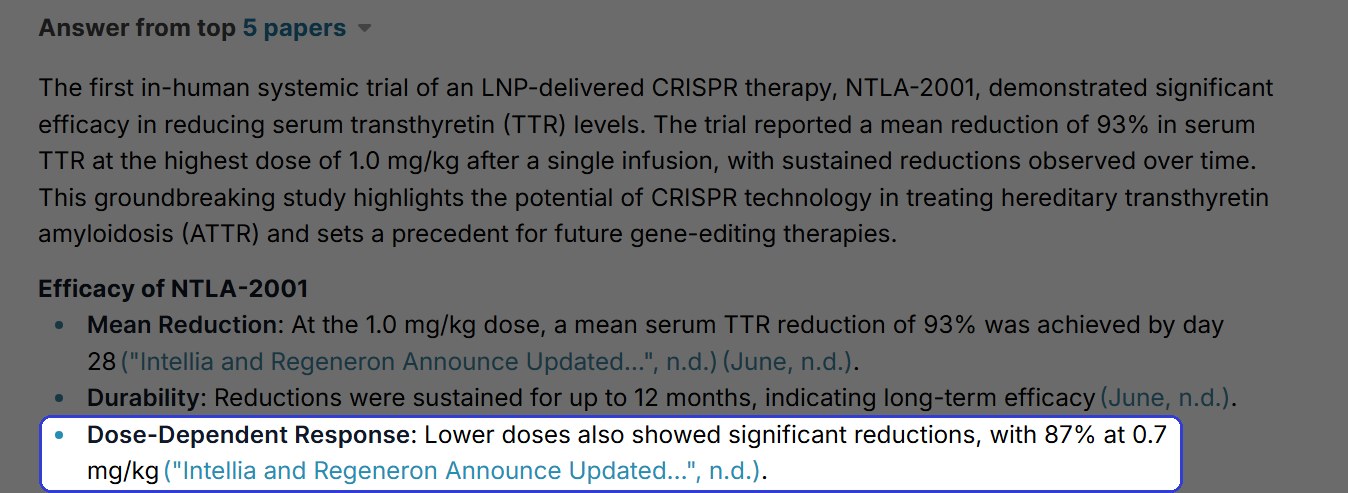
SciSpace ka answer, us line ke sath jo 87% ko 0.7 mg/kg par rakhti hai
Wahi release, dated 28 February 2022, 0.1, 0.3 aur 0.7 mg per kilogram groups ke liye 52%, 87% aur 86% deta hai aur 1.0 ke liye 93%. To 87% 0.3 ka hai, aur 0.7 ka 86% tha.
Insights column row 1 par aur aage badha, writer ko batate hue ki trial ne 1.0 mg/kg par 93% report kiya, "not 87%". 87% NEJM paper ka uski higher dose ke liye figure hai, aur 1.0 par 93% extra dose groups par ek baad ke update se aata hai.
<ProTip title="📏 Dose check karein, sirf percent nahi:" description="Ek figure sahi ho sakta hai aur fir bhi galat dose group ke samne ho sakta hai. Har percentage ko paper me uski dose se match karein isse pehle ki wo sentence me jaye" />
Extraction column
Elicit ke New column panel ne apne placeholder text me example extractions maange, isliye instruction me ek tha. SciSpace ka instruction box optional hai, jisme 150-word ki limit hai, aur usne wahi text bina badle liya.
Dono tools ko same name ka column mila, TTR reduction by dose, aur same instruction: "For each dose group, the mean percent reduction in serum TTR at day 28 (e.g., "1.0 mg/kg: 40%"). Write "not reported" if the paper gives no dose-level figure."
Elicit - Add a column ne ek New column panel khola, aur column 30.4-second ke check par bhar gaya. Trial row ne read kiya "0.1 mg/kg: 52%; 0.3 mg/kg: 87%", jo abstract se match karta hai, aur Fontana aur commentary rows ne not reported read kiya.
Chat note ne bataya ki un dono ne not reported kyun read kiya: baad ka trial paper aur commentary "do not report dose-level day-28 means in their source text." Fontana abstract is baat ko support karta hai, jisme sirf pooled figures hain.
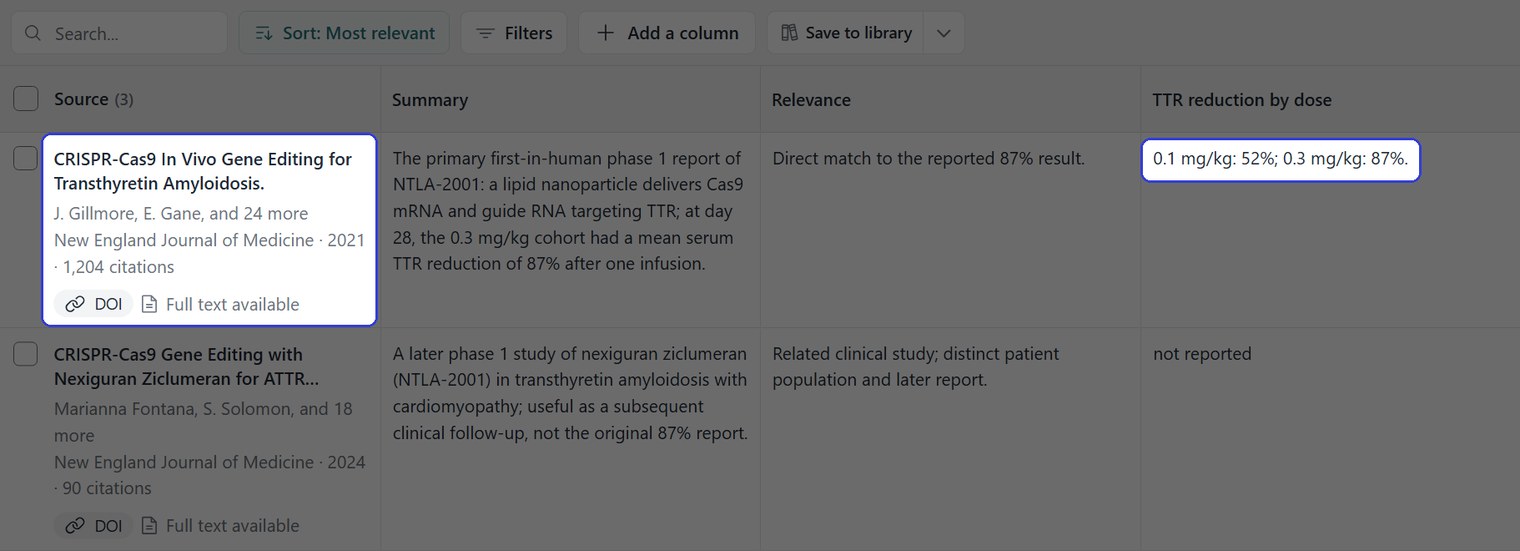
Trial row aur uske extraction cell ke sath Elicit table
SciSpace - Add a Column panel Create new column aur suggested columns ki ek list offer karta hai, jisme TL;DR, Conclusions, Results, Methods Used aur Limitations shamil hain. Rows 1 se 3 20.1-second ke check par bhar gaye the, aur baqi jaise-jaise table scroll ki gayi, bhar gaye.

SciSpace table ki Row 1, iske Insights cell aur iske extraction cell ke sath
6 SciSpace cells ko unke sources se check kiya gaya tha:
Updated-data release - chaar doses ke liye 52%, 87%, 86% aur 93%, jo release se match karta hai.
Onuma et al. (2024) - optimal lipid ki ek single dose ke baad 98% se zyada reduction, jo preclinical study ke abstract se quote kiya gaya, aur noted tha ki ye day-28 dose figure nahi hai.
Kotit (2023) - NYHA I/II me 0.7 mg/kg par 92% aur 1.0 mg/kg par 92%, aur NYHA III me 0.7 mg/kg par 94%, jo abstract se match karta hai.
Fontana et al. (2024) - dose ke mutabiq report nahi kiya gaya. Abstract sirf pooled figures deta hai, 28 days par -89% aur 12 months par -90%.
Gillmore et al. (2025) - day 28 par -90%, pooled, jo abstract se match karta hai.
Brannagan et al. (2022) - "1.0 mg/kg: 40%". PubMed Central par full text me koi 40% figure nahi hai. Yeh bina kisi number ke dose-dependent reduction report karta hai, aur iski Table 1 dose ko up to 1 mg/kg, single deti hai.
Brannagan cell word for word instruction ke andar ka example hai. Do anya rows, 2024 book chapter aur ek 2026 paper, ek dash ke sath bina kisi figure ke wapas aaye.
<ProTip title="🧩 Un cells par dhyan dein jo example ko echo karti hain:" description="Ek SciSpace cell instruction ke example se word for word match karta tha. Kisi bhi cell ko jo aapke example ko repeat karta hai, paper se check karein isse pehle ki wo table me jaye" />
Literature review matrix template unhi columns ko hath se set karne ka ek tarika hai.
Aamne saamne
Elicit | SciSpace | |
Table me papers | 3 | 100 me se 10 dikhaye gaye |
2021 NEJM trial | Row 1 | Top 10 me nahi hai |
87% figure par answer | 0.3 mg/kg par 87%, paper se match karta hai | 0.7 mg/kg par 87%, apne hi source ke khilaf |
Screen par table | 66.9-second ke check tak | Lagbhag 16 seconds |
Extraction column bhara gaya | 30.4-second ke check tak | Rows 1 se 3 20.1 seconds tak |
Cells checked | 2 me se 2 unke papers ke sath consistent hain | 5 consistent, 1 figure iske paper me nahi hai |
Per-row relevance note | Relevance column | Insights cell |
Ready-made columns | Add a column, aapke dwara likha gaya | Create new column, sath me suggested columns |
SciSpace tez tha aur isne bada net dala. Elicit ne kam papers diye, lekin iski table usi paper se shuru hui jiske baare me sentence tha.
<ProTip title="🎯 Draft ke sentence ke sath search karein:" description="Pehli Elicit status line ne figure ke peeche ke trial paper ko search kiya, aur wo paper sabse pehle aaya. Sentence ko waise hi paste karein jaise wo draft me hai jab kaam iske source ko dhoodhna ho" />

Har tool ki cost kya hai
Plan | Elicit (Academic prices) | SciSpace |
Free | Basic, $0. Research Agent aur Research Reports ke liye limited usage, 138 million se zyada papers me unlimited search | Basic, $0. 100 monthly credits, Limited Literature Reviews, Limited Chat with PDF |
First paid tier | Plus: $19 ek mahine ka, ya $132 ek saal ka | Premium: $20 ek mahine ka, ya $144 ek saal ka |
Second paid tier | Pro: $69 ek mahine ka, ya $468 ek saal ka | Advanced: $90 ek mahine ka, ya $840 ek saal ka |
Third paid tier | Scale: $149 ek mahine ka, ya $1,068 ek saal ka | Max: $200 ek mahine ka, ya $1,920 ek saal ka |
Enterprise | Custom | Custom |
Prices elicit.com/pricing aur scispace.com/pricing se hain.
Elicit Industry prices bhi list karta hai, jisme koi Plus tier nahi hai: Pro $75 ek mahine ka ya $588 ek saal ka, aur Scale $279 ek mahine ka ya $2,028 ek saal ka. Iska Academic Plus tier RIS, CSV, BIB, PDF aur DOCX me export aur ek baar me 5 table columns list karta hai, aur Pro ise 20 columns tak badhata hai.
SciSpace usage ko credits me count karta hai, aur iska credits guide kehta hai ki Literature Review aur Extract Data tools unhe consume nahi karte hain. Premium 1,200 monthly credits aur unlimited Literature Reviews list karta hai.
Dono ka use karna
Is run me dono tools ne alag-alag cheezein achhi tarike se ki, isliye ek literature review unhe sequence me use kar sakta hai:
Elicit me primary papers dhoodhein - claim ko waise hi enter karein jaise likha hai aur direct matches ke roop me marked rows ko rakhein.
SciSpace me topic ko scope karein - topic ko ek question ke roop me chalayein aur suggested columns jaise Methods Used aur Limitations add karein taaki ye dekha ja sake ki aur kya bahar hai.
Har figure ko paper se check karein - har ek ko kholein aur number aur uski dose ko confirm karein isse pehle ki use kahi bhi copy kiya jaye.
Journal article ko cite karein - press release ko nahi, bhale hi release me wahi same figure ho.
Ek poore protocol ke liye, systematic literature review guide step by step jata hai, organizing sources for a literature review ki guide papers ke check hone ke baad unhe cover karti hai, aur what counts as a primary source ki apni guide hai.
<ProTip title="✍️ Us paper ko cite karein jise aapne check kiya:" description="Ek baar jab paper se figure confirm ho jaye, to draft se hi us paper ko cite karein. Jenni me Cite button cursor par search karta hai aur in-text citation aur reference ko ek sath file karta hai" />
Verdict: Elicit ya SciSpace?
Elicit, ek thesis ke liye jisme kisi claim ke peeche ke primary trial ko cite karna ho. Isne sirf claim se hi us paper ko sabse pehle dhoodha, aur iske answer aur iske extraction cell dono ne 87% ko 0.3 mg per kilogram par rakha, jaisa ki paper karta hai.
SciSpace, ek tez aur wide first look ke liye, iske suggested columns aur page karne ke liye 100 papers ke sath. Iske answer ko iske apne sources ke khilaf padhein, kyunki yahan summary aur extraction column dose par disagree kar rahe the.
Ek baar jab papers mil jayein aur figures check ho jayein, to writing Jenni me hoti hai, jahan har citation usi sentence par jata hai jise wo support karta hai.
<CTA title="Citation wahan daalein jahan claim baitha hai" description="Cursor par Cite kholein, paper dhoodhein, aur in-text citation aur uski reference entry ek sath andar chale jayenge" buttonLabel="Free Writing Shuru Karein" link="https://app.jenni.ai/register" />
Guide to medical research databases wahi same search chalane ke liye anya jagahon ko list karti hai, aur tool reviews hub me usi paragraph par tested aur tools hain.