Dwara
Justin Wong
—
Random Sampling Samjhaya Gaya: Methods, Steps, aur Real Use

Justin Wong
Vikas Prabhari
Graduated kiya Bachelor's me Global Business & Digital Arts, Minor me Entrepreneurship
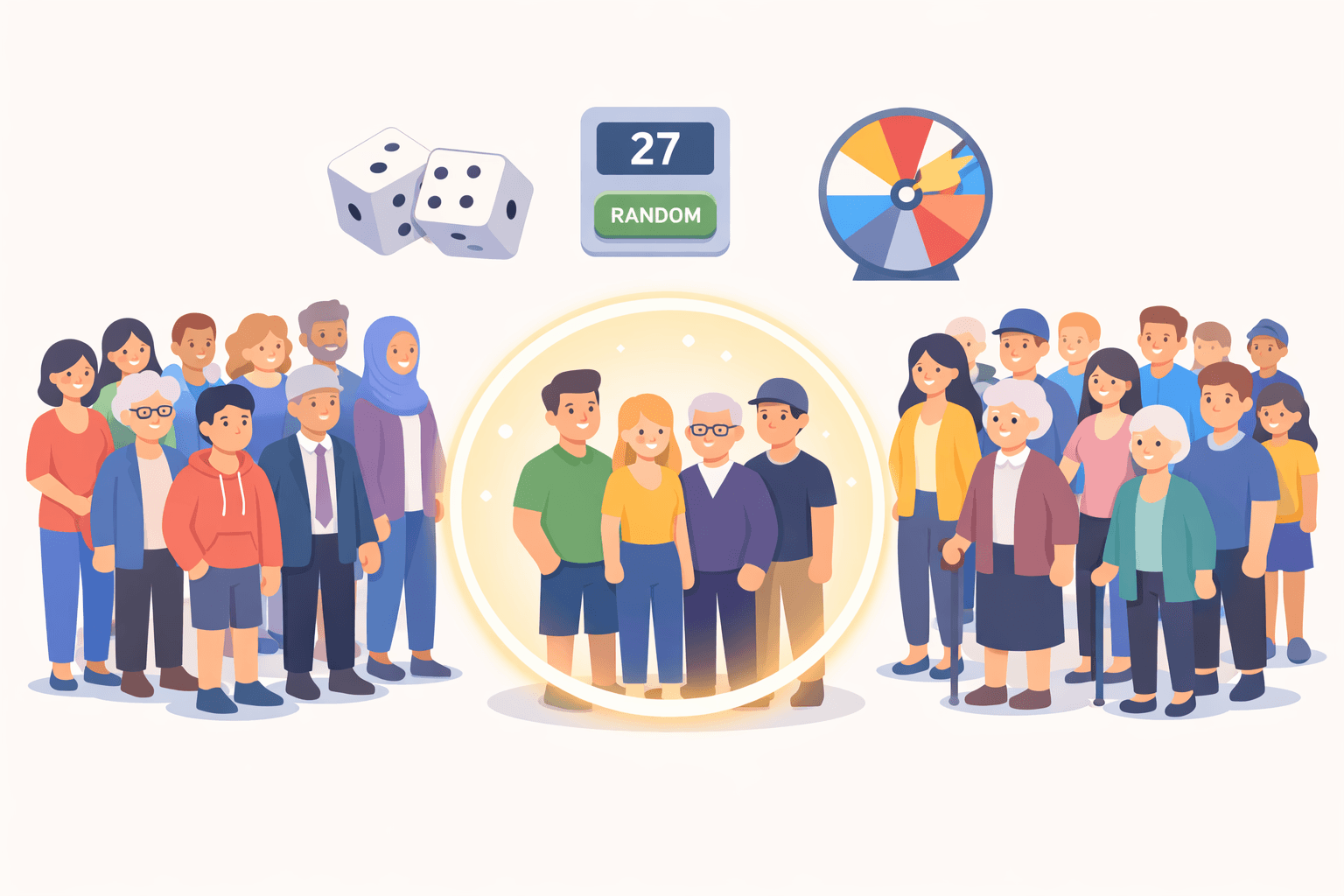
Ek badi population ko study karne ke liye, aap randomly iska ek chhota hissa chunte hain. Is method ko, jise random sampling kaha jata hai, har kisi ko select hone ka barabar mauka deta hai. Yeh medicine aur polling jaise fields mein bharosemand research ka foundation hai.
Yeh guide aapko dikhayegi ki yeh kaise kaam karta hai, kaun-kaun si alag techniques available hain, aur unhe ek real project mein kaise apply karna hai. Kya aap seekhne ke liye taiyar hain?
<CTA title="Build Better Research Samples" description="Create structured sampling plans faster and reduce bias in your research process" buttonLabel="Try Jenni Free" link="https://app.jenni.ai/register" />
Practically Random Sampling Ka Asli Matlab Kya Hai
Practice mein, random sampling ka matlab hai subjects ko puri tarah se chance ke basis par chunna, jo sunne mein jitna aasan lagta hai usse kahin mushkil hai.
World Health Organization note karta hai ki population ke accurate estimates ke liye yeh unbiased approach behad zaroori hai.
Ek achha sample puri group ki ages, incomes, aur baki traits ke mix ko mirror karta hai, jo isse regression analysis jaise tests ke liye crucial banata hai. Iska theory simple hai, lekin execution aksar fail ho jata hai.
Researchers ko aksar kharab participant lists jaise problems ka samna karna padta hai, jiski wajah se unhe "random-enough" methods se kaam chalana padta hai jo sach mein random nahi hote. Yeh farq aksar academia mein alag-alag research paradigms ke beech ki dividing line hota hai.
Ek asli random sample ke liye, aapko teen cheezon ki zaroorat hoti hai:
Population ke har ek insaan ki ek complete list.
Har ek insaan ke chune jaane ka ek known chance.
Ek selection process jo randomness par based ho, convenience par nahi.
In rules se thoda sa bhi bhatakna bias lata hai aur aapke results ko kharab karta hai.
<ProTip title="💡 Pro Tip:" description="Always verify your sampling frame before selecting participants to avoid hidden bias" />
Core Random Sampling Methods Explained
Alag-alag techniques randomness ko ek structured tarike se apply karti hain. Sabse behtar choice aapke study ke design, is baat par ki kya aap qualitative vs quantitative research kar rahe hain, aur aap jis group ko dekh rahe hain uske size par depend karti hai.
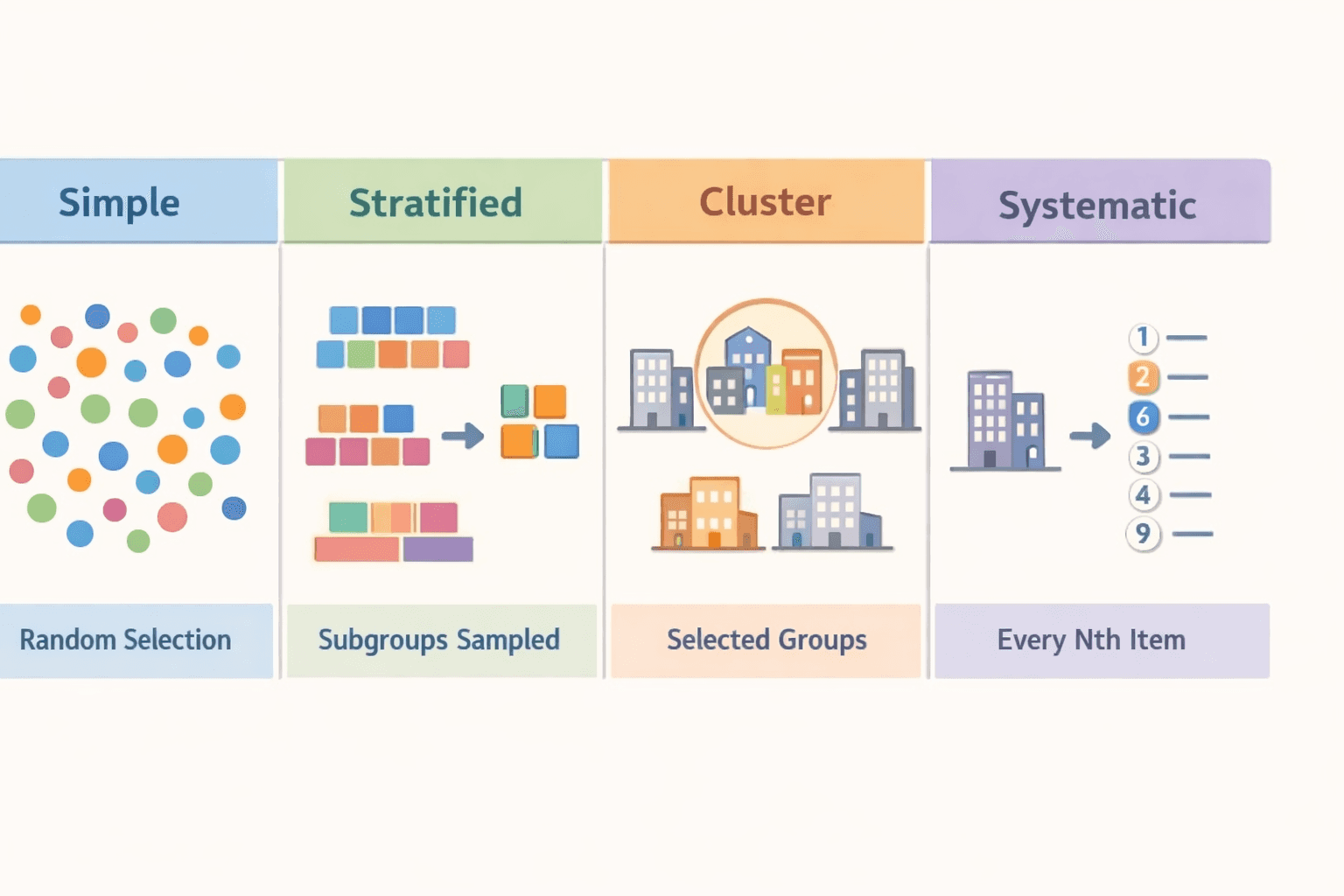
Simple random sampling (the pure form)
Yahan, har ek single person ke paas chune jaane ka barabar mauka hota hai. Researchers aamtaur par random number generators ya lottery-style draws ka use karte hain.
500 students ki ek class ke baare mein sochiye. Aap har ek ko ek number denge, fir 50 ko chunne ke liye ek generator ka use karenge. Yeh textbook ka sabse behtar example hai.
Iska statistical power high hota hai, lekin yeh puri population ki ek perfect, complete list hone par hi tikka hai. Agar aapki list mein khami hai, toh results bhi kharab honge.
Stratified random sampling (for balanced representation)
Yeh method population ko alag-alag subgroups mein baantta hai, jaise age brackets ya income levels, isse pehle ki har ek subgroup se ek random sample liya jaye. Yeh ensure karta hai ki in key categories ko sahi tarike se represent kiya jaye.
Misaal ke taur par, ek health survey age ke decades (20-29, 30-39, etc.) ke hisab se stratify kar sakta hai taaki yeh ensure ho sake ki sabhi groups population mein unke share ke mutabik shamil hain.
Iska main benefit sample mein variability ko kam karna aur har subgroup ki zyada accurate picture hasil karna hai. Market research jaise fields mein iska kaafi use hota hai.
Cluster sampling (efficient for large groups)
Individuals ko chunne ke bajaye, aap randomly poore pre-existing groups, ya "clusters" ko chunte hain, jaise randomly paanch schools ko chunna aur unke sabhi students ka survey karna.
Geographically scattered populations ke liye yeh sabse common probability sampling methods mein se ek hai.
Yeh approach travel, time aur cost ko kam karta hai, jo badi aur door-door tak fali hui populations ke liye ek bada advantage hai. Iska trade-off yeh hai ki isme aamtaur par stratification jaise methods ke mukable zyada sampling error hota hai.
Systematic sampling (structured randomness)
Ek random starting point chunne ke baad, aap apni list se har nth person ko chunte hain, jaise kisi database queue mein har 10th customer.
Isse chalana aasan hai, lekin isme ek hidden risk hota hai. Agar list mein koi recurring pattern hai (for example, har 10th entry hamesha ek manager hai), toh aapka sample biased ho jayega.
How the methods compare
Method | Best use case | Main strength | Key limitation |
Simple Random | Chhoti populations jahan ek full list maujood ho | High statistical accuracy | Ek complete aur accurate list ki zaroorat hoti hai |
Stratified | Important aur diverse subgroups wali populations | Key traits ki representation ensure karta hai | Plan aur execute karne mein zyada complex hai |
Cluster | Badi, geographically fali hui populations | Bahut practical aur cost-effective hai | Generally isme higher sampling error hota hai |
Systematic | Ordered datasets bina kisi hidden patterns ke | Implement karne mein simple aur fast hai | List mein cyclical bias ke prati vulnerable hai |
Yeh sabhi methods probability sampling ke core idea ko support karte hain, lekin har ek ke apne practical trade-offs hain jo aapke final data ko shape karte hain.
<ProTip title="📊 Pro Tip:" description="Use stratified sampling when population groups differ significantly in size or behavior" />
Step-by-Step Random Sampling Process
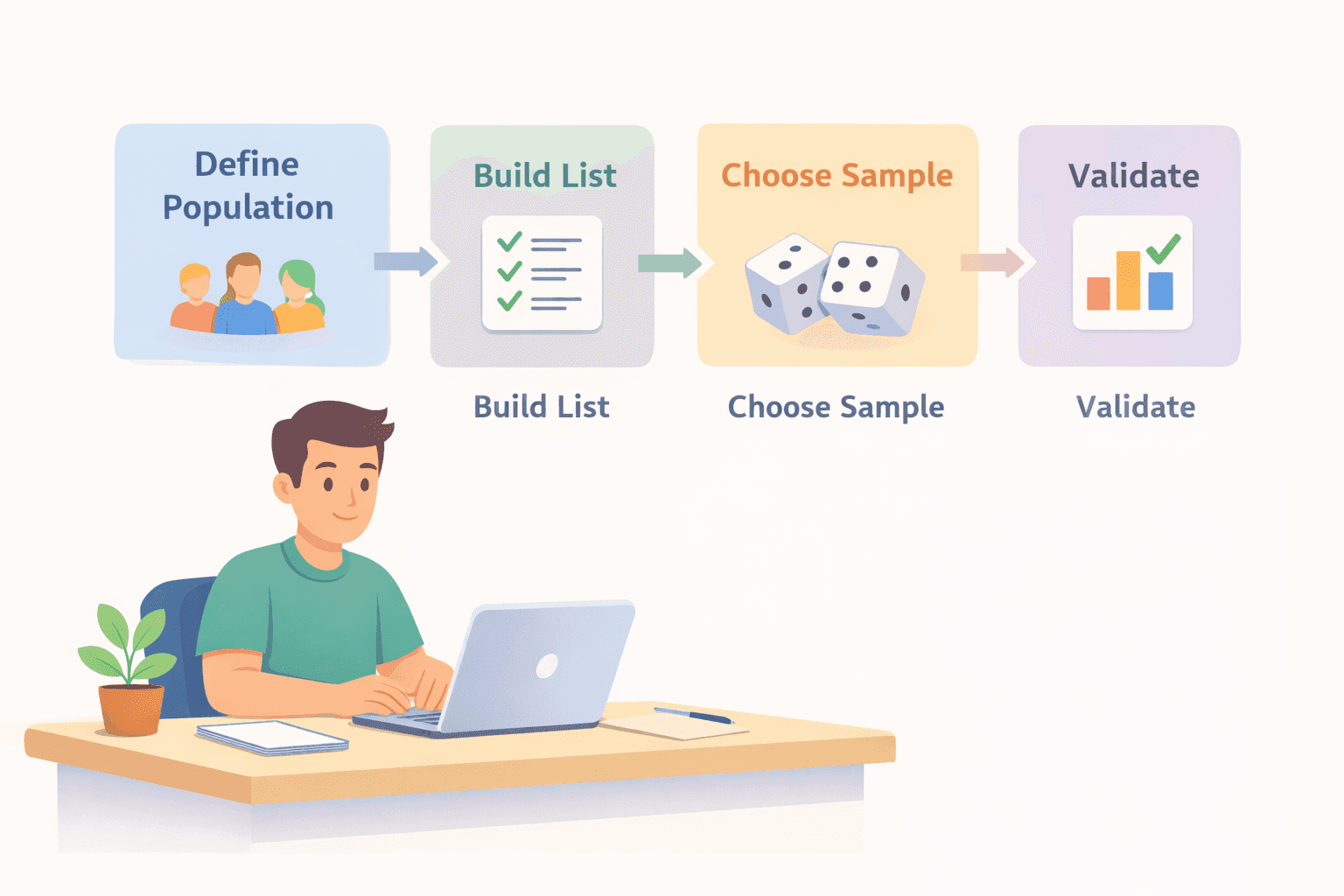
Random sampling ko sahi tarike se karne ka matlab hai ek clear sequence ko follow karna. Agar aap kisi ek stage ko skip karte hain, toh aapka data aasani se skewed ya bekar ho sakta hai.
Step 1: Apni population aur scope ko define karein
Shuruat karein yeh decide karke ki aap exactly kis par study kar rahe hain. Specific rahein, "young adults" ke bajaye, ise "all university students in Surabaya enrolled in 2024" ke roop mein define karein. Yeh shuruati decision aapke poore research plan ko shape karta hai aur aapko batata hai ki kya yeh project possible bhi hai.
Step 2: Ek sampling frame taiyar karein
Yeh aapki master list hai. Isme aapki defined population ke har ek member ka shamil hona zaroori hai. Agar is list se log gayab hain, toh unke select hone ka chance zero ho jata hai, jo turant randomness ko kharab kar deta.
Pew Research Center ne major surveys mein faulty sampling frames ko bias ka ek bada karan mana hai.
Step 3: Sample size decide karein
Aapko kitne units chunne ki zaroorat hai? Iska jawab confidence aur precision ko balance karta hai. Harvard T.H. Chan School of Public Health ke ek analysis ke mutabik, ek bada sample tabhi reliability ko badhata hai jab selection sach mein random ho.
Apne confidence level aur margin of error ko balance karne ke liye ek sample size calculator ka use karein. Apne size ko calculate karne ke liye, aapko teen cheezein decide karni hongi:
Aapka confidence level (aamtaur par 95%)
Ek acceptable margin of error
Aapki population ke andar expected variability
Step 4: Random selection apply karein
Yeh woh stage hai jahan aap frame se apna sample chunne ke liye chance ka use karte hain. Common tools mein shamil hain:
Ek digital random number generator
Random numbers ki ek printed table
Computer-generated selection ke liye specialized software. Key yeh hai ki process se kisi bhi human choice ko hata diya jaye.
Step 5: Representativeness ko validate karein
Ek baar jab aapke paas aapka sample aa jaye, toh yeh mat maan lijiye ki yeh sahi hai. Ise check karein. Sample ke basic characteristics, jaise average age ya gender split ko full population ke baare mein jo aap jante hain usse compare karein.
Agar sample kaafi alag lagta hai, toh kuch galat hua hai. Aapko shayad kisi pichle step par wapas jana padega, aksar sampling frame ya selection method ko theek karne ke liye.
<ProTip title="🧪 Pro Tip:" description="Test your sampling method using small simulations before full data collection" />
Log “Random Enough” Samples Par Bharosa Kyun Nahi Karte
Yeh skepticism bilkul sahi hai. Real world mein, kai researchers ko "random enough" methods se kaam chalana padta hai, aur online forums aise logon se bhare pade hain jo sawal uthate hain ki kya unka approach sach mein valid hai.
Ek common shortcut convenience sample hai, jaise apne classmates ka poll lena, kisi specific Facebook group mein survey post karna, ya website ke pehle 100 visitors ka use karna.
Yeh groups accessible aur varied lagte hain, lekin selection chance par based nahi hota. Yeh is baat par based hota hai ki kis tak pahunchna sabse aasan hai, jo ki bias ka ek classic roop hai.
Ek bada misunderstanding yeh hai ki zyada logon ko ik इकट्ठा karne se problem solve ho jati hai. Aisa nahi hota. Hazaar logon ka ek biased sample fundamentally sou logon ke ek sach mein random sample ke mukable kam bharosemand hota hai.
Agar aapke paas draw karne ke liye complete list nahi hai, toh aap iska probability sample hone ka daava nahi kar sakte. Yeh gap tab samne aata hai jab researchers aakhirkar choose a journal for research publication ke liye koshish karte hain, kyunki peer reviewers sampling rigor ko dekhte hain.
Random Sampling vs Non-Probability Sampling
Is farq ko sahi tarike se samajhna fundamental hai. Aapki choice yeh decide karti hai ki kya aap apne findings ko ek bade group par generalize kar sakte hain.
Practice mein yeh kaise alag hain
Aspect | Random sampling | Non-probability sampling |
Selection kaise kaam karta hai | Puri tarah se chance par (e.g., ek lottery) | Researcher ke judgment ya convenience par based |
Risk of bias | Theoretically low, agar sahi tarike se kiya jaye | Inherently high aur aksar uncontrollable |
Statistical inference | Puri population ke baare mein valid estimates ki permission deta hai | Statistical generalization ko support nahi karta |
Random sampling us math ka basis hai jo aapko predictions karne deta hai (inferential statistics). Non-probability sampling yeh promise nahi kar sakti ki aapka sample broader population ko reflect karta hai.
Har ek approach ko kab use karein
Random sampling ko tab chunein jab aapke conclusions ko precise aur defensible hona zaroori ho. Yeh critical hai:
Clinical trials aur public health research ke liye
Official government surveys, jaise census ke liye
Formal academic studies ke liye jahan results publish kiye jaate hain
Specific aur practical constraints ke tahat non-probability methods ko chunein:
Aapke project ke paas bahut tight time ya budget limits hain
Aapko sirf preliminary, exploratory insights ki zaroorat hai, jaise early-stage market feedback
Puri population tak pahunchna ya uski list banana impossible hai (e.g., kisi hidden community ko study karna)
In short, kuch prove karne ke liye random sampling ka use karein; kisi cheez ke baare mein seekhne ke liye non-probability sampling ka use karein.
<ProTip title="⚖️ Pro Tip:" description="Do not label convenience samples as random sampling in research reports" />
Random Sampling Ke Real-World Applications
Yeh method sirf ek textbook ka idea nahi hai. Yeh ek practical tool hai jiska use alag-alag fields mein decisions ko zyada reliable banane aur bias ko kam karne ke liye kiya jata hai.
Healthcare mein, yeh bharosemand clinical trials aur disease spread ko track karne wali studies ki reedh ki haddi hai. Misaal ke taur par, CDC probability sampling ka use karke estimate lagata hai ki US mein kitne logon ko koi specific illness hai, jo public health policy ko guide karta hai.
Market research ke liye, companies is par depend karti hain. Jab koi business yeh janna chahta hai ki customers naye product ya brand ki reputation ke baare mein kya sochte hain, toh woh apne target audience ka ek unbiased snapshot lene ke liye random sampling ka use karte hain.
Data science aur machine learning ka field is par kaafi rely karta hai. Analysts algorithms ke liye balanced training datasets banane ke liye random sampling ka use karte hain.
Core techniques jaise bootstrap sampling (jo uncertainty ko estimate karne ke liye data ko resample karta hai) aur Monte Carlo simulations (jo probabilities ko model karte hain) repeated random draws par hi bane hain.
Aap ise yahan bhi kaam karte hue payenge:
Social science, voting ya employment jaise topics par national surveys ke liye.
Government, accurate census surveys aur audits ko design karne ke liye.
Business operations, manufacturing line se product quality ko validate karne ke liye.
In sabhi areas mein, common thread random sampling ka use karke raw data ko actionable analysis mein badalna hai, guesswork se informed decisions ki taraf badhna hai.
Common Mistakes aur Best Practices
Yahan tak ki experienced teams bhi aisi galatiyan kar sakti hain jo shuruat se hi unke data ki quality ko kamzor kar deti hain.
Frequent mistakes
Kuch common problems consistently sample integrity ko kamzor karti hain:
Total population ki ek purani ya incomplete list ka use karna.
Aasani se ik इकट्ठा kiye gaye "convenience" data ko ek true random sample samajhne ki galati karna.
Sample kitna bada hona chahiye yeh decide karne ke liye zaroori math ko skip karna.
Population ke andar key subgroups ki sahi representation ensure karne mein fail hona.
Practical steps for better accuracy
Apne process ko behtar banana kuch disciplined habits par depend karta hai:
Shuru karne se pehle apni population ko precision ke sath define karein.
Apne sampling frame ko verified aur comprehensive data se source karein.
Proper randomization tools ya services apply karein, manually names mat chunein.
Known population metrics ke sath iske demographics ko check karke apne final sample ko validate karein.
Ek carefully designed sampling method hi useful, credible data ko misleading numbers ke collection se alag karta hai.
Shuruat Se Hi Random Sampling Sahi Karein
Aap ise feel kar sakte hain jab aapka sample us cheez ko fully represent nahi karta jise aap study karne ki koshish kar rahe hain, aur yeh aapke results par bharosa karna mushkil bana deta hai. Yeh aapki progress ko dheema karta hai aur aise sawal khade karta hai jo aapne expect nahi kiye the. Participants ko chunne ke aapke tarike mein chhoti si chook bhi sab kuch affect kar sakti hai. Woh risk real hai.
<CTA title="Design Smarter Research Workflows" description="Plan sampling methods and structure research faster with guided AI support" buttonLabel="Try Jenni Free" link="https://app.jenni.ai/register" />
Jenni ka use aapko apni sampling ko zyada clarity ke sath plan karne mein madad karta hai taaki aapka research track par rahe. Yeh is baat ko support karta hai ki aap methods ko kaise structure karte hain aur apne approach ko kaise explain karte hain, jisse aapke kaam ko defend aur samajhna aasan ho jata hai. Apne results ko solid rakhne ka yeh ek simple tarika hai.