Dwara
Nathan Auyeung
—
Rationale Kaise Likhein: Clear Structure aur Examples

Nathan Auyeung
Senior Accountant EY mein
Bachelor ka Accounting mein Graduation kiya, aur ek Postgraduate Diploma of Accounting bhi poora kiya
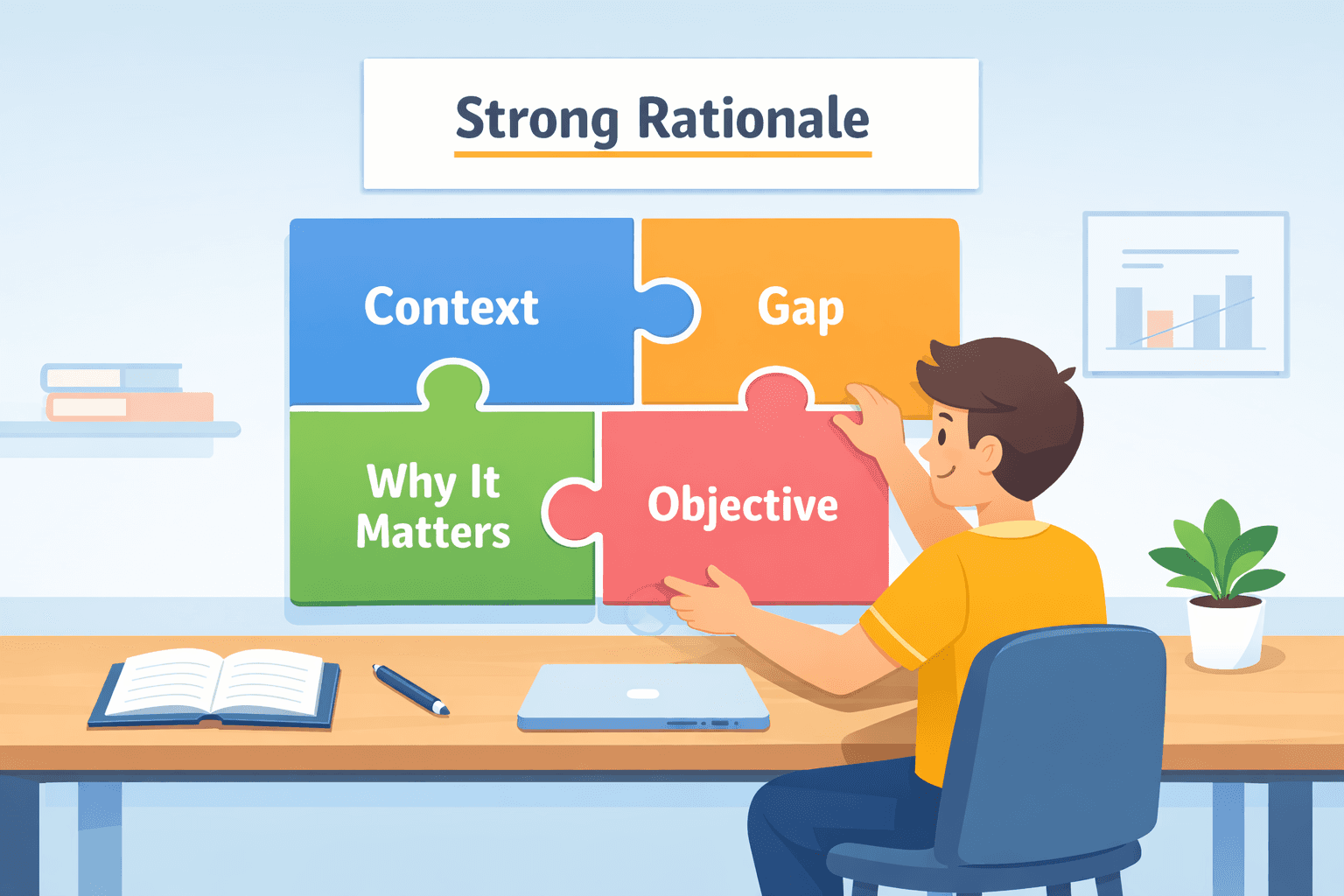
Rationale likhna confusing ho sakta hai. Aap apna topic jaante hain, lekin yeh explain karna ki yeh kyun mahatvapurna hai, aksar sabse mushkil hissa hota hai.
Yeh guide aapko clear examples aur ek simple structure ka use karke bilkul sahi tareeka dikhayegi. Anth tak, aap seekh jayenge ki apne topic ko kaise justify karna hai, ise ek real problem se kaise connect karna hai, aur confidence ke saath kaise likhna hai.
<CTA title="Ek Strong Rationale Tezi Se Banayein" description="Apne ideas ko strong justification aur academic clarity ke saath clear structured rationales mein badlein." buttonLabel="Jenni Free Try Karein" link="https://app.jenni.ai/register" />
Ek Strong Rationale Asal Mein Kaisa Dikhta Hai
Ek strong rationale dikhata hai ki aapka kaam kyun zaroori hai. Yeh sirf background nahi hai. Yeh ek seedhe sawaal ka jawab deta hai: iski abhi kya zaroorat hai? Academic writing mein yeh kaise kaam karta hai, ise behtar samajhne ke liye, research rationale structure and explanation par yeh guide batati hai ki researchers apne studies ko kaise justify karte hain.
Example ke liye, ek research rationale ko dekhein. Kayi studies university students ke liye online learning ka exam karti hain. Halanki, primary school ke chhote bachhon par iske impact ke baare mein bahut kam jaankari hai. Yeh ek problem hai kyunki early education long-term academic results ko shape karti hai. Isliye, yeh study investigate karegi ki online learning urban areas mein primary school ke pupils ke engagement ko kaise influence karti hai.
Dekha yeh kaise kaam karta hai? Yeh current landscape ko state karta hai, usme ek specific hole (kami) ko identify karta hai, explain karta hai ki woh kami kyun mahatvapurna hai, aur phir batata hai ki ise address karne ke liye kya kiya jayega. Yeh ek full rationale hai.
Ek Rationale Ka Core Structure
Ek accha rationale step by step argument build karta hai. Har ek piece agle piece ko support karta hai.
1. Context: Stage Set Karein Shuruat current situation ya jo pehle se pata hai uske description se karein. Example ke liye, remote education ki taraf shift ke baad digital learning tezi se faili. Yeh stage aksar ek clear research problem and background context ko define karne se closely connect hoti hai, jo aapki study ko effectively frame karne mein madad karti hai. Is section ko chhota rakhein; aap background de rahe hain, full review nahi.
2. Gap: Kya Missing Hai? Yeh sabse mahatvapurna step hai. Aapko point out karna hoga ki kya nahi kiya gaya hai ya kya nahi pata hai. Example ke liye, research heavily higher education ka paksh leti hai, aur is baat par kam dhyan diya jata hai ki primary school students kaise engage hote hain. Agar koi gap nahi hai, toh aapke kaam ki koi real zaroorat nahi hai.
3. Justification: Yeh Kyun Matter Karta Hai Yahan, aap "so what?" ka jawab dete hain. Consequence ko explain karein. Aap kisi practical impact, academic zaroorat, ya kisi specific group ke liye relevance ki taraf point kar sakte hain. Humare case mein, early engagement critical hai, yeh directly bachhe ke future academic path ko influence karta hai. Agar aapki study kisi particular worldview ya evidence samajhne ke method par bhi depend karti hai, toh sahi research paradigms chunna aapke rationale ke framing ko strengthen karne mein madad kar sakta hai.
4. Objectives: Aap Kya Karenge Apne specific aim ke saath conclude karein. Clear tareeqe se state karein ki aapka kya plan hai. Example ke hisab se, objective hoga: digital learning platforms ka use karne wale primary school students ke beech engagement levels ko measure aur analyze karna.
Component | Purpose | Key Question It Answers | Example Sentence |
Context | Background aur current state provide karta hai | Pehle se kya pata hai? | Online learning pichle saalon mein tezi se expand hui hai. |
Gap | Missing knowledge ko identify karta hai | Kya nahi pata hai ya kya missing hai? | Halanki, primary school students par bahut kam research focus karti hai. |
Justification | Importance ko explain karta hai | Yeh kyun matter karta hai? | Early engagement long-term academic success ko affect karta hai. |
Objective | Aim ko state karta hai | Aap kya karenge? | Yeh study primary-level online learning mein engagement ko analyze karegi. |
<ProTip title="💡 Pro Tip:" description="Agar aapka rationale clearly gap nahi dikhata, toh aapka argument weak lagega, chahe aap kitna bhi accha likhein." />
Example-Led Breakdown: Different Types of Rationale

Approach context ke hisab se badal jata hai. Yahan kuch common types diye gaye hain.
Research Rationale Example Yeh academic papers aur studies ke liye typical hai.
Example: Past research online settings mein student motivation ko dekhti hai. Halanki, parents ke influence par shayad hi kabhi dhyan diya jata hai.
Is oversight ka matlab hai ki hum poori tarah nahi samajh paate ki chhote students kaise kamyab hote hain ya struggle karte hain. Is gap ko fill karne se behtar teaching methods aur families ke liye zyada effective guidance mil sakti hai.
Focus: Existing literature mein ek hole ko identify karna aur ek academic contribution ko state karna.
Project Rationale Example Aap ise kisi grant application ya practical initiative ke liye use karenge.
Example: Humara project city schools ke liye ek naya waste management program create karega.
Current approach students ko engage nahi karta, isliye participation poor hai. Hum environmental awareness aur actual involvement dono ko boost karne ke liye interactive tools use karne ka plan bana rahe hain.
Focus: Ek tangible problem ko direct, real-world application ke saath solve karna.
Thesis Rationale Example Yeh zyada formal hota hai, aksar dissertation ya major paper ke liye.
Example: Hum jaante hain ki social media logon ke aapas mein baat karne ke tareeqe ko badalta hai. Jo hum nahi jaante woh yeh hai ki yeh college students ke formal writing skills ko kaise affect karta hai. Yeh thesis pata lagane ke liye social media use ke different levels ke against writing performance ko measure karegi.
Focus: Ek study ke field ke andar ek clear position establish karna aur ek specific contribution define karna.
<ProTip title="🧠 Reminder:" description="Context ke basis par apna rationale adjust karein. Research gaps par focus karti hai, projects solutions par focus karte hain." />
Step-by-Step: Rationale Kaise Likhein
Ab chaliye examples ko ek repeatable method mein badlein.
Step 1: Focused Background Se Shuru Karein Is section ko overload na karein. Bad example: Waqt ke saath education mein bahut si cheezein badli hain… Better: Online learning modern education ka ek key part ban gayi hai.
Step 1: Focused Background Se Shuru Karein Is section ko overload na karein. Bad example: Waqt ke saath education mein bahut si cheezein badli hain… Better: Online learning modern education ka ek key part ban gayi hai.
Step 2: Ek Specific Gap Identify Karein Precise rahein. Vague claims se bachein. Weak: Sahi research nahi hai. Strong: Bahut kam studies primary-level online learning mein student engagement ko examine karti hain.
Step 3: Impact Explain Karein Yeh woh jagah hai jahan aap reader ko persuade karte hain. Aap impact ko teen tareeqon se frame kar sakte hain:
Academic → ek knowledge gap ko fill karta hai
Practical → ek real problem solve karta hai
Social → outcomes ko improve karta hai
Step 4: Apni Direction Clearly State Karein Ek purpose ke saath end karein. Aapka objective precise aur aapke overall argument se aligned hona chahiye. Agar aap unsure hain ki ise clearly kaise define karein, toh research purpose and study objectives ka yeh explanation aapko refine karne mein madad kar sakta hai ki aapki study kya achieve karna chahti hai.
Example: Yeh study investigate karti hai… Is project ka aim hai…
<ProTip title="⚡ Quick Tip:" description="Aapka rationale logically move hona chahiye jo exist karta hai usse jo missing hai aur phir jo aap karenge uspar." />
Strong vs Weak Rationale
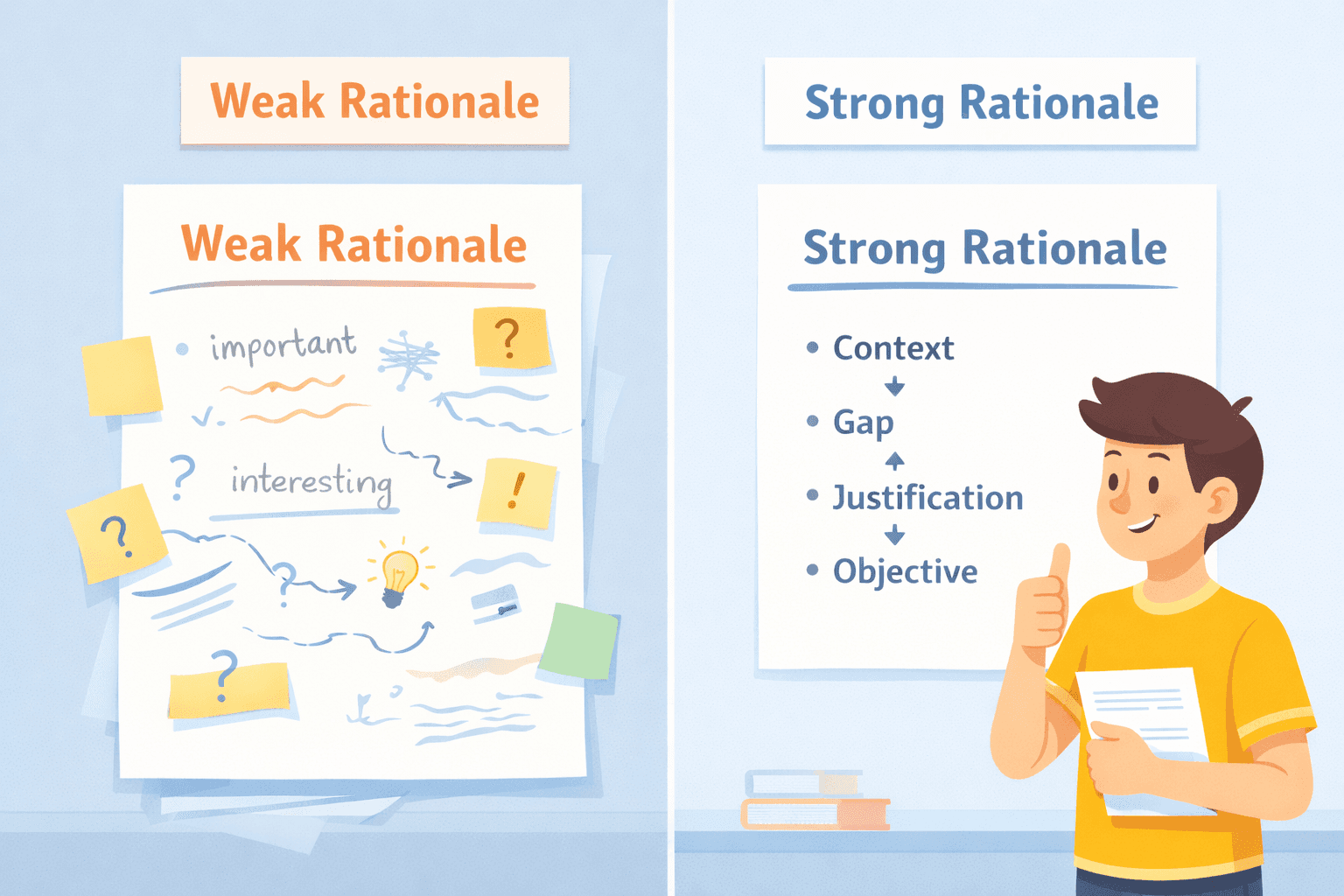
Inhe directly compare karna dikhata hai ki aapko kis cheez ka aim rakhna chahiye.
Weak Rationale Yeh topic important aur interesting hai. Bahut se log isko study karte hain, aur iske bahut se benefits hain. Yeh kyun fail hota hai:
Yeh point out nahi karta ki kya missing hai.
Yeh koi proof ya reasoning offer nahi karta.
Yeh koi indication nahi deta ki actually kya kiya jayega.
Strong Rationale
Halanki social media par aksar research ki jati hai, academic writing par iska specific impact achhe se samajh mein nahi aaya hai. Yeh significant hai kyunki writing ability grades aur long-term success ko affect karti hai. Yeh study analyze karegi ki social media use ke different levels student writing performance ke saath kaise correlate karte hain.
Yeh kyun kaam karta hai:
Yeh research mein ek precise, narrow gap ko identify karta hai.
Yeh ek logical reason deta hai ki woh gap ek problem kyun hai.
Yeh ek clear, measurable objective ko state karta.
Bachne Layak Common Mistakes
Yeh galtiyan common hain, aur yeh aapke argument ko poori tarah se undermine kar sakti hain. Inhe apne kaam mein spot karna hi inhe theek karne ka pehla step hai.
1. Bahut Zyada Vague Hona Bina support ke general claims ko ignore karna aasan hota hai. Topic ko "important" ya "relevant" kehna koi argument nahi hai. Aapko specific hona padega. Sahi situation kya hai? Kaun sa precise piece missing hai? Vagueness reader ko sochne par majboor kar deti hai ki kya aap khud subject ko sach mein samajhte hain.
2. Bahut Zyada Background Likhna Yeh prove karne ke liye ki aapne reading ki hai, sab kuch summarize karne ka man karta hai. Isse bachein. Ek rationale koi literature review nahi hai. Agar aapko gap define karne se pehle sources ko synthesize karne ki zaroorat hai, toh humara AI Literature Review & RRL Generator aapko woh foundation build karne mein madad kar sakta hai. Iska kaam ek problem set up karna hai, prior solutions ko recount karna nahi. Agar aapka background section aapke gap aur justification ke combined section se lamba hai, toh aapne apna thread kho diya hai. Bas utna hi context provide karein jisse aapka identified gap turant samajh mein aa sake.
3. Gap Ko Skip Karna Yeh sirf ek galti nahi hai; yeh ek fatal flaw hai. Gap aapke rationale ka engine hai. Iske bina, aapke paas koi "why" nahi hai. Aap bas ek field of study ko describe kar rahe hain, usme enter karne ka koi case nahi bana rahe hain. Hamesha khud se poochein: "Hum abhi tak kya nahi jaante? Kya try nahi kiya gaya hai? Kaun sa specific question unanswered reh gaya hai?" Agar aap iska jawab nahi de sakte, toh aapko apna focus refine karne ki zaroorat hai.
4. Evidence Ki Jagah Opinion Ka Use Karna Aapka conviction evidence nahi hai. "Mujhe lagta hai ki yeh crucial hai" ya "Yeh obvious hai ki..." jaise phrases bias introduce karte hain aur credibility ko kam karte hain. Justification external reasoning par khada hona chahiye. Established facts ka use karein, contradictory data ki taraf point karein, ya kisi logical consequence ko highlight karein. Reader ko dikhayein ki woh gap kyun matter karta hai un cheezon ke basis par jo aapke opinion se alag hain. Example ke liye, "Mera manna hai ki is study se madad milegi" ki jagah, "Ise samajhna improved policy ki taraf le ja sakta hai, jaisa ki related fields mein similar interventions dwara dikhaya gaya hai" try karein.
Agar aapki study do variables ke beech relationship dikhane ki koshish kar rahi hai, toh correlational research ko samajhna bhi madadgar ho sakta hai, kyunki kayi rationales is baat ko explain karne ke liye build kiye jaate hain ki woh relationship investigate karne layak kyun hai.
<ProTip title="📌 Note:" description="Ek strong rationale balance ke liye 60 percent justification aur 40 percent background ka aim rakhein." />
Quick Rationale Writing Checklist
Kisi bhi cheez ko finalize karne se pehle is list ka use karein.
Structure
Context: Kya current situation ya existing knowledge clearly aur briefly explained hai?
Gap: Kya aapne ek specific, precise cheez ko identify kiya hai jo missing ya unknown hai?
Justification: Kya aapka explanation ki gap kyun matter karta hai logical lagta hai?
Objective: Kya aapka final aim ya direction plainly stated hai? Agar aap abhi bhi apne study focus ko narrow kar rahe hain, toh how to write a research question seekhna aapke rationale ko zyada specific aur academically grounded banane mein madad kar sakta hai.
Content
Evidence: Kya aapke claims ko data, literature, ya clear reasoning se support mila hai?
Clarity: Kya koi vague, general, ya unsupported statements hain?
Connection: Kya har ek section naturally agle section ki taraf lead karta hai, ek coherent argument build karte hue?
Style
Tone: Kya language aapki audience ke liye appropriately formal hai (e.g., academic, professional)?
Conciseness: Kya sentences direct hain aur bina faltu ke words ke hain?
Flow: Kya writing bina jump kiye ek point se dusre point par logically progress karti hai?
Practice Mein Iska Kya Matlab Hai
Rationale likhna persuasion ka ek exercise hai, storytelling ka nahi. Aapka goal ek logical case build karna hai.
Imagine karein ki aap ek skeptical audience ke samne ek idea pitch kar rahe hain. Aapka kaam unhe guide karna hai, step by step, ek single conclusion tak: ki aapka kaam zaroori hai.
Pehle, aap baseline establish karte hain. Accepted reality ya current state of knowledge kya hai? Yeh boundaries set karta hai.
Phir, aap flaw ko reveal karte hain. Us reality ke andar, kaun sa specific piece missing hai, kharab hai, ya misunderstood hai? Yeh aapka opening hai.
[120]
Agla, aap stakes par argue karte hain. Woh missing piece ek genuine problem kyun hai? Use ignore karne ke consequences kya hain? Yeh urgency create karta hai.
Finally, aap fix offer karte hain. Aapki study, project, ya decision us specific problem ka direct response hai.
Jab aap ise is tarah ke structured argument ke roop mein dekhte hain, toh process clear ho jata hai. Aap thode hi na sirf ek topic describe kar rahe hain; aap toh reader ke liye ek puzzle solve kar rahe hain.
Apne Rationale Ko Confidence Ke Saath Ek Saath Lana
Aap stuck feel kar sakte hain jab aapke ideas wahan hote hain lekin reasoning ek sath nahi aati, aur isse aapka kaam usse weaker lagta hai jitna woh hai. Yeh frustrating hai. Ek strong rationale sirf aapke topic ko describe karne ke baare mein nahi hai, balki yeh dikhane ke baare mein hai ki yeh kyun matter karta hai aur aage kya hone ki zaroorat hai.
<CTA title="Ideas Ko Clear Rationales Mein Badlein" description="Apne thoughts ko stronger arguments aur clearer academic flow ke saath structured rationales mein organize karein." buttonLabel="Jenni Free Try Karein" link="https://app.jenni.ai/register" />
Wahan par Jenni help kar sakti hai, aapko aapke thoughts ko organize karne ka ek clear tareeqa dekar taaki aapka argument focused aur follow karne mein easy rahe. Yeh ek simple shift hai jo pressure ko hata deta hai aur aapko zyada clarity ke saath likhne mein madad karta hai. Jab aapka rationale clear hota hai, toh aapka poora kaam strong lagta hai.