Dwara
Justin Wong
—
Discursive vs Argumentative Essay: Key Differences Explained

Justin Wong
Vikas Prabhari
Graduated kiya Bachelor's me Global Business & Digital Arts, Minor me Entrepreneurship
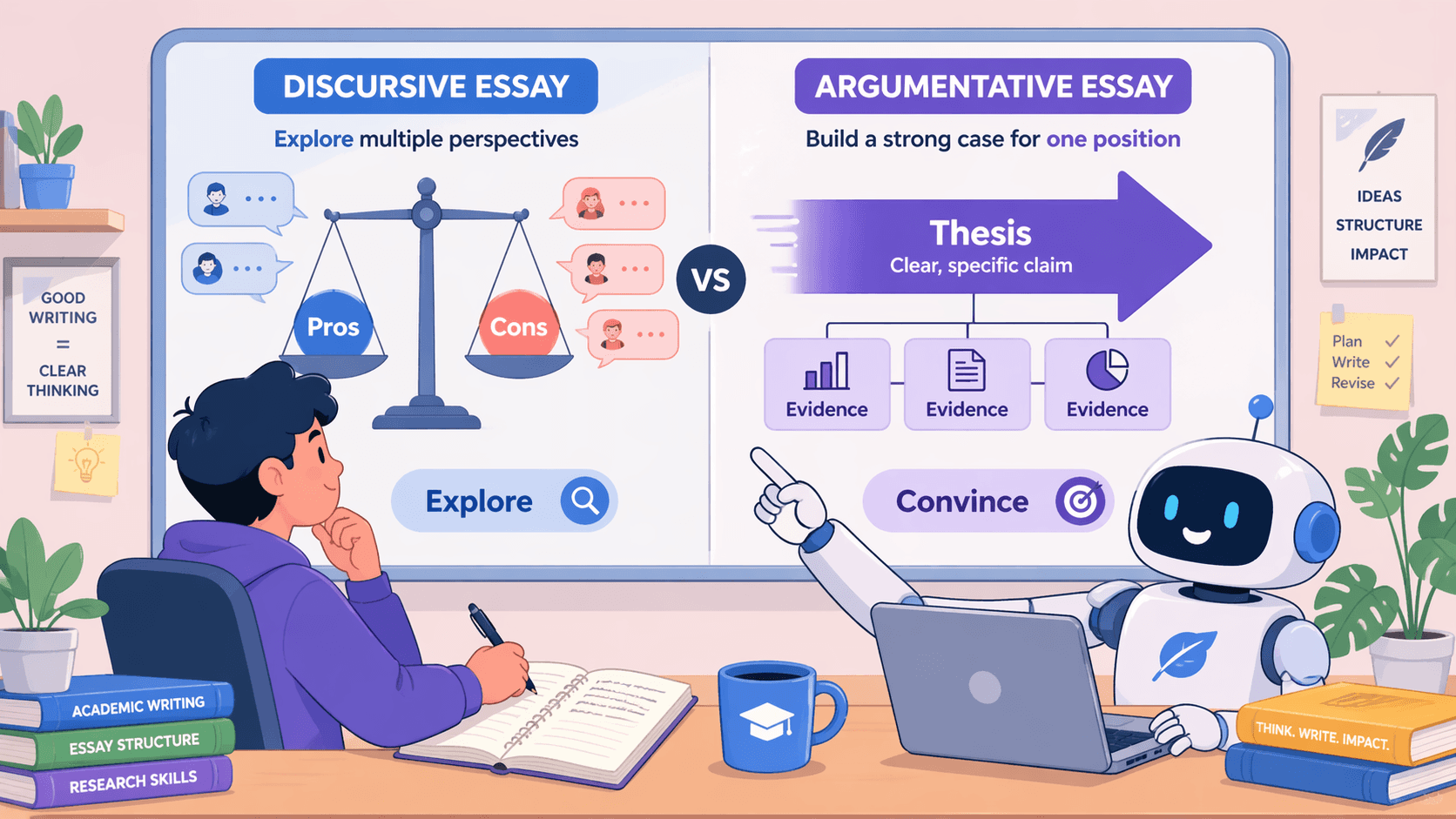
Discursive aur argumentative essays ke beech ka sabse bada farq aapka stance (nazariya) hota hai. Ek discursive essay kisi topic ko alag-alag angles se explore karta hai aur bina kisi bhedbhav ke neutral hokar alag views pesh karta hai.
Ek argumentative essay ek mazboot position leta hai aur sabooton ke sath uska dawaydar banta hai, sath hi counterarguments ka active treeqe se jawan deta hai.
Purdue OWL ke mutabiq, ek balanced discussion ko priority deta hai, jabki dusre ke liye ek clear thesis zaroori hoti hai. In dono ke beech confuse hona ek aam vajah hai jis se students ke marks kat-te hain.
Niche di gayi guide dono formats ko examples aur ek aasan framework ke sath clear karti hai taaki aap apne assignment ke liye sahi format chun sakein.
<CTA title="Structure Your Essay the Right Way" description="Turn confusing essay types into clear structured writing with guided outlines" buttonLabel="Try Jenni Free" link="https://app.jenni.ai/register" />
Discursive aur Argumentative Essays ke Beech Kya Farq Hai?
Yeh sab aapke goal par depend karta hai. Kya aap kisi topic ko explore kar rahe hain ya phir koi behes jeetne ki koshish kar rahe hain? University of Melbourne ka Writing Centre ise bilkul saaf tareeqe se samjhata hai.
Discursive kaam alag-alag views pesh karta hai, jabki argumentative writing ek akele, evidence-backed case ko bilkul clear banata hai. Agar aap iska aur zyada detail chahte hain, toh writing a great essay par hamari is guide ko dekhein.
In roles ko thoda alag tareeqe se sochein:
Ek discursive essay ek fair moderator ki tarah hota hai, jo har perspective ko sunne ka mauka deta hai.
Ek argumentative essay ek dedicated lawyer ki tarah hota hai, jo ek side ke liye sabse mazboot defense tayyar karta hai.
A Side-by-Side Comparison
Aspect | Discursive Essay | Argumentative Essay |
Purpose | Kisi mudde ke sabhi pehluon ko examine aur explain karna. | Reader ko ek specific position ke liye convince karna. |
Your Stance | Neutral aur objective. | Saaf taur par batana aur uska defense karna. |
Tone | Balanced aur exploratory. | Persuasive aur evidence-driven. |
Structure | Pros, cons aur alag viewpoints pesh karta hai. | Ek claim karta hai, supporting evidence deta hai aur counterarguments ka jawab deta hai. |
Conclusion | Bina koi side liye saari discussion ko summarize karta hai. | Aapki thesis aur uski importance ko reinforce karta hai. |
Students Kahan Galti Karte Hain
Yeh mix-up isliye hota hai kyunki dono hi essays debatable subjects par hote hain. Confusion yahin se shuru hoti hai. Study groups mein yeh ek aam complaint hai, students shuru toh neutrality ke sath karte hain par dheere-dheere ek view ka support karne lagte hain.
Yeh shift discursive essay ke basic rule ko tod deta hai, aur exploration ko persuasion mein badal deta hai. Inmein se zyada problems shuruat mein hi essay writing ke sahi principles ko follow na karne se aati hain.
<ProTip title="💡 Pro Tip:" description="If your conclusion takes a side you are writing an argumentative essay not a discursive one" />
Aapko Kaunsa Essay Type Kab Use Karna Chahiye?
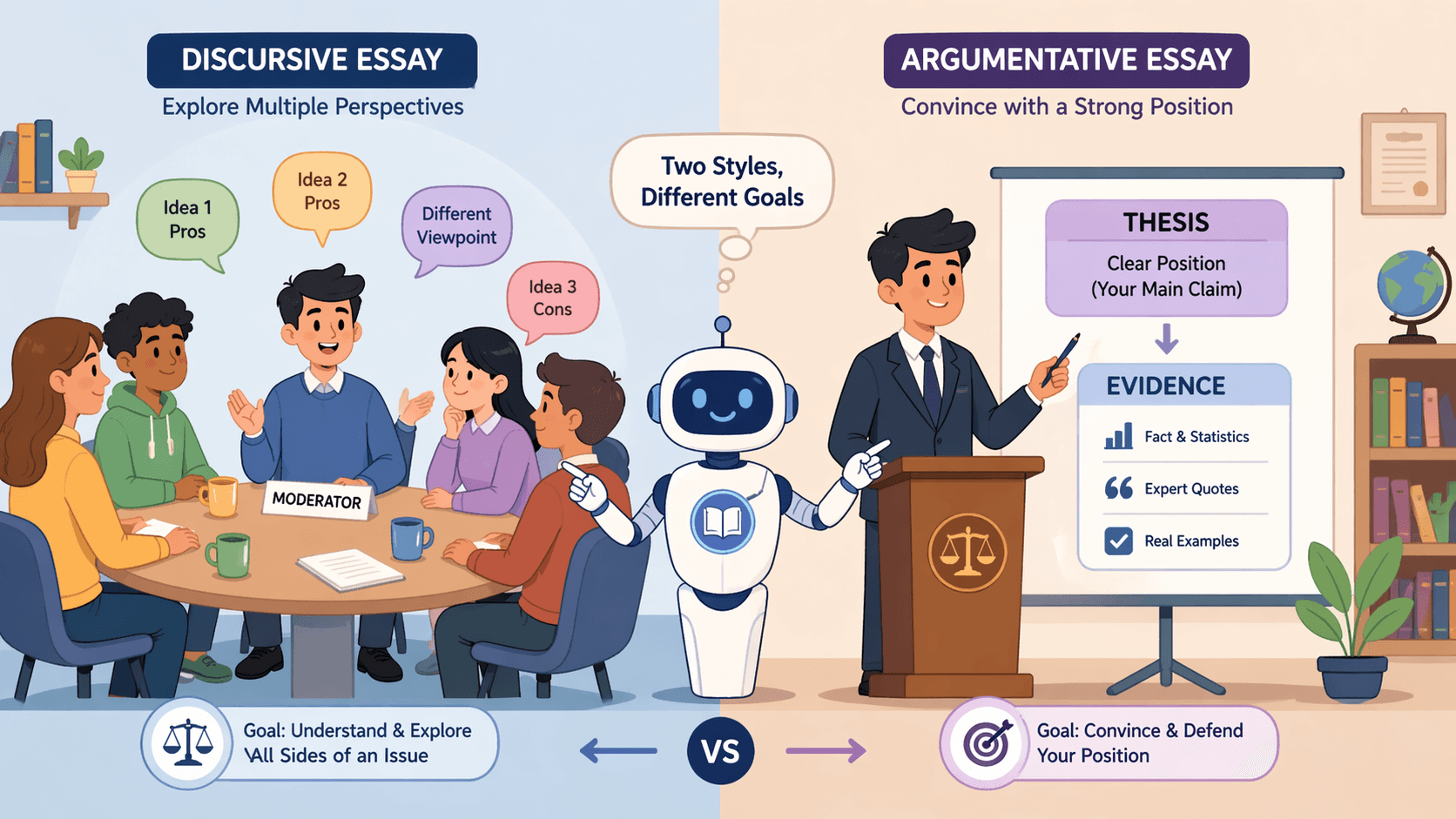
Aapka choice poori tarah is baat par depend karta hai ki assignment ka prompt aapse kya demand kar raha hai.
Exploration ke liye Discursive Essay use karein
Discursive essay ka core ek balanced discussion hota hai. Aapko yeh format tab dekhne ko milega jab prompt mein kuch aisi language hogi:
"Advantages aur disadvantages par discuss karein..."
"Muddon ke dono sides ko explore karein..."
"Alag-alag perspectives ko analyze karein..."
Maan lijiye ek topic hai, "Kya social media ko regulate kiya jana chahiye?" Ek discursive essay mein, aapka kaam kisi ek ko winner chunna nahi hai.
Aapka kaam bina kisi bhedbhav ke regulation ke paksh (for) aur vipaksh (against) dono ko pesh karna hai, aur dono positions ke merits ko analyze karna hai. Goal ek thorough aur barabar ka examination hai.
Persuasion ke liye Argumentative Essay ka use karein
Argumentative essay ka sirf ek mission hota hai: convince karna. Directive prompts ko dekhein jaise:
"Aap kis hadd tak agree ya disagree karte hain?"
"Is statement ke support ya against mein argue karein..."
"Apni position ko defend karein..."
Ab, vahi topic ek stance ban jata hai: "Misinformation ke spread ko rokne ke liye social media ko regulate kiya jana chahiye."
Yahan, aapka goal clear hai. Aapko ek definitive thesis deni hogi, use robust evidence ke sath support karna hoga, aur seedhe potential counterarguments ka jawab dena hoga.
Page Par Yeh Kaisa Dikhta Hai
Yeh difference sentence level par aapki writing ko badal deta hai.
Ek discursive writer likhta hai: "Proponents ka kehna hai X, jabki critics counter karte hain Y ke sath."
Ek argumentative writer likhta hai: "Halanki kuch log Y claim karte hain, par sabooton se saaf pata chalta hai X."
Students ke marks katne ki ek aam vajah yeh hoti hai ki woh us assignment mein argumentative aur persuasive tone use karte hain jo ki ek neutral, discursive format mangta hai. Prompt ke verb se apna approach match karna pehla sabse bada step hai.
<ProTip title="🧠 Reminder:" description="Always check keywords like discuss or argue before choosing your essay type" />
Discursive Essay Structure Explained
Ek discursive essay balanced discussion pesh karne ke liye banaya gaya hai. Iska structure is tarah design kiya gaya hai ki poore essay mein fairness bani rahe.
The Standard Format
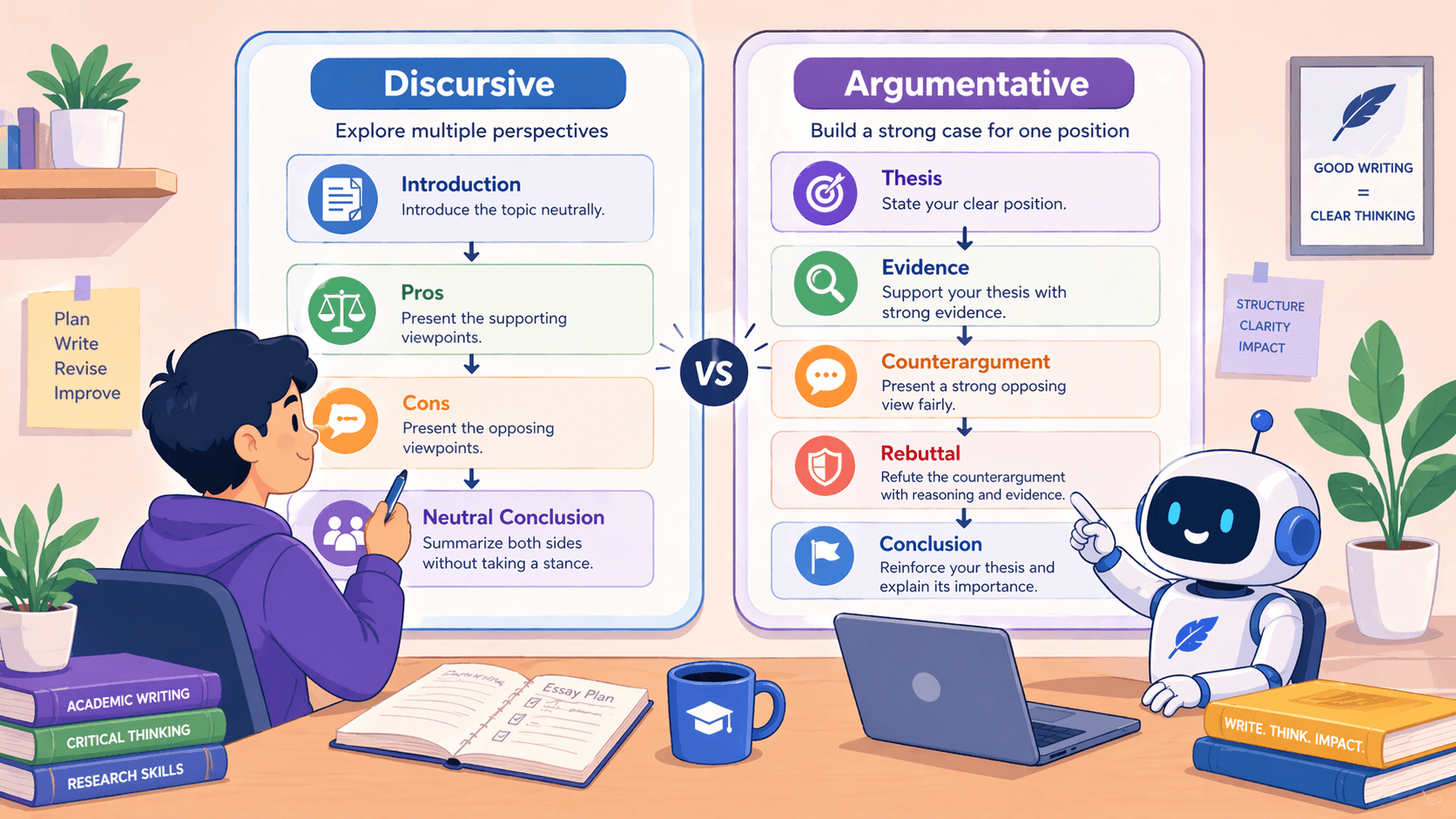
Zyadatar discursive essays ek clear, four-part layout follow karte hain:
Introduction
Arguments 'For' (Paksh mein)
Arguments 'Against' (Vipaksh mein)
Conclusion
Yeh classic pros-and-cons structure aspat karta hi ki aap topic ko alag-alag angles se cover karein. Agar aap sure nahi hain ki ideas ko kaise organize karein, toh ek how to structure essay guide ko review karne se is framework ko samajhne mein madad mil sakti hai.
Crafting the Introduction
Opening paragraph mein topic ko bilkul neutral tareeqe se introduce karna chahiye. Yeh batata hai ki debate exist karti hai, lekin aapki apni side reveal nahi karta.
Agar aapko apne reader ko engage karne mein pareshani hoti hai, toh how to write essay introduction hook se aap bina apni neutrality khoye ek strong opening build kar sakte hain. For example:
"Modern society mein social media ka role kafi discuss hone wala subject hai. Kuch log iske influence ko bohot positive mante hain aur dusre ise kaafi problematic samajhte hain."
Building the Body: Presenting Both Sides
Body ka har paragraph ek single viewpoint ya argument par focus hona chahiye. Aap ek section support karne wale perspectives ko de sakte hain:
"Supporting log social media ki is power ki taraf ishara karte hain jo logon ko doori ke bawajood connect karti hai aur social causes ke liye communities ko ek sath lati hai."
Phir, agla section opposing side ko address karega:
"Dusri taraf, detractors in platforms ke is role par zor dete hain jo hate speech ko badhava deta hai aur false information ko tezi se failata hai."
Key yeh hai ki har ek side ko ek barabar aur sahi dhang se pesh kiya jaye.
Writing the Conclusion
Conclusion dono side ko synthesize karta hai bina kisi winner ko declare kiye. Yeh complexity ko acknowledge karta hai. Ek simple closing is tarah ho sakti hai:
"In summary, social media ek dual-edged reality pesh karta hai. Yeh anokhi communication aur activism toh deta hai lekin sath hi privacy aur public discourse se jude bade challenges bhi lata hai." Essay discussion ko reflect karte hue khatam hota hai, na ki use resolve karte hue.
<ProTip title="⚖️ Balance Tip:" description="Give equal depth to both sides to maintain neutrality" />
Argumentative Essay Structure Explained
Ek ache argumentative essay ka ek hi kaam hota hai: ek clear, convincing case banana. Aapko apni position clear karni hoti hai aur step-by-step use back up karna hota hai. Iske liye standard format sabse best rasta hai.
The basic format Zyadatar argumentative essays ek simple pattern follow karte hain.
Introduction: Apne thesis statement se shuru karein. Yeh ek sentence mein aapka main point hota hai.
Supporting arguments: Apne saboot pesh karne ke liye body paragraphs ka use karein.
Counterargument: Ek strong opposing view ko address karein.
Rebuttal: Explain karein ki kyun woh opposing view galat ya incomplete hai.
Conclusion: Apni thesis ko restate karein aur batayein ki yeh kyun matter karta hai.
Yeh sirf extra kaam nahi hai. Yeh ek structured critique ka classic model hai, jo aapko apne khud ke argument aur uski kamzoriyon ke baare mein sochne par majboor karta hai. Agar aap koi framework chun rahe hain (jaise classical, Rogerian, ya Toulmin), toh hamari guide to the different types of argumentative essays ko dekhein.
Start with a punch: the thesis Sab kuch aapke thesis statement par tika hai. Yeh aapki poori position ko define karta hai. Ise chhupayein nahi. Ise sabse aage aur center mein rakhein. Agar aapko ek focused claim draft karne mein help chahiye, toh AI thesis statement generator aapki stance ko sharp karne mein madad kar sakta hai.
Ek weak thesis aisi hoti hai: "Social media mein kuch problems hain." Ek strong thesis stand leti hai: "Social media platforms ko government regulation face karni chahiye taaki misinformation ke spread aur public debate ko hone wale nuksaan ko roka ja sake."
Fark samajh aaya? Dusra wala aapko follow karne ke liye ek clear direction deta hai.
Proving your point: the arguments Intro ke baad har paragraph ko solid evidence ke sath aapki thesis ko support karna chahiye. Jaisa ki Harvard College Writing Center batata hai, persuasion credible data aur sound logic par depend karta hai. Aap aur bhi practical techniques strategies essay writing mein dekh sakte hain. Aapke paragraphs mein yeh ho sakta hai:
Kisi trusted source se relevant statistics.
Is field ke experts ke quotes ya findings.
Kisi real-world case study ka analysis.
Apna sabse best evidence chunein. Har paragraph mein ek strong, aur achi tarah se samjhaya gaya data teen weak examples se behtar hai.
The secret weapon: counterarguments Yahin par bohot se essays kamzor reh aate hain. Ek persuasive writer dusre viewpoints ko ignore nahi karta; balki woh unhe head-on face karta hai. Sabse pehle, chalte hue ek counterargument ko fair tareeqe se samjhayein.
For example: "Regulation ke critics ka manna hai ki yeh free speech ko rokta hai aur iska use censorship ke liye ho sakta hai."
Phir, aap iska rebuttal dete hain. Dikhayein ki kyun woh counterargument stand nahi karta. "Halanki, verified jhooth par targeted regulations, jaise pandemic ke dauran health misinformation, bina speech ko limit kiye public harm ko kam kar sakti hain. Goal opinion ko silent karna nahi, balki galat content ko limit karna hai."
Aisa karne se aapka case kamzor nahi hota. Yeh aapko aur bhi credible aur aapke argument ko robust banata hai, kyunki aapne reader ke sabse bade objection ka pehle hi jawab de diya hai.
Ending with force: the conclusion Apne introduction ko bas repeat na karein. Aapka conclusion briefly summary dekar aapki position ko aur mazboot banana chahiye. Phir, ek step aage badhein. Koi action suggest karein, consequence batayein, ya iski broad importance ko highlight karein.
Ek flat conclusion aise restate karega: "Isliye, social media ko regulate kiya jana chahiye." Ek strong conclusion dil ko chhoo leta hai: "Social media ke liye saaf rules na banana misinformation ko democracy ko kharab karne ka mauka deta hai.
Regulation ideas ko limit karne ke baare mein nahi hai, balki us factual ground ko protect karne ke baare mein hai jis par ek healthy public discourse tika hota hai."
Clear rahein. Direct rahein. Reader ko convince karke chhodein.
<ProTip title="🔥 Argument Tip:" description="Always include at least one counterargument to strengthen your credibility" />
Side-by-Side Structural Comparison
In dono essay types ko samajhne ka sabse accha tareeqa inko direct compare karke dekhna hai.
Section | Discursive Essay | Argumentative Essay |
Introduction | Topic ka ek neutral overview pesh karta hai. | Ek clear thesis statement ke sath shuru hota hai, jo ek firm position leta hai. |
Body | Topic ko alag-alag angles se explore karta hai, pros aur cons ko balanced tareeqe se pesh karta hai. | Muddon ki ek side ke liye case build karta hai, us single argument ko support karne ke liye evidence use karta hai. |
Evidence Use | Discussion ke andar alag-alag perspectives ko support karne ke liye cite kiya jata hai. | Chune gaye argument ko back up aur prove karne ke liye cite kiya jata hai. |
Counterargument | Dusron ke beech ek valid perspective ki tarah barabar weight ke sath pesh kiya jata hai. | Acknowledge kiya jata hai aur phir strategically refute kiya jata hai taaki main position ko mazbooti mile. |
Conclusion | Discussion ko neutrally summarize karta hai, bina koi personal stance liye. | Original thesis aur stance ko reinforce karta hai, jiska madsad reader ko convince karna hota hai. |
Core difference simple hai. Ek discursive essay topic ko explore karta hai, jabki ek argumentative essay ek position ke liye ladta hai. Ek balanced writing hai, dusra opinion-based persuasion hai.
Common Student Mistakes aur Unhe Kaise Fix Karein
Theory janna ek alag baat hai. Use apply karna dusri baat hai. Yahan kuch practical problems hain jo students face karte hain, aur unhe solve karne ke simple tareeqe diye gaye hain.
Galti 1: Discursive essay mein argue karna Jab aapko explain karna ho, tab persuasion mein slip ho jana asan hai. Students aksar bina realize kiye apne subtle opinions add kar dete hain. Yeh zaroori neutrality ko tod deta hai.
Fix: Apne draft se persuasive language ko hatayein. Aise words ko dhoondhein jo kisi conclusion ko push karte hain.
Phrases jaise "This proves..." ya "Clearly..." ko remove karein.
Unhe neutral phrasing se replace karein: "This suggests...", "One interpretation is...", ya "Some argue that...".
Aapka kaam landscape ko pesh karna hai, uspar road banana nahi.
Galti 2: Argumentative essay mein bohot zyada neutral hona Iska opposite problem bhi kafi common hai. Kuch essays isliye fail hote hain kyunki woh dono sides ko barabar pesh karte hain aur kabhi kisi strong stance ko commit nahi karte. Yeh ek confusing aur unfocused argument banata hai.
Fix: Ek side chunein. Apni position ko intro mein hi ek clear, direct thesis statement mein batayein. Phir, har body paragraph mein us position ko reinforce karein.
Evidence ka har ek hissa aapke point ko prove karne se connect hona chahiye. Agar aap khud ko "on the other hand" bohot zyada likhte hue paate hain, toh aap shayad neutrality ki taraf slip ho rahe hain.
Galti 3: Weak ya missing structure Bina kisi solid plan ke, essays bikhar jate hain. Reader ke liye unhe follow karna confusing ho jata hai. Purdue OWL writing lab ki research se pata chalta hai ki clear structure direct readable-ness ko aur aapke grades ko behtar banata hai.
Fix: Sirf writing shuru na karein. Pehle plan karein. Draft karne se pehle apne sections ko jaldi map karne ke liye aap hamare essay outline generator ka use kar sakte hain.
Ek single paragraph likhne se pehle apne main points ko outline karein.
Har paragraph ko ek main idea assign karein. Ek hi paragraph mein do arguments ko cram na karein.
Paragraphs ke beech transitions use karein. Words jaise "Furthermore," "In contrast," ya "As a result" signs ki tarah kaam karte hain, jo reader ko aapki logic ke sath guide karte hain.
Ek accha structure koi rukawat nahi hai; balki yeh woh frame hai jo aapke argument ko khada rakhta hai.
<ProTip title="📌 Structure Tip:" description="Outline your essay before writing to maintain logical flow" />
Aise Writing Techniques Jo Dono Essays Ko Behtar Banate Hain
Bhale hi discursive aur argumentative essays ke goals alag hon, par unhe behtar likhne ke toolbox mein kafi tools same hote hain. Kuch core skills ko master karne se dono hi types mazboot banenge.
1. Clarity ke liye transition words use karein Yeh words woh glue hote hain jo aapke paragraphs ko ek sath jode rakhte hain. Yeh aapke ideas ke beech ka relation dikhate hain, jisse aapka essay follow karna aasan ho jata hai.
Ek discursive essay mein, aap transitions ka use perspectives ke beech shift karne ke liye karenge: "On the other hand...", "Alternatively...", "Conversely..."
Ek argumentative essay mein, transitions logical connections build karte hain: "However...", "Therefore...", "Consequently...", "For example..."
Inke bina, ek essay disconnected statements ki ek list lagta hai.
2. Evidence aur examples ke sath back up karein Koi bhi essay sirf ek opinion nahi hota. Dono types ko credible hone ke liye solid support ki zaroorat hoti hai. Aapka kaam dikhana hai, sirf batana nahi.
Strong evidence aam taur par kuch categories mein aata hai:
Reliable sources se research data aur statistics.
Concrete, real-world examples jo aapke point ko illustrate karte hain.
Is field ke recognized experts ke quotes ya insights.
Bina evidence ke claim wala paragraph sirf ek assertion hai. Evidence ise ek argument mein badalta hai.
Agar aap clarity aur depth badhana chahte hain, toh fundamentals jaise structure aur transparency ko how to improve essay writing ke zariye behtar banana ek bada farq la sakta hai.
3. Consistent academic tone banaye rakhein Chahe aap explore kar rahe hon ya persuade, writing ko formal aur controlled lagna chahiye.
Aapko general taur par avoid karna chahiye:
Slang aur casual phrases. "a lot of folks" ki jagah "many people" likhein.
Overly emotional language. Words jaise "disastrous" ya "amazing" aksar exaggerated lagte hain. "Problematic" ya "significant" zyada precise hain.
Clear, direct aur precise wording par aim karein. Yeh aapko aur authoritative sound karata hai, chahe aap balanced discussion pesh kar rahe hon ya koi case bana rahe hon.
Quick Decision Framework
Assignment prompt par atke hain? Apne aap se yeh teen simple sawal poochein.
Kya mujhe poori tarah neutral rehna hai, ya main ek side chun sakta hoon?
Kya mera main kaam reader ko kisi baat ke liye persuade karna hai?
Prompt kaunsa verb use karta hai? Kya yeh mujhe "discuss" karne ko kehta hai ya "argue" karne ko?
Aapke answers aapko seedhe sahi format ki taraf point karenge.
The decision table
If your answer is "yes" to... | Write a Discursive Essay | Write an Argumentative Essay |
Neutral tone required? | ✔ Yes | ✘ No |
Clear personal stance needed? | ✘ No | ✔ Yes |
Balanced viewpoints required? | ✔ Yes | ✘ No |
Persuasion is the main goal? | ✘ No | ✔ Yes |
Ise is tarah sochein: agar prompt aapse kisi topic ko explore ya examine karne ko kehta hai, toh yeh shayad discursive hai. Agar yeh aapse kisi position ko prove ya defend karne ko kehta hai, toh yeh argumentative hai.
Yeh framework confusion ko door karta hai aur aapko sahi approach ke sath writing shuru karne deta hai.
<ProTip title="✅ Decision Tip:" description="If your teacher expects a position always choose argumentative structure" />
Aisa Essay Style Chunein Jo Us Baat Se Match Kare Jo Aap Kehna Chahte Hain
Aap wahan bethe hain aur sure nahi hain ki aapko dono sides explore karni chahiye ya ek clear stance lena chahiye, aur aapki writing messy lagne lagti hai. Yeh confusing hai. Ek discursive essay alag views ko dekhta hai, jabki ek argumentative essay ek position leta hai aur clear reasoning ke sath use support karta hai.
<CTA title="Write Better Essays with Clear Structure" description="Organize arguments and discussions with guided academic writing support" buttonLabel="Try Jenni Free" link="https://app.jenni.ai/register" />
Agar aap shuruat se hi apna structure clear rakhna chahte hain, toh Jenni aapke ideas par haavi hue bina aapki writing ko guide kar sakti hai. Yeh aapko apne point par focus rehne mein help karti hai jabki sab kuch organized rakhti hai, taaki aapka essay sharp aur follow karne mein easy lage.