Dwara
Justin Wong
—
Academic Writing mein AI ke use ko Saaf Taur Par Kaise Disclose Karein

Justin Wong
Vikas Prabhari
Graduated kiya Bachelor's me Global Business & Digital Arts, Minor me Entrepreneurship
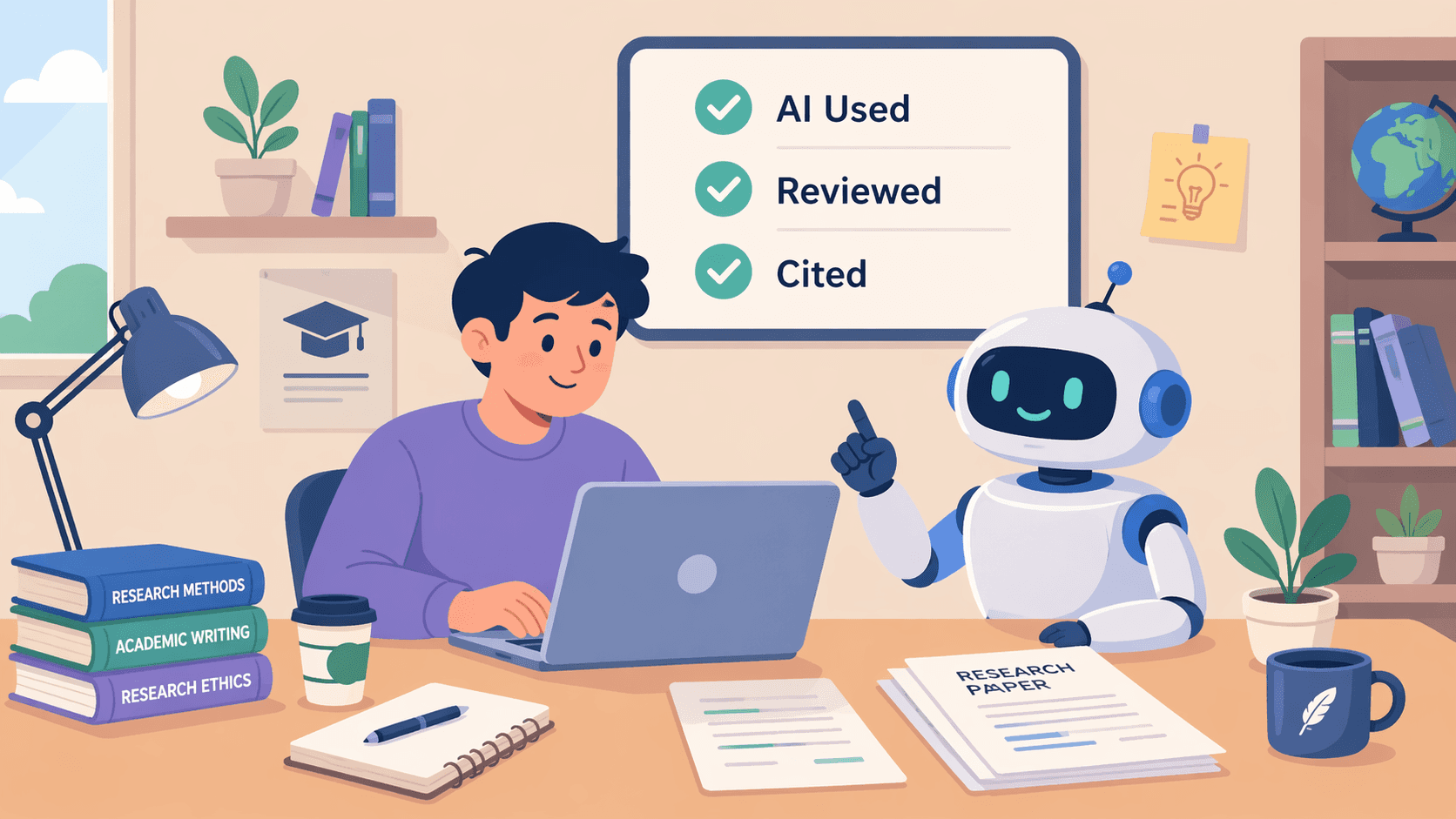
Essay ya research paper likhne mein AI tools ka use karna ab kaafi common ho gaya hai. Lekin aap chupchaap AI se paste karke apna kaam khatam nahi maan sakte.
Bade journals aur universities ne ise ek rule bana diya hai: aapko saaf-saaf batana hoga ki aapne kaunsa AI use kiya aur kaise. Yeh aapko pareshani mein daalne ke liye nahi hai.
Yeh isliye hai taaki yeh pakka ho sake ki aap abhi bhi apne kaam ke khud hi in-charge hain. Aap yeh confirm kar rahe hain ki aapne sab kuch check kiya hai, aap un ideas ke sath khade hain, aur final content ki responsibility aapki hai.
Ise credit dene ki tarah samjhein, thik waise hi jaise aap kisi book ko cite karte hain—jisme academic writing mein large language models ko cite karna bhi shamil hai jab woh aapke draft ko ek meaningful shape dete hain. Yeh guide is sahi dhang se karne ke simple aur non-negotiable rules batati hai.
<CTA title="Write Transparent AI Disclosures" description="Create clear AI usage statements for essays and research without confusion or risk." buttonLabel="Try Jenni Free" link="https://app.jenni.ai/register" />
Academic Writing Mein AI Disclosure Kyun Zaruri Hai
Yeh simple hai: imaandari se trust banta hai. Jab aap ChatGPT jaise tool ka use karne ke baare mein clear hote hain, toh aap apne professor, reviewers aur readers ko dikhate hain ki aapke paas chhupane ke liye kuch nahi hai.
Almost har bada publisher, Elsevier, Wiley aur International Committee of Medical Journal Editors jaise groups ab iski demand karte hain.
Woh sab ek key point par agree karte hain: kisi AI ko author ki tarah list nahi kiya ja sakta. Publishing policies par badhti hui research is baat ko majboot karti hai ki sabhi journals mein transparency ek universal requirement banti ja rahi hai, jaise ki haal hi mein ai use in academic writing ki findings mein bataya gaya hai.
Iske peeche ka logic bilkul seedha hai. Draft karne ya edit karne ke liye AI ka use karne se responsibility transfer nahi hoti. Committee on Publication Ethics bilkul clear hai: author hi hamesha unke kaam ke liye ultimately accountable hota hai.
Agar AI koi galti karta hai ya koi galat claim karta hai, toh woh aap par aayega. Yahi iska core principle hai. AI ek tool hai, ek powerful spell-checker ki tarah, na ki koi partner.
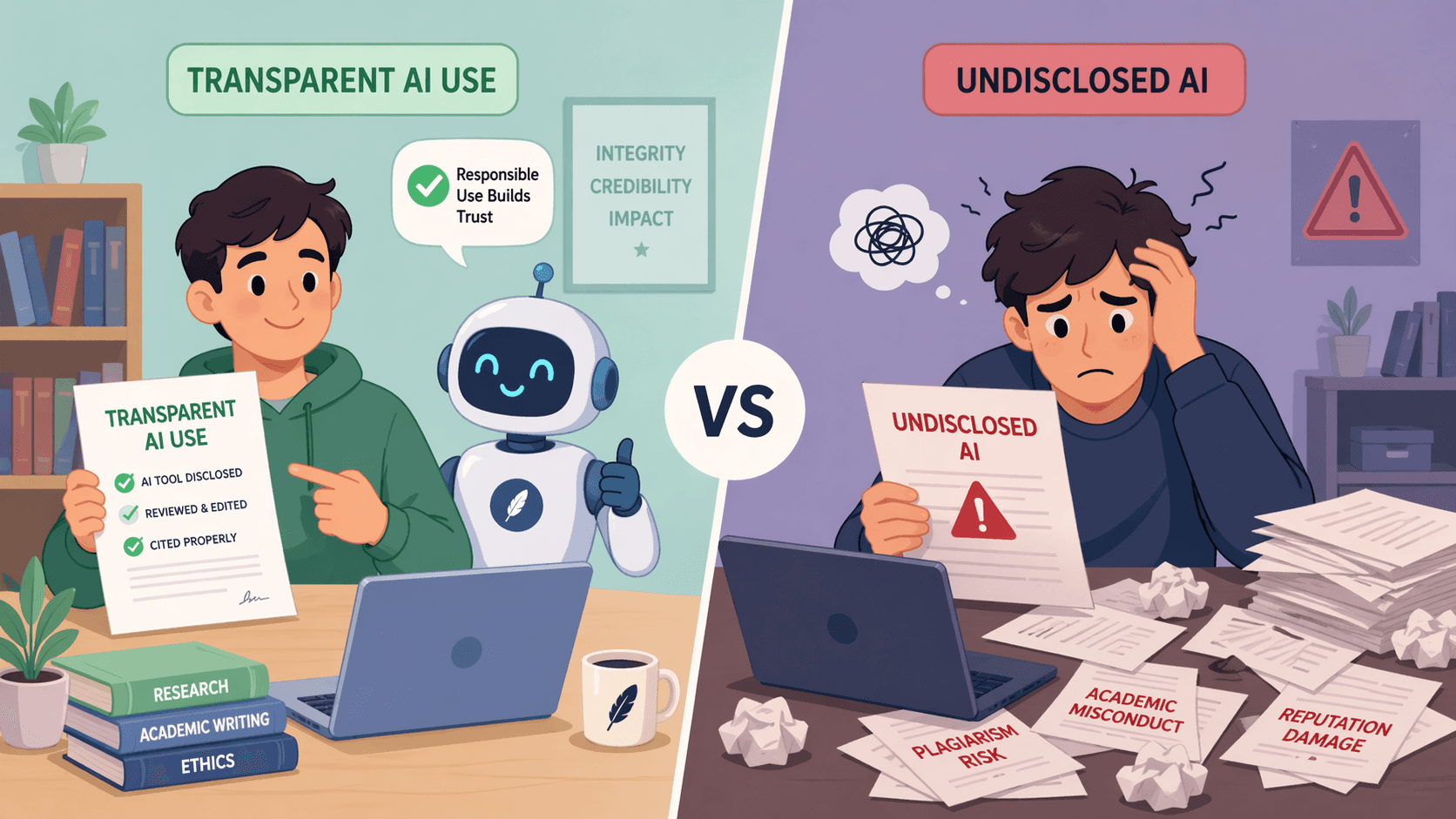
Kya hoga agar aap iska zikr nahi karte? Iske consequences real aur severe hain. Journals aapke paper ko reject kar denge. Agar baad mein koi hidden use pakda gaya, toh published work ko retract kiya ja sakta hai.
Yeh academic misconduct ke liye ek formal investigation bhi shuru kar sakta hai. Lambe samay mein, yeh aapke colleagues ke beech aapki credibility ko kharab karta hai jo ab ye sochenge ki pata nahi aapne aur kya-kya chhupaya hoga.
Hal hi ke academic debates ka consensus consistent hai: AI ka use chhupate hue pakde jaana, shuruat se hi open hone ki tulna mein kahin zyada nuksaan pahunchata hai.
Research integrity par specific aur detailed guidelines ke liye, aap World Health Organization ya U.S. Office of Research Integrity ke resources ko consult kar sakte hain.
<ProTip title="💡 Pro Tip:" description="Treat AI like a research assistant you must acknowledge in every major contribution." />
Aapko AI Use Kab Disclose Karna Chahiye
Aapko AI use tab disclose karna chahiye jab bhi yeh aapke kaam ko create karne mein koi meaningful role play karta hai. Sabse important shabd yahan "meaningful" hai. Yeh har ek keystroke ke baare mein nahi hai, balki substantial help ke baare mein hai.
Clear cases jahan disclosure zaruri hai
Agar AI tool ne aapke paper ke actual content ko shape dene mein madad ki hai, toh aapko ise report karna hoga. Typical examples hain:
Clarity improve karne ke liye paragraphs ko rewrite karne ke liye iska use karna.
Apne liye doosre research papers ko summarize karne ke liye iska use karna.
Initial ideas ya structural outline generate karna.
Data analysis ya code likhne mein assistance lena.
Figures, charts, ya doosre visuals create karna.
Yahan ek concrete scenario hai: aap ChatGPT se apne literature review chapter ke liye paanch key studies ko summarize karne ke liye kehte hain. Aapko ise disclose karna hoga. AI ki summary ne is baat ko directly influence kiya ki aapne us prior research ko kaise samjha aur present kiya.
The gray areas: minor help versus substantial help
AI ka har use ek jaisa nahi hota. Kuch tools bilkul un grammar checkers ki tarah kaam karte hain jinhe hum saalon se use kar rahe hain.
Minor use mein basic spell-checking ya comma splices fix karna shamil hai.
Substantial use mein sentences ko rewrite karna, naya content generate karna, ya analysis perform karna shamil hai.
Kayi universities aur publishers us minor aur technical use ke liye statement ki demand nahi karte. Lekin badhte hue researchers aur editors suggest karte hain ki aap ise phir bhi disclose karein. Yeh zyada safe aur transparent rasta hai.
Log sach mein kya keh rahe hain
Academic forums aur conference talks mein chal rahi discussions ko dekhne se ek hi chinta baar-baar samne aati hai. Ek darr hai ki secret AI ka use kuch students ya researchers ko ek unfair edge deta hai aur published work par se trust ko dheere-dheere kam karta hai.
Kuch academics ise AI dwara "intellectual effort ko remove karna" kehte hain, khaskar tab jab poore paragraphs ya sections ek machine dwara rewrite kiye jaate hain.
Doosre iska counter karte hain ki problem tool khud nahi hai, balki yeh hai ki hum ise chhupate kaise hain. Unka kehna hai ki transparency hi iska sabse seedha solution hai.
Practical consensus yeh hai: agar AI ne aapki writing ka meaning, structure, ya substance badal diya hai, toh aapko ise disclose karna chahiye.
Agar aap abhi bhi unsure hain ki yeh line kahan hai, toh hamara breakup ki research paper mein kitna AI content acceptable hai aapki approach ko calibrate karne mein madad kar sakta hai.
Apne Paper Mein AI Disclosures Kahan Rakhein
Aap apna AI disclosure bas kisi footnote mein daal kar yeh umeed nahi kar sakte ki sab log ise dekh lenge. Bilkul clear rahne ke liye, aapko apni submission mein kayi jagahon par iska zikr karna chahiye.
Yeh multi-placement approach publishers ki badhti expectations ke sath aligned hai, jisme ai author guidelines par formal policies shamil hain, jo manuscript ke alag-alag sections mein visibility aur accountability par zor deti hain.
Yeh aamtaur par kahan jata hai
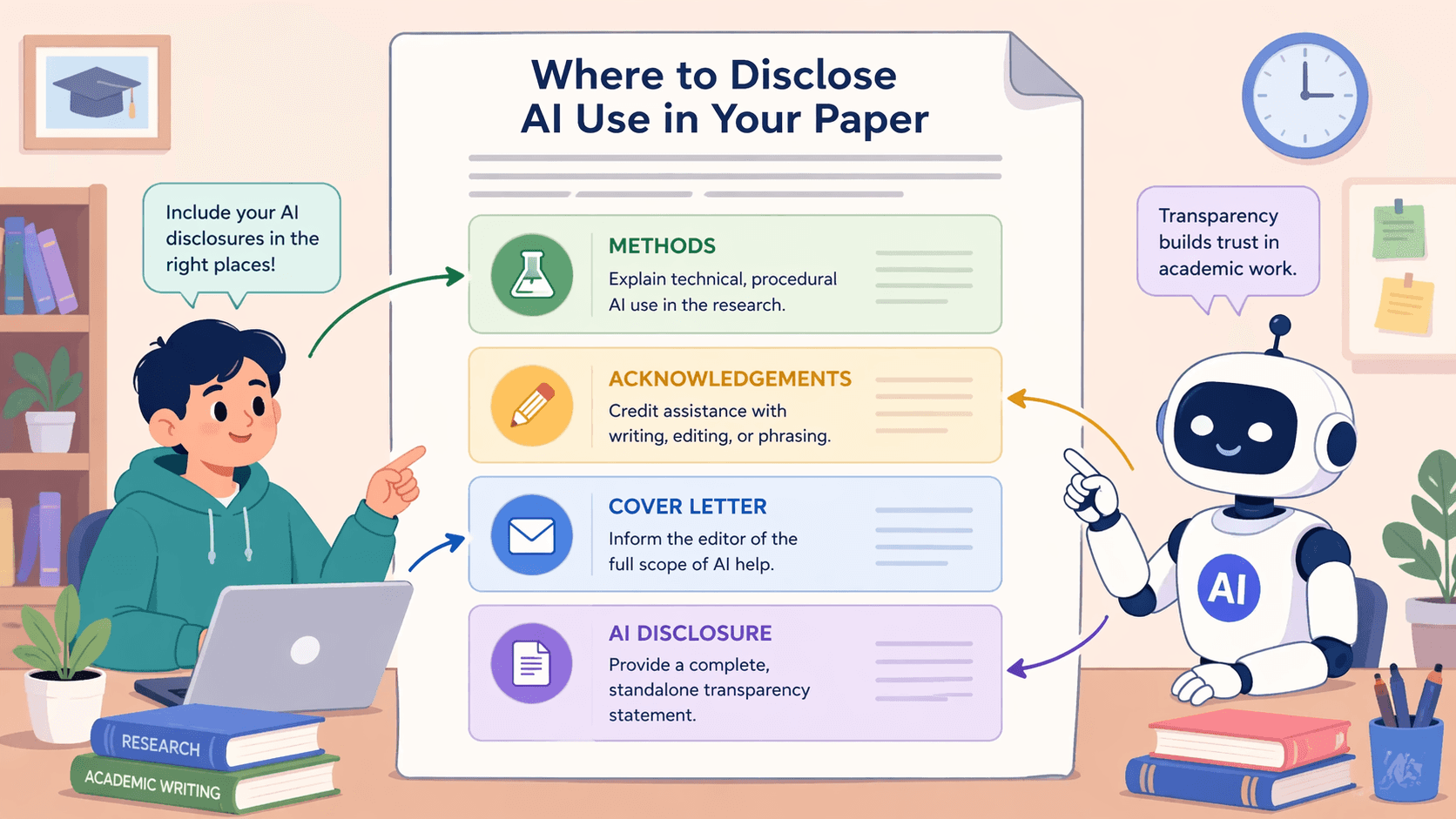
Zyadatar journals aur university guidelines aapko in key areas mein disclosures include karne ke liye kahenge:
The Methods section, agar aapne data analysis, modeling, ya research process ke kisi hisse ke liye AI ka use kiya hai.
The Acknowledgements, writing, editing, ya phrasing mein mili kisi bhi help ke liye.
Aapka cover letter editor ke liye, jo overall AI involvement ki summary provide karta hai.
Manuscript mein ek dedicated AI section, jo ab ek common requirement banta ja raha hai.
Paper Section | Disclosure Kya Karta Hai | Ise Kab Use Karna Hai Ka Example |
Methods | Technical aur procedural AI use ko explain karta hai. | Aapne apne dataset ko analyze karne ya model build karne ke liye ek AI tool use kiya. |
Acknowledgements | Writing aur editing mein mili help ko credit deta hai. | Aapne grammar ke liye Grammarly ya kisi tricky paragraph ko rephrase karne ke liye ChatGPT use kiya. |
Cover Letter | Editor ko AI help ke poore scope ke baare mein inform karta hai. | Ek brief summary jisme likha ho, "AI was used for language editing and to generate the initial literature review outline." |
Dedicated Section | Ek complete, standalone transparency statement provide karta hai. | Jab koi journal specifically "Declaration of Generative AI and AI-assisted Technologies" titled section ki maang karta hai. |
Aapko ek se zyada baar kehne ki kyun zaruri hai
Inme se har ek placement alag person se baat karta hai. Editor sabse pehle aapka cover letter skims karta hai. Reviewer aapke methods ko dhyan se dekhta hai. Final reader aapke published paper ko dekhta hai.
Sare relevant spots par statement dalne se confusion dur hota hai aur yeh dikhata hai ki aap transparency ko seriously le rahe hain. Yeh aapke kaam ko pehli glance se lekar aakhri tak aur credible banata hai.
<ProTip title="📌 Note:" description="Always check journal guidelines before submission since placement rules vary." />
AI Disclosure Statement Mein Kya Include Karein
Ek accha disclosure specific hota hai. Yeh transparent hota hai. Isme is baat ki koi gubaish nahi honi chahiye ki tool ne kya kiya aur aapne kya kiya.
Detailed reporting ki importance research writing mein ai transparency ke broad research discussions mein bhi reflect hoti hai, jahan clarity aur accountability research integrity ko maintain rakhne ke key themes hain.
Woh pieces jo aapko include karne ki zarurat hai
Har statement mein in points ko cover kiya jana chahiye:
Tool name aur version (e.g., ChatGPT-4, Grammarly 7.0)
The specific purpose jo isne serve kiya
Paper ke kaunse sections ko isne affect kiya
Woh date ya timeframe jab aapne ise use kiya
Ek clear statement of human review and final responsibility
Vague se lekar precise tak
Aisa koi weak aur generic mat likhein jaise: "AI tools were used."
Kuch exact likhein. For example:
Tool: Chat GPT-4
Purpose: Dus source articles se key points ko summarize karna.
Section: Literature Review (paragraphs 2-4).
Process: Authors ne sabhi AI-generated text ka review kiya, fact-check kiya aur use rewrite kiya.
Ek complete example statement
Mila kar dekhne par yeh kuch aisa lagta hai:
"In writing this manuscript, the authors used ChatGPT-4 (March 2025) to assist in summarizing background literature for the introduction. All content generated by the tool was subsequently reviewed, edited, and verified by the authors, who assume full responsibility for the work's accuracy and conclusions."
Yeh detail level un expectations se match karta hai jo Springer Nature aur IEEE jaise bade publishers ab rakhte hain.
Kya include nahi karna hai
In common errors se bachein jinse kisi reviewer ki eyebrow khadi ho sakti hai:
AI ko co-author ki tarah list karna. Yeh ek tool hai, contributor nahi.
Uljhi hui language use karna jaise "AI helped with the writing." Kaise, exactly?
Yeh saaf tor par batana bhool jana ki aap, yaani human author, final document mein har cheez ke liye responsible hain.
<ProTip title="💡 Pro Tip:" description="Specific details make your disclosure credible and reviewer friendly." />
AI Disclosure Templates Jo Aap Use Kar Sakte Hain
Template use karna smart decision hai. Yeh aapka time bachata hai aur yeh sure karta hai ki aap koi required piece na bhulein.
Agar aap AI-generated summaries ke sath sources organize kar rahe hain, toh citation manager kya hota hai yeh samajhna aapke workflow ko streamline karne aur proper attribution ensure karne mein madad kar sakta hai.
Yahan kuch formats hain jinhe aap apne paper ke alag-alag parts ke liye copy kar sakte hain.
Methods ya Acknowledgements section ke liye
"During the preparation of this work, the authors used [Tool Name and Version] on [Date or Month/Year] to assist with [Specific Purpose, e.g., summarizing literature, editing for clarity].
All outputs from this tool were reviewed, edited, and fact-checked by the authors, who take complete responsibility for the final content."
Editor ke liye aapke cover letter ke liye
"Please note that the preparation of this manuscript involved the use of AI-assisted technology. Specifically, [Tool Name] was used for [Specific Purpose, e.g., drafting the initial outline and improving language flow].
Every piece of AI-generated content was subsequently reviewed, verified for factual accuracy, and substantially edited by the authors. No unedited AI text appears in the submitted work."
Ek dedicated AI statement section ke liye
Declaration on the use of generative AI and AI-assisted technologies In the writing of this manuscript, the authors utilized [Tool Name] to assist with [Specific Purpose]. The AI was not used to generate data, interpret results, or draw conclusions.
All text produced with its assistance was critically reviewed and edited by the authors. The authors affirm they are solely accountable for the published work's content, integrity, and accuracy.
Yeh templates journals ki aam requirements ko follow karte hain aur aapko un simple mistakes se bachate hain jo desk rejection ka kaaran ban sakti hain. Bas bracket ke details ko fill karein.
Publisher Guidelines Jo Aapko Pata Honi Chahiye
Halaanki har journal ke apne specific guidelines hote hain, lekin woh sab do hi principles par aate hain: transparent rahein, aur yaad rakhein ki human hi hamesha responsible hota hai.
Agar aap unsure hain ki compliant rehte hue sahi AI tool kaise chunein, toh ai writing tool kaise chunein par guides ko review karna madad karega taaki aapka usage shuru se hi academic expectations ke sath align rahe.
Bade publisher policies par ek quick look
Publisher / Organization | Unki Key Requirement |
Elsevier | AI disclosure ke liye manuscript mein ek dedicated section require karta hai. |
Wiley / COPE | Kaam mein kisi bhi "substantial" AI assistance ke liye disclosure ko mandate karta hai. |
Springer Nature | Methods ya uske jaise kisi section mein AI ke role ki transparent reporting ki maang karta hai. |
IEEE | Text, code, ya figures generate karne mein AI use ke liye full disclosure chahta hai. |
ICMJE | Manuscript ke andar aur editor ko diye cover letter dono mein disclosure ki maang karta hai. |
Yeh policies static nahi hain. Yeh har samay update ho rahi hain. Apne target journal ke official author guidelines ko submit karne se theek pehle check karna ek non-negotiable step hai.
Ek universal rule
Har ek publisher aur academic body mein, yeh absolute hai: Kisi AI tool ko author ki tarah list nahi kiya ja sakta. Kisi scholarly paper mein claims, data, aur conclusions ke liye sirf ek human being ko hi accountable theraya ja sakta hai.
Yeh rule sirf bureaucratic nahi hai. Yeh accountability ka foundation hai. Yeh ensure karta hai ki jab kisi reader ka koi sawal ho, ya kisi result ko verify karne ki zarurat ho, toh ek person ho, na ki koi software, jo answerable ho.
AI Use Disclose Na Karne Ke Ethical Risks
AI help chhupane ke real-world risks
Yeh sirf ek rule follow karne ke baare mein nahi hai. Yeh is baare mein hai ki jab aap open nahi hote toh aapke kaam aur aapki reputation ka kya hota hai.
Apne workflow ko structured aur compliant rakhne ke liye, un tools aur features ko explore karna useful hai jo citation manager features guide mein bataye gaye hain, khaskar jab citations ko AI-assisted writing ke sath combine kiya ja raha ho.
Trust kyun gayab ho jata hai
Faculty lounges aur academic forums mein abhi ek real conversation chal rahi hai. Log pareshan hain.
Hal hi ke bibliometric analyses suggest karte hain ki academic submissions mein AI-detectable patterns ka trend badh raha hai, jo undisclosed AI usage ke badhte challenge ko spotlight karta hai.
Jab koi reader, reviewer, ya professor yeh sochne lagta hai ki kya aapke paper ka koi hissa machine se aaya hai, toh unka aapke likhe har cheez par se trust tootne lagta hai. Yeh doubt corrosive hota hai.
Log sach mein kis baare mein chintit hain
Yeh ethical concerns abstract nahi hain. Yeh practical hain aur aksar cite kiye jaate hain:
Apni khud ki voice khona. Ek paper aapki tarah sound karna chahiye, na ki kisi generic AI tone ki tarah.
Hard work ko skip karna. Ideas ke sath struggle karne ka process hi wahan hai jahan real understanding banti hai. AI us crucial effort ko shortcut kar sakta hai.
Subtle errors introduce karna. AI facts, citations aur data ko "hallucinate" karta hai. Agar aapne ise nahi pakda, toh woh jhooth aapke ban jaate hain.
Yeh hypothetical fears nahi hain. Yeh wahi direct reasons hain jin par departments aur journals apne rules tight kar rahe hain.
Ek simple choice: open ya hidden
Aapki Approach | Likely Outcome |
Transparent Hona | Editors aur readers ke sath credibility banata hai. Yeh seedhe policy requirements ko meet karta hai. |
Ise Chhupa Kar Rakhna | Immediate manuscript rejection ka risk hota hai. Agar baad mein pata chala, toh yeh aapki professional credibility ko permanently damage kar deta hai. |
Transparency chunna sirf compliance ke baare mein nahi hai. Yeh ek professional signal hai. Yeh logon ko batata hai ki aap apne kaam mein itne confident hain ki aap clear rah sakte hain ki ise kaise banaya gaya.
<ProTip title="⚠️ Reminder:" description="Hiding AI use is riskier than using AI openly and responsibly." />
Step-by-Step: AI Use Ko Sahi Se Kaise Disclose Karein
AI use ko disclose karne ka ek practical guide
Apne academic work mein AI assistance ko document karne ka ek seedha process yahan hai.
1. Pinpoint karein ki aapne AI kaise use kiya Apne project ko go through karein aur har ek instance ko note karein jahan AI ne role play kiya. Common examples hain:
Initial drafts likhna.
Language polish karna aur text edit karna.
Data analysis run karna ya summaries generate karna.
Ideas brainstorm karna ya structures outline karna.
2. Assistance ke extent ko gauge karein Decide karein ki AI ne kitna contribute kiya. Kya yeh ek choti si tweak thi, ek major structural edit, ya kuch beech ka? Jab aap unsure hon, toh use disclose karna zyada safe hota.
3. Apna disclosure statement draft karein Direct aur factual rahein. Ek simple template accha kaam karta hai:
"AI tools were used in the development of this work for [specific task, e.g., language editing and initial drafting]. All content was reviewed and verified by the author."
4. Statement ko sahi jagah par rakhein Aap is note ko kahan include karte hain, yeh publication ke rules par depend karta hai. Typical locations hain:
The Methods ya Methodology section.
An Acknowledgements section.
Journal ke liye submit kiya gaya ek cover letter. Apne target publication ke specific guidelines ko hamesha pehle check karein.
5. Apne records maintain karein AI ke involvement se related sab kuch save karein. Iska matlab hai inhein apne paas rakhna:
Woh exact prompts jo aapne tool ko diye.
Aapke drafts ke alag-alag versions.
AI generation ke baad aapne jo edits kiye unka ek log. Yeh paper trail zaruri hai. Agar koi aapki authorship par sawal uthata hai, toh yeh records prove karenge ki kaam ultimately aapka hi hai.
AI Use Ke Baare Mein Clear Rahein Isse Pehle Ki Yeh Koi Issue Bane
Aap soch sakte hain ki ek choti si bhool se koi farq nahi padega, lekin unclear AI use jaldi sawal khade kar sakta hai aur aapke kaam ko risk mein daal sakta hai. Yeh doubt create karta hai. Yahi problem hai.
<CTA title="Create Clear AI Disclosure Statements" description="Write accurate AI usage statements that meet journal and university requirements with ease." buttonLabel="Try Jenni Free" link="https://app.jenni.ai/register" />
Behtar move yeh hai ki aap exactly batayein ki aapne AI kaise use kiya aur ise apne kaam mein consistent rakhein, Jenni jaise tools ke sath jo aapko bina zyada soche clear disclosures organize karne mein madad karte hain; hamara researchers ke liye AI writing assistant is tarah ke accountable workflow ko support karne ke liye hi bana hai. Yeh aap se responsibility nahi lega, lekin isse transparent rehna aur academic expectations ko meet karna aasan ho jata hai.