Tarafından
Nathan Auyeung
—
Gerçekten İşe Yarayan Literatür Taraması Matrisi Şablonu

Nathan Auyeung
EY'de Kıdemli Muhasebeci
Muhasebe alanında Lisans Derecesi ile mezun oldu, Muhasebe alanında Lisansüstü Diplomasını tamamladı
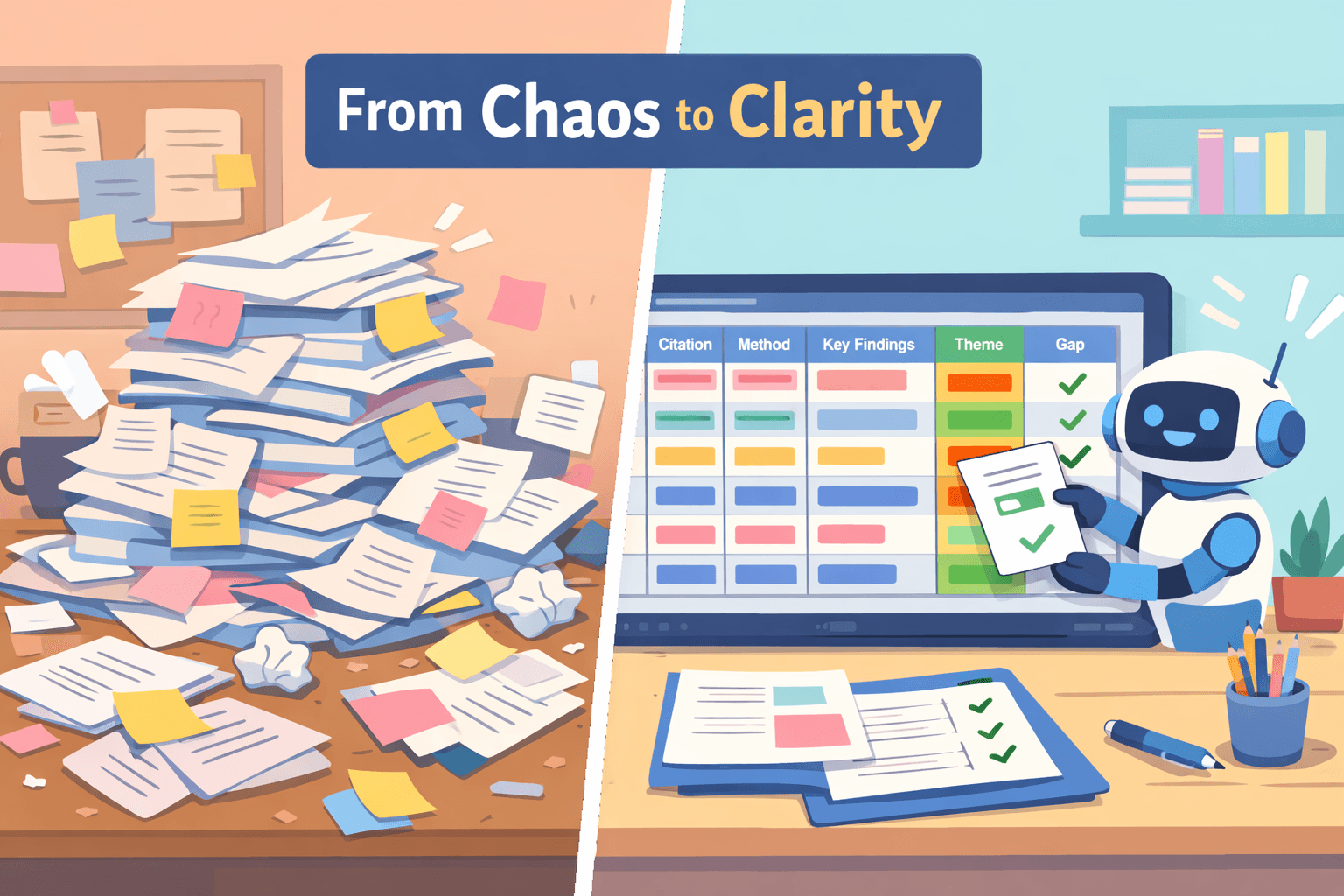
Araştırma makalelerinden oluşan bir yığının altında eziliyor musunuz? Onuncu makaleye geldiğinizde ayrıntılar birbirine karışmaya başlar; çalışmaların birbiriyle bağlantılı olduğunu bilirsiniz ama kimin hangi yöntemi kullandığını ya da ne bulduğunu hatırlamak zorlaşır. Bir literatür inceleme matrisi, her şeyi tek bir yerde tutmanıza yardımcı olur. Okurken her kaynağın amacını, yöntemini ve temel bulgularını kaydettiğiniz basit bir tablodur.
Çalışmalarınızı yan yana görmek, sonuçları karşılaştırmayı, örüntüleri fark etmeyi ve PDF’ler arasında gidip gelmeden argümanınızı kurmayı kolaylaştırır. Bu rehber; neleri eklemeniz gerektiğini, nasıl verimli dolduracağınızı ve hazır kopyalanabilir bir şablonla matrisinizi nasıl net bir yazılı incelemeye dönüştüreceğinizi gösterir. Düzenli notlardan ilk taslağa daha hızlı geçmek istiyorsanız, bir AI literatür inceleme ve RRL oluşturucu sayfaya kelimeleri hızla dökmenize, ardından bunları kaynaklarınızla olgunlaştırmanıza yardımcı olabilir.
<CTA title="Kaynaklarınızı Daha Hızlı Düzenleyin" description="Dağınık makaleleri dakikalar içinde net bir literatür matrisine dönüştürün. Jenni, notlarınızı yapılandırmanıza ve araştırma boşluklarını hızlıca görmenize yardımcı olur." buttonLabel="Jenni’yi Ücretsiz Dene" link="https://app.jenni.ai/register" />
Literatür İnceleme Matrisi Nedir?
Bunu araştırmanız için bir elektronik tablo gibi düşünün. Her satırın tek bir kaynağı temsil ettiği bir tablo oluşturursunuz; bu bir kitap, bir dergi makalesi, bir rapor olabilir.
Her sütun, o kaynak hakkında izlemek istediğiniz belirli bir bilgiyi temsil eder; bu, özellikle bir anlatı temelli literatür incelemesi hazırlarken oldukça faydalıdır. Okuduğunuz tüm çalışmalar için merkezi bir kontrol paneli gibi çalışır.
Ayrı ayrı belgelerde aramak yerine, satırlara bakarak farklı yazarların bir soruna nasıl yaklaştığını, temel bulgularının ne olduğunu ve sonuçlarının nerede ayrıştığını hızla görebilirsiniz.
Bu yapı size birkaç kritik konuda avantaj sağlar:
Birden fazla makalede ortaya çıkan ortak temaları veya argümanları görmenizi sağlar.
Farklı çalışmalarda kullanılan araştırma yöntemlerini doğrudan karşılaştırmanıza yardımcı olur.
Bilginin eksik olduğu ya da çalışmaların birbiriyle çeliştiği noktaları fark etmenizi sağlar.
Tüm kritik notlarınızı tek bir yerde tutar, böylece aynı düşünceyi beş farklı kenara tekrar tekrar yazmazsınız.
Bu yöntem, özellikle tez ya da doktora çalışması gibi daha büyük projelerde—özellikle bir tez literatür incelemesi hazırlarken—ya da ister sistematik ister daha geleneksel anlatı temelli olsun, her türlü yapılandırılmış literatür taramasında çok değerlidir; bunu literatür incelemesi yazma rehberinde daha ayrıntılı görebilirsiniz.
Ayrıca bir araştırma önerisi taslağı için de sağlam bir temel sunar; çünkü çalışmanızın içine gireceği mevcut akademik tartışmayı net biçimde haritalamanıza yardımcı olur. Bir dergi makalesi ya da ders ödevi hazırlıyorsanız, aynı süreç doğrudan bir araştırma makalesinin literatür inceleme bölümüne de uygulanır.
Neden Bir Matris Kullanmalısınız? (Küçük Projelerde Bile)
Bir literatür incelemesini herhangi bir sistem olmadan yönetmeye çalışmak genellikle birkaç tanıdık ve sinir bozucu sonuca yol açar. Her şey önemli gibi göründüğü için metnin devasa bölümlerini vurgulayıp durursunuz.
Asla tam olarak dönüp bakmayacağınız sayfalarca not yazarsınız. Bir makaleyi okuduktan bir hafta sonra, o belirli yöntemi Smith’in mi yoksa Jones’un mu kullandığını hatırlayamazsınız.
Yazma zamanı geldiğinde, farklı bulguları birleştirmek göz korkutucu bir bulmaca gibi gelir. Matris kullanmak bu süreci değiştirir. Okurken bilgiyi çıkarmaya ve kısaltmaya sizi zorlar; bunun da birkaç pratik faydası vardır:
Eğilimler görünür hale gelir. Tüm "Temel Bulgular" veya "Ana Argümanlar" sütunlarını yan yana koyduğunuzda, örüntüler ve ortak temalar hemen göze çarpar.
Anlaşmazlıkları takip edebilirsiniz. Çalışmalar arasındaki çelişkiler artık ayrı belgelerin içinde kaybolmaz; hepsi aynı tabloda yer aldığı için analiz etmek ve yazıya dökmek kolaylaşır.
Yazma aşaması hızlanır. Kanıtlarınız zaten düzenlenmiş ve kendi kelimelerinizle yeniden ifade edilmiş olur. Boş bir sayfadan ya da karmaşık not yığınından başlamazsınız.
İntihal riskini azaltır. Her kaynağı ilerledikçe matrise özetlemek, doğal olarak sizi özgün metnin ifadesinden uzaklaştırır ve sonradan istemeden kopyalama riskini düşürür.
Özünde matris, veriyi çıkarma aracıdır; kanıt sentezi araştırmalarında yaygın olarak kullanılan, şeffaflığı artırmaya ve hataları azaltmaya yönelik yapılandırılmış bir yaklaşımdır.
Makalelerin nitel içeriğini yapılandırılmış, karşılaştırılabilir veri noktalarına dönüştürür; böylece tüm inceleme süreci daha verimli ve daha az dağınık hale gelir.
Doğru Matris Formatını Seçin
Bir literatür inceleme matrisi oluşturmak için pahalı yazılımlara ihtiyacınız yok. Basit bir tablo işinizi görür. En yaygın ve esnek araçlar standart elektronik tablolardır.
İyi seçenekler şunlardır:
Excel veya Google Sheets (şiddetle önerilir)
Notion içinde bir tablo
Word veya Pages içinde temel bir tablo (ancak bunlar daha az esnektir)
Alıntıları ve PDF’leri bir kaynak yöneticisinde de tutuyorsanız, Zotero ve Mendeley entegrasyonu ile akıcı bir iş akışı kurmak, kütüphaneniz büyüdükçe matrisinizdeki “Alıntı” sütununu doğru tutmayı kolaylaştırabilir.
Elektronik tabloların en güçlü yanı budur: Veriyi girdikten sonra üzerinde kolayca işlem yapmanıza izin verirler.
Matrisiniz dolduktan sonra tüm kaynaklarınızı tek tıkla yayın yılına göre sıralayabilir, yalnızca nitel yöntem kullanan çalışmaları gösterecek şekilde filtreleyebilir veya satırları ortak bir temaya göre manuel olarak gruplayabilirsiniz.
Bu dinamik sıralama, statik bir kelime işlemci tablosunda çok daha zordur.
Temel Sütunları Oluşturun
Basit bir çerçeveyle başlayın. İhtiyaç duyarsanız sonradan her zaman yeni sütunlar ekleyebilirsiniz. Amaç, yazarken gerçekten kullanacağınız bilgileri yakalamaktır.
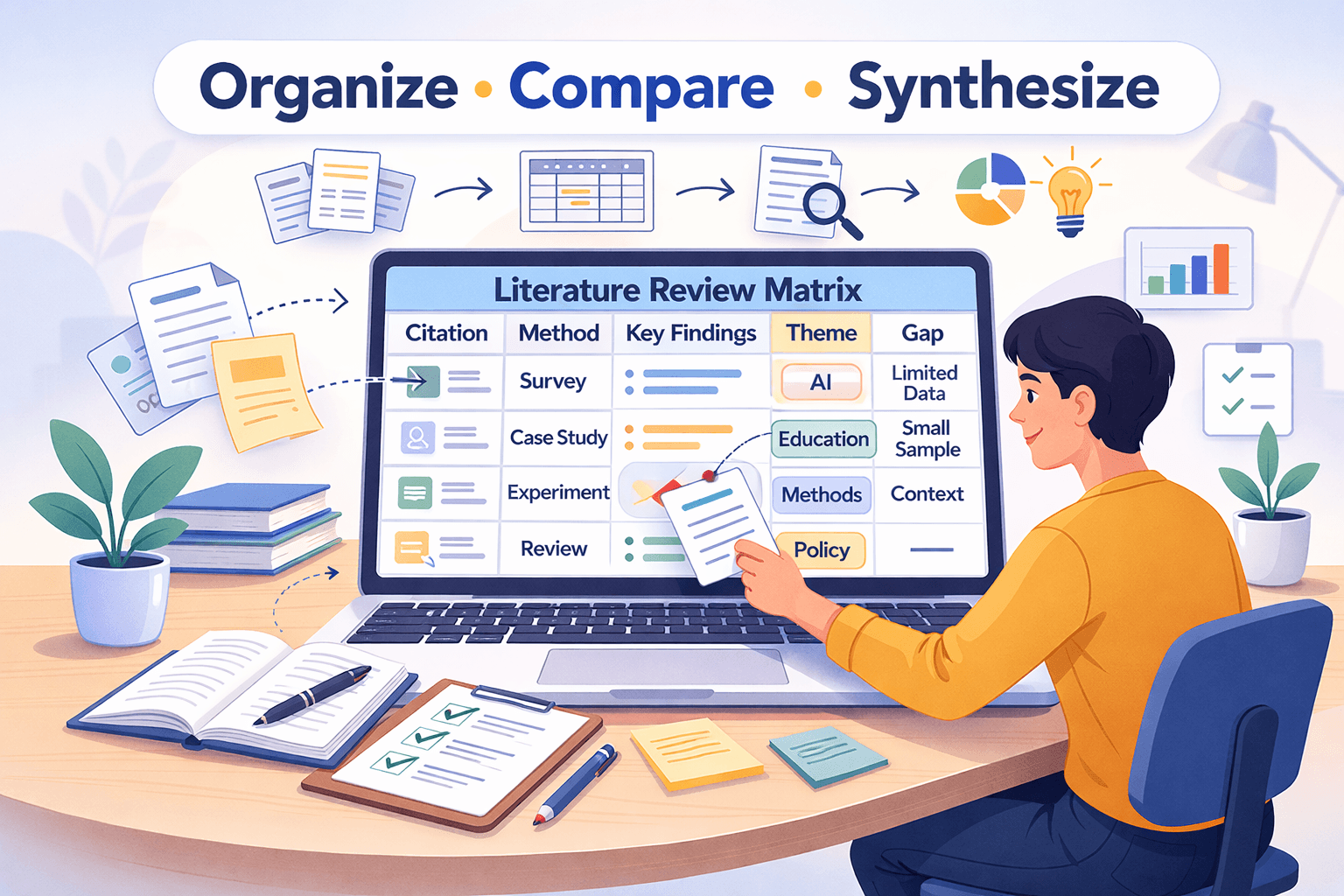
Başlangıçta eklemeniz gereken temel sütunlar:
Alıntı: Tam kaynakça bilgisi (Yazar, Yıl, Başlık, Dergi/Yayınevi). Bunu en baştan doğru girmek, ileride büyük bir biçimlendirme derdini önler.
Araştırma Amacı: Bu çalışma tam olarak hangi soruyu yanıtlamaya çalışıyordu? Amacını bir cümlede özetleyin.
Yöntem: Nitel, nicel ya da karma yöntem olup olmadığını not edin. Örneklem büyüklüğünü ve kimlerin incelendiğini yazın (ör. "kent hastanelerinde çalışan 45 hemşire").
Temel Bulgular: Ana sonuçlar. Okurken bunları kendi kelimelerinizle yazın; sentez için en önemli sütun budur.
Sınırlılıklar: Yazarların belirttiği zayıf yönler ya da sizin fark ettiğiniz noktalar. Örneğin: küçük örneklem, olası yanlılık, dar kapsam.
Çalışmanızla İlişkisi: Bu makaleyi neden tutuyorsunuz? Kendi araştırma sorunuzla nasıl bağlantı kuruyor? Bu sütun odağınızı korur.
Daha derin analiz için isteğe bağlı sütunlar: Temelleri oturttuktan sonra bunlar daha derine inmenize yardımcı olabilir:
Kullanılan Teori veya Çerçeve
İncelenen Temel Değişkenler
Ölçüm Araçları (ör. belirli anket adları)
Tema/Kategori (makaleleri konuya göre gruplamak için)
Belirlenen Araştırma Boşluğu (yazarların hâlâ bilinmediğini söylediği şey)
Kalite Değerlendirmesi (çoğunlukla sistematik derlemelerde kullanılır)
Doğrudan Alıntı (olduğu gibi alıntılamak isteyebileceğiniz gerçekten kritik bir cümle için az kullanın)
<ProTip title="💡 İpucu:" description="Daha az sütunla başlayın ve sonradan genişletin. Basit bir matrisin bakımı daha kolaydır ve bilgi yükünü azaltır." />
Bu Ücretsiz Şablon Yapısını Kullanın
Aşağıdaki basit yapıyı doğrudan yeni bir elektronik tabloya kopyalayabilirsiniz. Temel sütunları ve birkaç faydalı isteğe bağlı alanı bir araya getirir.
Doldururken küçük bir ipucu: Her hücredeki özetlerinizi en fazla bir iki cümleyle sınırlamaya çalışın. Matrisin amacı size hızlı, taranabilir bir genel bakış sunmaktır.
Tek bir hücreye paragraf yazmaya başladıysanız, büyük olasılıkla bilgiyi damıtmak yerine notları kopyalıyorsunuzdur. İhtiyacınız olan, tüm tartışma değil, ana fikirdir.
Matrisi Okurken Doldurun (Sonra Değil)
İnsanların yaptığı en büyük hata, önce bir yığın makaleyi okuyup sonra hafızadan ve dağınık notlardan matrisi oluşturmaya çalışmaktır. Bu, sürecin tüm amacını boşa çıkarır.
Doğru iş akışı entegredir. Bir kaynağı okur ve hemen matrise işlersiniz.
Bu şöyle işler:
Matris şablonunuzu açın.
Bir makale veya bölüm okuyun.
Sonraki kaynağa geçmeden önce, o makalenin tam satırını tablonuza doldurun.
Girerken yazarın noktalarını aktif biçimde kendi kelimelerinizle yeniden ifade edin.
Bunu bu şekilde yapmak, analiz ve sentezin haftalar sonra, ayrıntıları unuttuğunuzda değil; okuma sırasında gerçekleşmesi anlamına gelir. Gelecekteki bir düzenleme işini anında tamamlanan basit bir göreve dönüştürür.
Bu tek alışkanlık, yazmaya oturduğunuzda size ciddi ölçüde zaman ve zihinsel enerji kazandırır.
<ProTip title="🧠 Hatırlatıcı:" description="Bir seferde tek makaleyi işleyin. Veriyi hemen girmek, anlamayı artırır ve sonradan yeniden okumayı azaltır." />
Kendi Kelimelerinizle Yazın
Matrisiniz, özetten cümleleri kopyalayıp yapıştıracağınız bir yer değildir. Asıl değeri, sizi yazarın fikirlerini en baştan kendi dilinize dönüştürmeye zorlamasından gelir.
Bunu anlık kavrayış için bir egzersiz gibi düşünün. Makalenin ne dediğini kaydetmek yerine, sizin incelemeniz için ne anlama geldiğini yazarsınız.
Fark şu şekildedir:
Sadece kopyalamayın: "Sonuçlar, istatistiksel olarak anlamlı pozitif bir korelasyon gösterdi (r = .65, p < .01)."
Bunu şu şekilde yeniden ifade edin: "Pratik süresi ile performans puanları arasında güçlü bir bağlantı bulundu."
Sizin işiniz alıntı depolamak değil; işlenmiş, kullanılabilir fikirlerden oluşan bir havuz yaratmaktır. Böylece gerçek incelemenizi yazmak çok daha kolay hale gelir; çünkü zaten kendi ifadeniz ve anlayışınızla çalışıyorsunuzdur.
Ayrıca, kaynağın özgün ifadesinden hemen uzaklaştığınız için istemeden intihale karşı önemli bir bariyer de oluşturur.
<ProTip title="✍️ Not:" description="Veri girerken yeniden ifade etmek, literatür incelemeniz için hazır kullanılabilir bir fikir havuzu oluşturur." />
Çalışmaları Gruplamak İçin Temaları Kullanın
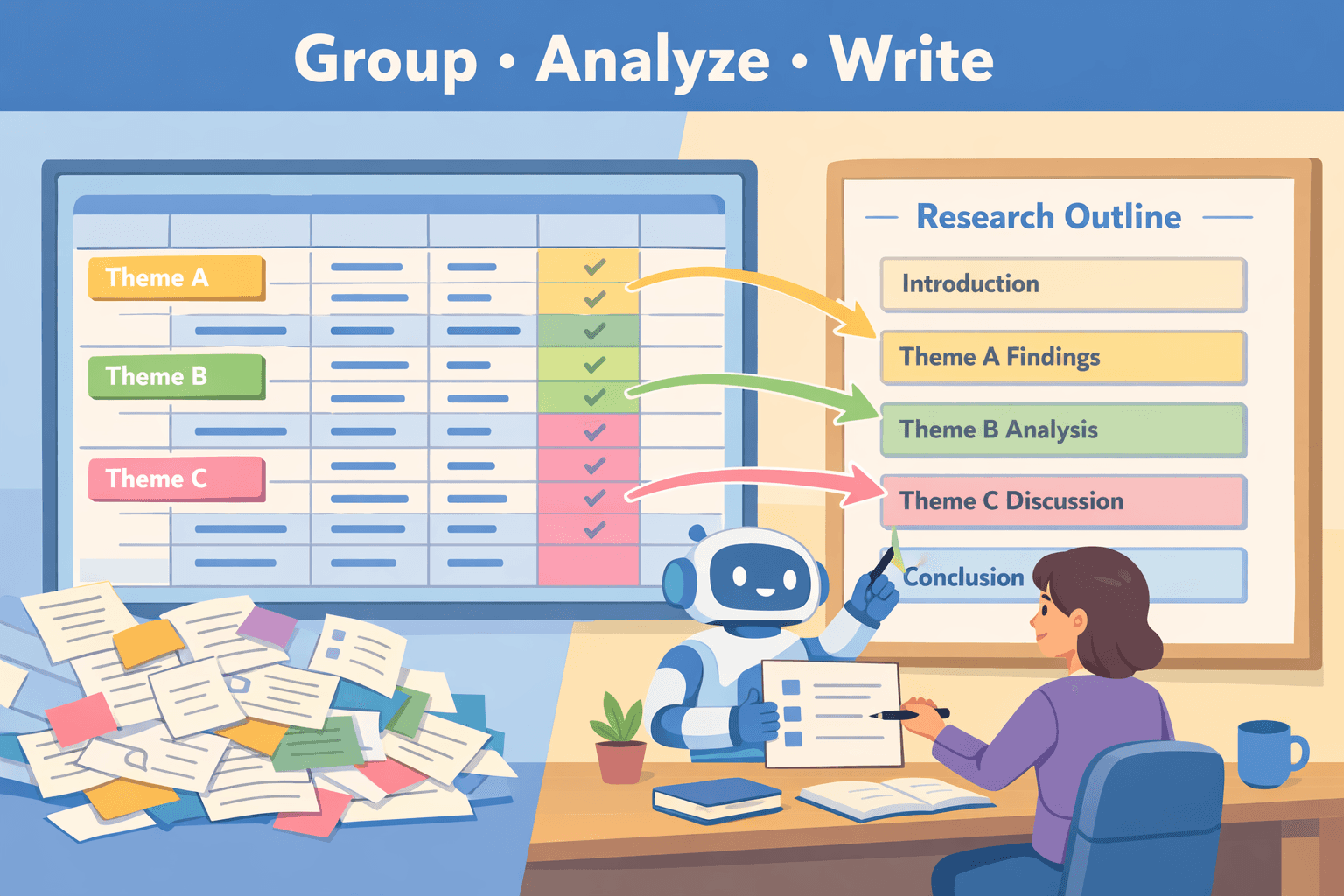
Matrisinize yaklaşık on ila on beş kaynak girdikten sonra örüntüleri fark etmeye başlarsınız. Asıl analiz işte burada başlar.
Elektronik tablonuza gidin ve tüm satırları 'Tema' sütununa göre sıralayın. Bir anda dağınık çalışmalar net kümelere dönüşür. Şunları görebileceksiniz:
Hangi çalışmaların benzer argümanlar ortaya koyduğunu veya benzer sonuçlar bulduğunu.
Hangi makalelerin bulgularının birbirini doğrudan çelişkiye düşürdüğünü.
Hangi konularda bolca araştırma yapıldığını, hangi alanlarda ise yalnızca bir iki makale bulunduğunu; bu da olası boşlukları görünür kılar.
Bu sıralama ve gruplama eylemi, tek tek makaleleri özetlemekten çıkıp literatürü bir bütün olarak sentezlemeye geçişte kritik adımdır.
Örneğin temalarınız şu gruplara ayrılabilir:
Belirli bir teknolojinin öğrenci katılımını artırdığını bulan çalışmalar.
Aynı teknolojinin ölçülebilir bir etkisi olmadığını bildiren çalışmalar.
Etkisinin tamamen öğretmenlerin onu kullanmak için nasıl eğitildiğine bağlı olduğunu savunan çalışmalar.
Bu kümeler, yazılı incelemeniz için doğal bölüm ve alt başlıklara dönüşür; doğrudan net ve etkili bir literatür inceleme taslağına çevrilir. Matrisiniz, argümanınıza temel yapıyı vermiş olur.
<ProTip title="📊 İpucu:" description="Temaları hızlıca gruplamak ve çalışmalar arasındaki baskın eğilimleri görselleştirmek için filtreleri veya renk etiketlerini kullanın." />
Araştırma Boşluklarını Otomatik Olarak Belirleyin
Matrisinizdeki 'Boşluk' sütununun özel bir görevi vardır. Her çalışma için, araştırmanın ne yapmadığını ya da hangi soruyu yanıtlayamadığını not etmekte kullanın.
Kendinize şunu sorun:
Bu çalışma hangi soruyu yanıtsız bıraktı?
Hangi insan grubu, bağlam ya da ortam dahil edilmedi?
Hangi yöntemsel yaklaşım kullanılmadı?
Aynı soruna farklı çalışmalarda bakarken bu sütuna indiğinizde matrisin gücü netleşir. Farklı çalışmalarda tekrar tekrar aynı yanıtsız soruyu ya da aynı eksik popülasyonu görüyorsanız, bu bir tahmin değil, görünür bir örüntüdür.
Tekrarlayan bu eksiklik, doğrudan literatürün kendisinden çıkardığınız meşru bir araştırma boşluğudur.
Bu kanıta dayalı yaklaşım, yalnızca o konuda bir makale görmediğiniz için boşluk olduğunu söylemekten çok daha güçlüdür. Birden fazla araştırmacının karşılaştığı tutarlı bir kör noktayı belgeliyorsunuz.
<ProTip title="🔎 Hatırlatma:" description="Birden fazla makalede tekrar eden boşluklar, araştırma sorunuz için güçlü bir gerekçe oluşturur." />
Matrisi Literatür İncelemenize Dönüştürün
Matris son belge değildir; net bir literatür inceleme taslağı kullanarak yapılandırılmış bir metin oluşturmanıza yardımcı olan düzenli ham maddedir. Onu yazılı bir incelemeye dönüştürmek artık keşif değil, birleştirme meselesidir.
İşte pratik yöntem:
1. Kaynak bazında değil, tema bazında yazın. İncelemenizi bir makale özetleri listesi olarak yapılandırmayın. Sıralanmış 'Tema' sütununa bakın. Taslağınızdaki her bölüm bu tematik kümelerden birini kapsayacaktır.
Şöyle cümleler yazarsınız: "2018 ile 2022 arasındaki bir grup çalışma sürekli olarak ... savundu" ve "Buna karşılık, Smith ve Chen’in daha erken dönem çalışmaları ... buldu.". Burada tek tek makaleleri rapor etmekten çok, tartışmaları ve eğilimleri ele alırsınız.
2. Yöntemleri birlikte tartışın. 'Yöntem' ve 'Örneklem' sütunlarınızı tarayın. Artık alanın yaklaşımı hakkında geniş genellemeler yapabilirsiniz.
Şöyle yazabilirsiniz: "Mevcut kanıtların büyük bölümü küçük ölçekli nitel görüşmelerden geliyor" ya da "On beş çalışmanın yalnızca ikisi boylamsal tasarım kullandı." Bu analiz doğrudan tablonuzdan gelir; yeniden okumadan değil.
3. Boşluğu doğrudan ifade edin. 'Boşluk' sütununuz, kendi çalışmanız için açık ve kanıta dayalı gerekçeyi sunar.
Yazınız şöyle net ifade edebilir: "Sık sık inceleme çağrılarına rağmen, hiçbir çalışma bu çerçeveyi K-12 bağlamına uygulamadı" ya da "Kent ortamlarına odaklanma, kırsal deneyimlerin incelenmeden kalmasına yol açtı."
Bu bir görüş değil; matrisinizin size zaten gösterdiği sonuçtur.
Örnek Matris Kaydı (Mini)
Bitmiş bir matriste birkaç sıkıştırılmış satır şöyle görünebilir:
Alıntı | Amaç | Yöntem | Temel Bulgular | Sınırlılıklar | Tema |
Smith (2022) | Yapay zekânın yazma kalitesi üzerindeki etkisini ölçmek. | Nicel, n=120 öğrenci. | AI grubunda dil bilgisi ve açıklık puanları iyileşti. | Çalışma yalnızca 8 hafta sürdü. | AI yazmayı geliştirir |
Lee (2023) | Öğrencilerin AI araçlarına yönelik algılarını anlamak. | Nitel görüşmeler, n=20. | Öğrenciler, çalışmalarını düzenlerken daha fazla özgüven bildirdi. | Nesnel sonuçlar yerine öz-bildirime dayanıyor. | AI özgüveni artırır |
Rahman (2021) | AI geri bildirimini öğretmen geri bildirimiyle karşılaştırmak. | Karma yöntemler, n=45. | Gruplar arasında nihai deneme puanlarında anlamlı fark bulunmadı. | Görece küçük örneklem. | AI etkisiz görünür |
Bunu taslağa dönüştürmek: Bu üç satıra bakıp hemen sentezleyici bir cümle yazabilirsiniz. Şöyle olabilir:
"Son dönem araştırmalar, AI yazım araçları konusunda karışık bir tablo sunuyor. Bazı çalışmalar, teknik yazma kalitesinde ve öğrenci özgüveninde somut iyileşmelere işaret ediyor. Ancak diğerleri, geleneksel geri bildirim yöntemlerine kıyasla anlamlı bir avantaj bulmuyor."
Bu paragraf, PDF’lere tekrar dönme ihtiyacını azaltır; yine de temel ayrıntıları ve atıfları doğrulamalısınız. Argüman ve kanıt, doğrudan tablonuzdaki düzenli verilerden gelir.
Tezler ve Sistematik Derlemeler İçin İleri Düzey İpuçları
Tez ya da sistematik derleme gibi büyük projelerde, özellikle kapsam taraması ile sistematik derleme arasındaki farkı ayırt ederken, matrisinizi daha karmaşık analizleri yönetmek için daha da ileri taşıyabilirsiniz.
Alan의 gelişimini izlemek için yılına göre sıralayın. Kronolojik sıra bir hikâye ortaya çıkarabilir. İlk çalışmaların çoğunlukla küçük ölçekli, keşif amaçlı görüşmeler olduğunu; daha yeni çalışmaların ise daha büyük, deneysel tasarımlar kullandığını görebilirsiniz.
Bu ilerleme kendi başına incelemenizde bir bölüm olabilir; araştırma sorularının ve yöntemlerin zaman içinde nasıl olgunlaştığını gösterir.
Sistematik derlemeler için bir 'Kalite' sütunu ekleyin. Bir değerlendirme aracı kullanarak (ör. CASP, MMAT veya yanlılık riski kontrol listeleri) 'Kalite' sütunu ekleyin. Raporlamayı yönlendirmek için PRISMA’yı kullanın, kalite puanlaması için değil.
Her çalışmanın sağlamlığını kriterlerinize göre değerlendirmek için basit bir ölçek (Yüksek/Orta/Düşük gibi) kullanın. Bu, kanıtı tartmanıza yardımcı olur.
Yazınızda, yöntemsel açıdan en güçlü çalışmaların düzenli olarak belirli bir sonuca işaret ettiğini, daha zayıf kanıtların ise daha bölünmüş olduğunu belirterek daha güçlü çıkarımlar yapabilirsiniz.
Görsel bir genel bakış için renk kodlaması kullanın. 'Temel Bulgular' veya 'Tema' sütununuzda her ana temaya ya da bulguya bir vurgu rengi atayın. Bir bakışta, hangi argümanların en fazla desteğe sahip olduğunu (aynı renkten çokça) ve dikkat çeken çelişkilerin nerede olduğunu (bir kümeye dağılmış farklı bir renk) görürsünüz.
Elektronik tablonuz, basit bir tablodan çıkıp tüm literatür birikiminin doğrudan, görsel bir haritasına dönüşür.
Kaçınılması Gereken Yaygın Hatalar
Matris güçlü bir araçtır, ancak onu daha az etkili hale getiren alışkanlıklara düşmek kolaydır. İşte düzenli sisteminizi tekrar dijital bir not yığınına dönüştürebilecek yaygın hatalar:
Tek bir hücreye deneme yazmak. Amaç kısa bir özet, tam kapsamlı bir özet değildir. Bir hücre iki cümleden fazlasını alıyorsa, muhtemelen fikri damıtmıyorsunuzdur.
Özeti kelimesi kelimesine kopyalamak. Bu, metni bir yerden başka bir yere taşımaktır; anlamak değildir. Değer katmaz ve intihal riski oluşturur.
'İlişki' sütununu boş bırakmak. Bir makalenin çalışmanız için neden önemli olduğunu açıklayamıyorsanız, belki de ona ihtiyacınız yoktur. Bu sütun incelemenizi odakta tutar.
Matrisin bayatlamasına izin vermek. Yeni bir kaynak bulduğunuzda satırını hemen ekleyin. Güncel olmayan bir matris, işe yaramaz bir matristir.
Bunu bir depolama kutusu gibi görmek. Matris, notlar için bir son durak değildir. Tüm amacı karşılaştırma ve sentez için bir çalışma alanı olmaktır. Satırlar arasında aktif olarak bakıp örüntüleri ve çelişkileri görmüyorsanız, asıl noktayı kaçırıyorsunuz demektir.
Unutmayın, matris yalnızca çalışmaları arasındaki ilişkileri görmek için kullanırsanız işe yarar. Aksi halde sadece daha şık bir klasördür.
Son Kontrol Listesi
Matristeki verilerden taslağa geçmeden önce bu listeyi gözden geçirin. Elektronik tablonuz şunları içermelidir:
Konu için en kritik tüm kaynakları içermelidir.
Her kaynağı kendi kelimelerinizle özetlemelidir; kopyalanmış özetler değil.
Her makale için net ve tutarlı etiketler veya temalar atanmış olmalıdır.
Farklı çalışmalarda kullanılan yöntemlerdeki örüntüleri ortaya koymalıdır.
Mevcut araştırmanın nerede yetersiz kaldığını, çalışmanızın hangi boşlukları dolduracağını açıkça göstermelidir.
Her kaynağın kendi araştırma sorunuzla nasıl bağlantı kurduğunu ya da onu nasıl bilgilendirdiğini açıkça belirtmelidir.
Basit bir test: Tamamlanmış matrisinize baktığınızda notlardan ve temalardan araştırma sorunuzun cevabının şekillendiğini net biçimde görebiliyorsanız, yazmaya hazırsınız demektir.
Hâlâ kopuk bir liste gibi görünüyorsa, 4. ve 5. adımlara daha fazla zaman ayırın; temalarınızı sıralayın, karşılaştırın ve rafine edin.
Matristen Anlamlı Bir İncelemeye
Bir literatür inceleme matrisi yalnızca düzenli kalmanın bir yolu değildir; kaynaklarınız hakkında daha net düşünmenin de bir yoludur. Dağınık okumaları yapılandırılmış bir tabloya dönüştürerek pasif not almaktan aktif karşılaştırma ve senteze geçersiniz. Örüntüler görünür hale gelir, anlaşmazlıkları açıklamak kolaylaşır ve araştırma boşlukları zorlanmış gibi değil, doğal biçimde ortaya çıkar.
<CTA title="Matrisinizi Taslağa Dönüştürün" description="Matris notlarınızdan yapılandırılmış literatür incelemesi bölümleri oluşturun. Jenni, veriden yazıya daha hızlı geçmenize yardımcı olur." buttonLabel="Jenni’yi Ücretsiz Dene" link="https://app.jenni.ai/register" />
Matrisinizi okudukça oluşturduğunuzda, aynı zamanda literatür incelemenizin temelini de inşa ediyorsunuz. Etiketlediğiniz temalar bölüm başlıklarınız olur, özetlediğiniz bulgular kanıtlarınız olur ve kaydettiğiniz boşluklar araştırma gerekçenizi oluşturur. Basit bir şablonla başlayın, girişlerinizi kısa tutun ve kendi kelimelerinizle yazın; matris hem analizinizde hem de yazınızda size rehberlik etsin.