Oleh
Nathan Auyeung
—
Penulisan Proposal Hibah untuk Organisasi Nirlaba: Cara Memenangkan Lebih Banyak Pendanaan

Nathan Auyeung
Akuntan Senior di EY
Lulus dengan gelar Sarjana Akuntansi, menyelesaikan Diploma Pascasarjana Akuntansi

Sebagian besar organisasi nirlaba tidak memiliki masalah penulisan hibah. Mereka memiliki masalah pemilihan hibah. Seorang petugas pengembangan dengan waktu dua belas jam seminggu menghabiskan waktu tersebut untuk tersebar di enam aplikasi, tidak ada satupun yang mendapatkan perhatian yang akan membuat mereka kompetitif, dan tingkat kemenangan yang dihasilkan dibaca sebagai kegagalan penulisan.
Aritmatika di balik itu sangat kejam. National Science Foundation memperkirakan dalam pernyataan beban publik mereka sendiri bahwa satu proposal federal membutuhkan waktu 120 jam untuk dipersiapkan, dan NIH mendanai 13 persen dari aplikasi proyek penelitian pada tahun fiskal 2025. Artikel ini adalah tentang menghabiskan jam-jam tersebut di tempat yang menghasilkan konversi.
<CTA title="Habiskan Lebih Sedikit Waktu pada Draf, Lebih Banyak pada Kasus" description="Jenni menyusun dan mendraf proposal Anda sehingga tim Anda dapat fokus pada bukti dan kesesuaian" buttonLabel="Coba Jenni Gratis" link="https://app.jenni.ai/register" />
Berapa Biaya Sebenarnya dari Aplikasi Hibah bagi Anda
Sebelum memutuskan apakah akan mengajukan permohonan, hargai aplikasi tersebut dalam jam staf seperti Anda menilai proyek lainnya. Kisaran di bawah ini adalah tipikal untuk organisasi nirlaba skala kecil hingga menengah. Hanya angka federal yang merupakan perkiraan resmi, dan itu berasal dari NSF.
Jenis penyandang dana | Waktu persiapan tipikal | Penghargaan tipikal | Waktu untuk keputusan |
Program pemberian perusahaan | 8 hingga 20 jam | 2.500 hingga 25.000 dolar | 4 hingga 12 minggu |
Yayasan komunitas | 15 hingga 25 jam | 5.000 hingga 50.000 dolar | 6 minggu hingga 4 bulan |
Yayasan swasta besar | 40 hingga 80 jam | 50.000 hingga 500.000 dolar | 3 hingga 9 bulan |
Penghargaan federal | 120 jam (perkiraan NSF) | 100.000 dolar ke atas | 6 hingga 9 bulan |
Sekarang lakukan pembagian. Aplikasi 20 jam untuk hibah komunitas senilai 10.000 dolar dengan peluang satu banding tiga bernilai sekitar 165 dolar per jam dalam nilai yang diharapkan. Aplikasi federal 120 jam senilai 250.000 dolar dengan peluang satu banding delapan bernilai sekitar 260 dolar per jam. Keduanya dapat dipertahankan. Aplikasi 60 jam ke yayasan yang belum pernah mendanai bidang masalah Anda hampir tidak bernilai apa-apa, tidak peduli seberapa bagus penulisannya.
<ProTip title="🧮 Lakukan perhitungan:" description="Kalikan nilai penghargaan dengan peluang jujur Anda, lalu bagi dengan jumlah jam. Jalankan ini pada setiap peluang sebelum dimasukkan ke dalam kalender, bukan sesudahnya" />
Temukan Penyandang Dana Sebelum Anda Menulis Proposal
Prospeksi adalah jam dengan daya ungkit tertinggi dalam seluruh proses, dan ini adalah langkah yang paling sering dilewati. Tiga sumber mencakup hampir semua kebutuhan.
Grants.gov memuat setiap peluang diskresioner federal, dan pendaftarannya saja dapat memakan waktu beberapa minggu, jadi mulailah sebelum Anda memiliki tenggat waktu tertentu. Candid mengelola database penyandang dana swasta terbesar, dan banyak perpustakaan umum menyediakan akses gratis ke database tersebut melalui Jaringan Informasi Pendanaan (Funding Information Network), yang layak ditanyakan ke cabang setempat Anda sebelum membayar langganan.
Sumber ketiga adalah sumber yang membedakan orang yang meneliti penyandang dana dengan orang yang mencari mereka. Setiap yayasan swasta di Amerika Serikat mengajukan Formulir 990-PF tahunan kepada Internal Revenue Service, dan laporan tersebut mencantumkan hibah yang sebenarnya dibayarkan oleh yayasan tersebut: penerima, jumlah, dan tujuan yang dinyatakan. Laporan-laporan tersebut gratis untuk dibaca di ProPublica Nonprofit Explorer.
Empat hal yang perlu dicatat saat Anda berada di sana. Ukuran hibah median, karena Anda harus meminta dalam kisaran mereka, bukan di atasnya. Ukuran organisasi yang mereka danai, karena yayasan yang hanya mendanai kelompok dengan anggaran 5 juta dolar tidak akan memulai dengan Anda. Apakah mereka memperbarui hibah atau sengaja merotasi penerima. Dan apakah ada penerima hibah saat ini yang terlihat mirip dengan organisasi Anda, yang merupakan sinyal terkuat bahwa Anda memenuhi syarat dalam praktik dan bukan hanya di atas kertas.
Sebuah yayasan yang pemberian terbesarnya tahun lalu adalah 15.000 dolar tidak akan mendanai permintaan sebesar 90.000 dolar, betapapun bagusnya penulisan proposalnya. Mengetahui hal itu membutuhkan waktu sekitar delapan menit dan menghemat empat puluh jam kerja di belakangnya.
<ProTip title="🔎 Cari tahu:" description="Sebelum mengajukan aplikasi yayasan apa pun, bacalah dua pengajuan 990-PF terakhir dan catat jumlah median hibah. Kemudian mintalah angka di dalam kisaran tersebut" />
Haruskah Anda Mendaftar Sama Sekali?
Berikut adalah pemeriksaan yang memakan waktu sepuluh menit dan menghemat waktu berminggu-minggu. Nilai masing-masing dari enam kriteria di bawah ini dari 0 hingga 2, di mana 0 berarti tidak, 1 berarti sebagian, dan 2 berarti ya dengan bukti.
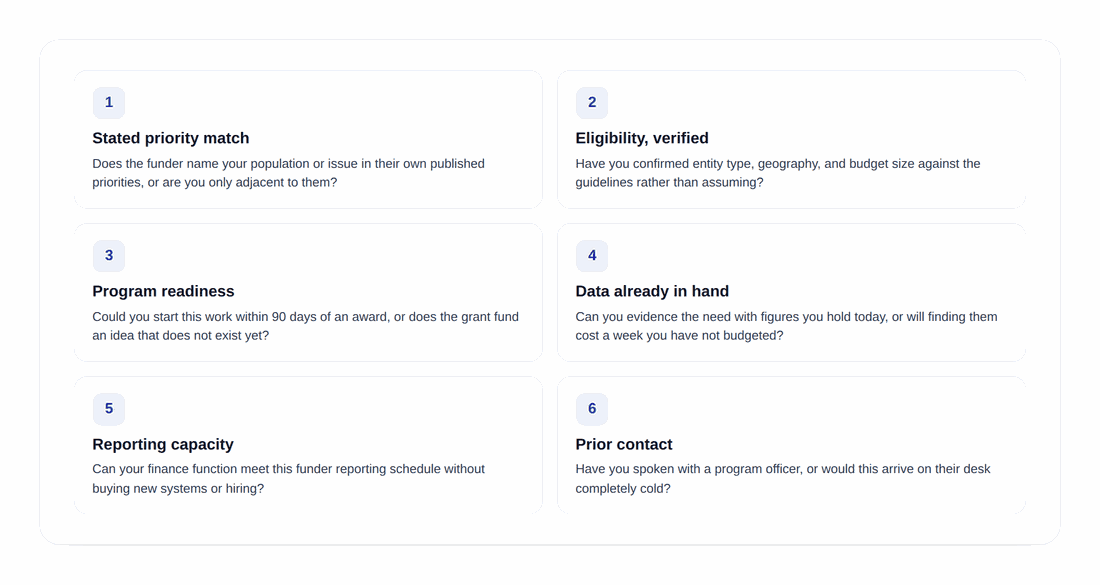
Tersedia dua belas poin. Di bawah delapan, jangan mendaftar pada siklus ini, dan alokasikan waktu tersebut ke dalam dua aplikasi yang mendapat nilai lebih tinggi. Skor 10 ke atas adalah tempat di mana sebagian besar proposal yang didanai berada sebelum satu kata pun ditulis.
Kriteria yang paling sering dimanipulasi orang adalah yang pertama. "Berdekatan dengan prioritas mereka" bukanlah kecocokan prioritas. Jika sebuah yayasan mendanai pendidikan anak usia dini dan Anda menjalankan program pendampingan remaja, fakta bahwa keduanya melibatkan anak muda tidak akan bertahan saat berhadapan dengan petugas program yang telah membaca empat puluh aplikasi bulan ini.
Kriteria yang paling sering dilewati orang adalah yang terakhir. Kontak lebih penting di dunia yayasan daripada di tempat lain, dan petugas program, sebagai aturan, sangat bersedia meluangkan waktu lima belas menit di telepon untuk memberi tahu Anda apakah ini sepadan dengan waktu Anda. Candid mengelola kumpulan sumber daya gratis yang baik untuk menemukan orang-orang tersebut sejak awal.
<ProTip title="🤝 Hubungan yang utama:" description="Ajukan satu pertanyaan kepada petugas program yang tidak dapat Anda jawab dari panduan. Ini menunjukkan bahwa Anda membacanya dan memulai hubungan yang bertahan lebih lama dari aplikasi ini" />
Di Mana Proposal Nirlaba Kehilangan Poin
Reviewer tidak membaca proposal Anda seperti Anda menulisnya. USDA National Institute of Food and Agriculture mencatat dalam lembar fakta penulisan hibah mereka bahwa seorang reviewer dapat menangani sepuluh hingga dua puluh proposal dalam satu siklus. Proposal Anda sedang disaring, dan empat hal yang sama selalu mengurangi poin setiap kali.
Pernyataan kebutuhan menggambarkan kesenjangan anggaran Anda. "Kami tidak dapat memenuhi permintaan karena keterbatasan dana" memberi tahu penyandang dana bahwa mereka sedang menutupi lubang. Deskripsikan apa yang terjadi pada orang-orang yang Anda layani, dengan data lokal, sehingga permintaan tersebut menjadi pembelian hasil.
Tujuan tidak dapat diukur. "Meningkatkan hasil bagi peserta" tidak dapat dinilai, didanai, atau dilaporkan. Setiap tujuan membutuhkan angka, populasi, dan tanggal.
Anggaran bertentangan dengan narasi. Jika desain program menggambarkan tiga lokasi dan anggaran mendanai dua koordinator, reviewer akan berasumsi Anda belum memikirkannya dengan matang. Bacalah kedua bagian tersebut secara silang sebelum Anda mengirimkannya, setiap saat.
Rencana evaluasi bersifat aspiratif. Menyebutkan teori perubahan bukanlah rencana evaluasi. Menyebutkan instrumen, orang yang mengumpulkan data, irama, dan ambang batas keberhasilan adalah rencana evaluasi. Pusat penulisan University of North Carolina memiliki anggaran dan lini masa kerja yang layak untuk ditiru strukturnya.
Apa yang Harus Dilakukan Saat Anda Ditolak
Anda akan ditolak jauh lebih sering daripada didanai, dan organisasi yang berkembang paling cepat adalah organisasi yang memperlakukan penolakan sebagai data, bukan sebagai vonis.
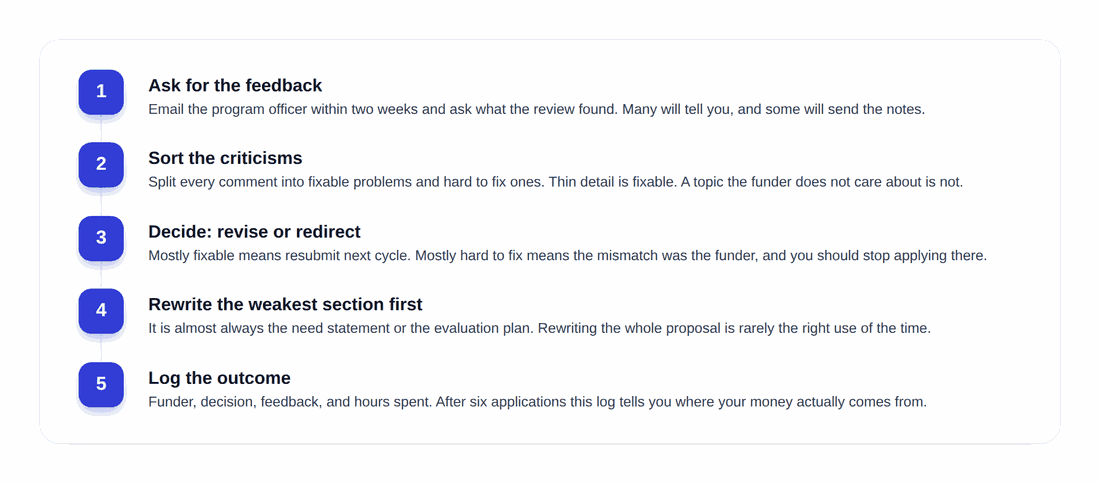
Langkah kedua adalah langkah yang memiliki bobot paling besar, dan memiliki kerangka kerja yang berguna di belakangnya. National Institute of Allergy and Infectious Diseases menerbitkan perbedaan antara masalah yang dapat diperbaiki dan yang sulit diperbaiki. Penulisan yang buruk, detail yang hilang, dan argumen signifikansi yang tidak meyakinkan adalah hal yang dapat diperbaiki. Topik yang menurut reviewer tidak penting, atau metode yang menurut mereka tidak akan berhasil, adalah hal yang tidak dapat diperbaiki.
Terjemahkan hal itu ke dunia nirlaba dan itu menjadi aturan keputusan yang sederhana. Jika umpan baliknya adalah tentang bagaimana Anda menyampaikannya, kirimkan kembali pada siklus berikutnya dengan bagian terlemah yang ditulis ulang. Jika umpan baliknya adalah tentang apa yang Anda lakukan atau untuk siapa Anda melakukannya, penyandang dana memberi tahu Anda bahwa mereka bukan penyandang dana Anda. Percayalah pada mereka dan habiskan 40 jam berikutnya di tempat lain.
<ProTip title="🛑 Aturan berhenti:" description="Tiga penolakan dari penyandang dana yang sama tanpa umpan balik substantif berarti berhenti. Keheningan mereka adalah jawaban dan jam kerja Anda terbatas" />
Bangun Perpustakaan Boilerplate Sebelum Anda Membutuhkannya
Setiap panduan penulisan hibah menyarankan untuk menggunakan kembali materi Anda. Hampir tidak ada dari mereka yang menjelaskan bagian mana yang aman untuk digunakan kembali, yang merupakan satu-satunya pertanyaan yang penting.
Simpan satu folder tunggal, diperbarui setiap tiga bulan, yang berisi sejarah organisasi Anda, pernyataan misi, biodata staf saat ini, daftar dewan, laporan keuangan audited terbaru, sertifikat asuransi, surat penetapan pajak, angka hasil tetap, dan paragraf pendek tentang setiap program. Ini adalah fakta tentang Anda. Hal-hal ini tidak berubah di antara penyandang dana, dan menulis ulangnya dari awal di bawah tekanan tenggat waktu adalah cara terjadinya kesalahan.
Empat hal ini tidak boleh berupa boilerplate:
Pernyataan kebutuhan. Harus mengenai populasi spesifik yang dipedulikan oleh penyandang dana ini
Desain program. Penyandang dana sering kali mendukung sebagian dari program, bukan seluruhnya
Anggaran. Penyandang dana yang berbeda mengizinkan biaya tidak langsung dan pos anggaran yang berbeda
Alasan mengapa Anda. Paragraf apa pun yang menjelaskan kesesuaian antara pekerjaan Anda dan prioritas mereka
Pengujiannya sederhana. Jika sebuah paragraf akan terbaca sama persis dalam aplikasi ke penyandang dana mana pun, paragraf tersebut termasuk dalam perpustakaan boilerplate. Jika tidak, tulislah yang baru. Waspadai juga jebakan menggunakan kembali statistik selama tiga tahun aplikasi tanpa memeriksa ulang, karena angka yang mutakhir pada tahun 2024 diam-diam menjadi masalah kredibilitas pada tahun 2027.
<ProTip title="♻️ Aturan penggunaan kembali:" description="Beri stempel tanggal pada setiap fakta di folder boilerplate Anda. Apa pun yang lebih lama dari delapan belas bulan harus diperiksa ulang sebelum dimasukkan ke dalam pengiriman" />
Cara Berkembang Dari 25.000 Menjadi 250.000
Sebagian besar organisasi mencapai batas atas bukan karena kemampuan menulis mereka mandek, melainkan karena infrastruktur mereka yang mandek. Penyandang dana yang lebih besar menilai risiko, dan penilaian risiko adalah tentang sistem, bukan tentang kalimat.
Naik ke tingkat berikutnya biasanya berarti tiga hal ini akan datang secara berurutan. Pertama, rekam jejak pelaporan: tiga atau empat hibah diselesaikan tepat waktu dengan laporan keuangan dan program yang lengkap, yang merupakan hal paling persuasif yang dapat ditunjukkan oleh organisasi kecil. Kedua, fungsi evaluasi, yang berarti seseorang yang pekerjaannya mencakup pengumpulan data hasil, bukan melakukannya di sela-sela pelaksanaan program. Ketiga, kematangan finansial: laporan keuangan audited, dewan yang meninjaunya, dan untuk pekerjaan federal, tingkat biaya tidak langsung yang dinegosiasikan.
Perhatikan bahwa tidak satupun dari hal-hal tersebut adalah peningkatan penulisan. Jika Anda secara konsisten menjadi finalis untuk hibah 100.000 dolar dan tidak pernah memenangkannya, hambatan tersebut hampir pasti ada di kolom keuangan dan evaluasi, bukan narasi. Diagnosis itu layak dibuat sebelum Anda menyewa konsultan untuk memperbaiki prosa Anda.
Dua pergeseran yang layak diupayakan saat Anda naik tingkat. Yang pertama adalah komitmen multi-tahun daripada pembaruan tahunan, yang menghapus seluruh siklus aplikasi dari kalender Anda dan memungkinkan Anda merencanakan staf lebih dari dua belas bulan. Yang kedua adalah dukungan operasional umum alih-alih pendanaan proyek yang dibatasi. Hibah yang dibatasi lebih mudah dimenangkan dan diam-diam lebih mahal untuk dijalankan, karena masing-masing membawa kategori anggaran sendiri, format pelaporannya sendiri, dan serangkaian hal yang tidak boleh Anda belanjakan. Organisasi yang menjalankan delapan hibah terbatas berarti menjalankan delapan birokrasi kecil.
Keduanya bukanlah sesuatu yang Anda minta dalam aplikasi pertama. Keduanya menjadi permintaan yang wajar setelah penyandang dana melihat Anda menyelesaikan dua hibah dengan bersih, yang merupakan satu alasan lagi mengapa rekam jejak pelaporan lebih penting daripada penulisan.
Penting juga untuk mengetahui seperti apa konsultan yang sah itu. Kode Standar Etika Association of Fundraising Professionals mewajibkan anggota untuk menolak komisi atau kompensasi berdasarkan persentase dari dana yang terkumpul. Siapa pun yang menawarkan untuk menulis proposal Anda demi bagian dari penghargaan berada di luar norma profesional, dan banyak penyandang dana tidak akan menerima anggaran yang berisi pengaturan tersebut.
Lebih Sedikit Aplikasi, Peluang Lebih Baik
Organisasi yang menang secara konsisten jarang sekali adalah organisasi dengan penulis terbaik. Mereka adalah organisasi yang menolak sebagian besar peluang, menginvestasikan jam kerja yang dihemat ke dalam dua atau tiga peluang yang benar-benar cocok, dan memperlakukan setiap penolakan sebagai informasi tentang dari mana uang mereka sebenarnya berasal. Yayasan memberikan 117,15 miliar dolar pada tahun 2025 dan Grants.gov mencantumkan lebih dari 1.000 program federal. Tidak ada kekurangan uang. Yang ada adalah kekurangan aplikasi yang jelas-jelas dimiliki oleh penyandang dana yang membacanya.
<CTA title="Berikan Dua Aplikasi Terbaik Anda Waktu yang Layak Mereka Dapatkan" description="Draft lebih cepat, kutip dengan benar, dan jaga konsistensi setiap bagian mulai dari pernyataan kebutuhan hingga narasi anggaran" buttonLabel="Coba Jenni Gratis" link="https://app.jenni.ai/register" />
Mulailah dengan skor lanjut atau tidak (go/no-go) pada tiga peluang Anda berikutnya. Singkirkan yang terendah minggu ini. Masukkan jam-jam itu ke dalam pernyataan kebutuhan dari yang tertinggi, dan berikan draf yang sudah selesai kepada seseorang di luar organisasi Anda untuk dibaca secara objektif. Mendapatkan nada yang tepat dan metode yang dijelaskan secara tepat adalah hal yang penting, tetapi keduanya tidak akan menyelamatkan aplikasi yang seharusnya tidak pernah ditulis.