Dwara
Justin Wong
—
Thesis vs Research Article: Key Differences Explained

Justin Wong
Vikas Prabhari
Graduated kiya Bachelor's me Global Business & Digital Arts, Minor me Entrepreneurship

Ek thesis aur ek research article bilkul ek hi study ko report kar sakte hain aur fir bhi lagbhag puri tarah se alag documents ho sakte hain. Iska karan yeh hai ki unhe alag-alag kaamo ke liye banaya jata hai. Ek thesis ko assess (mulyankan) kiya jata hai. Ek article ka use kiya jata hai.
Baaki sab kuch usi se juda hai: ise kaun padhta hai, yeh kitna lamba hota hai, isme kitna method detail hona chahiye, aur ise reject karne ki power kiske paas hoti hai.
<CTA title="Write for the Reader You Actually Have" description="Jenni aapko un audience ke liye documents structure karne me madad karta hai jo unhe judge karenge" buttonLabel="Try Jenni Free" link="https://app.jenni.ai/register" />
The Six Differences That Matter
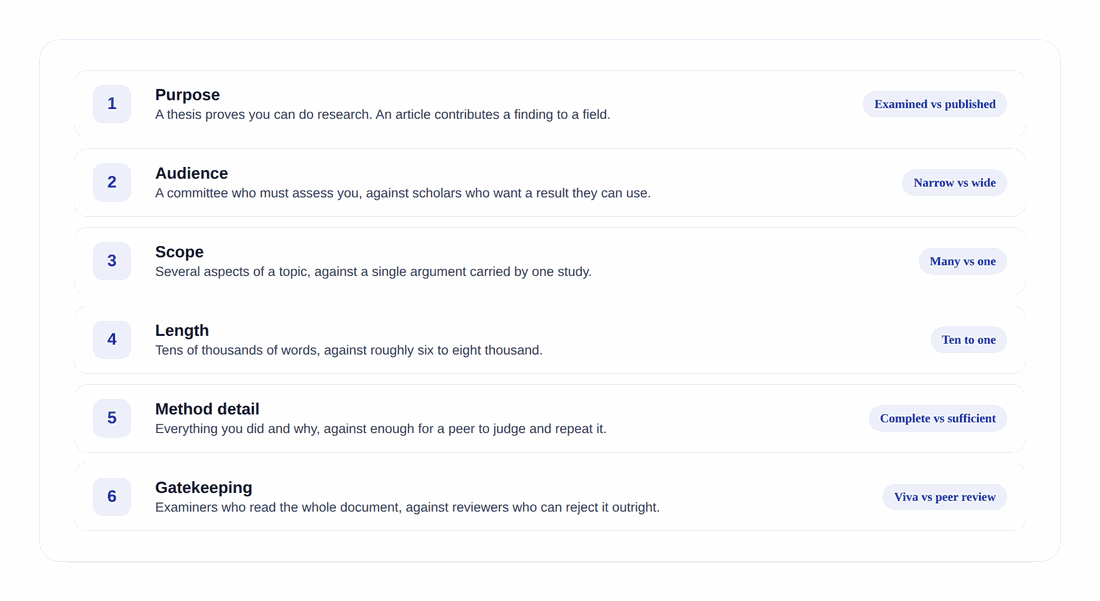
Purpose. Ek thesis yeh prove karti hai ki aap ek required standard tak research kar sakte hain. Ek article kisi field me ek finding ka yogdan deta hai. Pehla aapke baare me hai, dusra result ke baare me hai.
Audience. Ek committee jo aapko assess karti hai, banisbat un scholars ke jo aisa result chahte hain jise ve use kar sakein. University of Toronto ki research guide ise seedhe shabdo me kehti hai: ek thesis ki audience aapki committee hoti hai, jabki ek article ko fellow researchers, professionals, policymakers, educators, ya general audience dwara padha ja sakta hai, aur aapke manuscript ko uske anusar modify karna hoga.
Scope. Chicago School ki library guide ise is tarah summarize karti hai ki ek dissertation me kisi topic ke kai aspects par charcha hoti hai, jabki ek article me kisi topic ke ek single aspect par charcha hoti hai. Ek article ek central message ke aas-paas organized hota hai.
Length. Lagbhag das guna ka antar. Wahi guide ek dissertation ke liye lagbhag 20,000 words aur ek journal article ke liye 8,000 words ki maximum limit batati hai; Open University batati hai ki 100,000 words tak ki theses lagbhag 6,000 words ke articles ban jati hain. Exact figures discipline aur degree ke hisab se badalte hain, lekin scale ka difference wahi rehta hai.
Method detail. Ek thesis har us cheez ko explain karti hai jo aapne ki aur aapne use kyu chuna, kyunki aapke judgment ka exam ho raha hota. Ek article ek peer ko evaluate karne aur kaam ko repeat karne ke liye kaafi details deta hai. Examiners ko dhyan me rakhkar di gayi justification sabse pehle hatai jati hai.
Gatekeeping. Examiners pura document padhte hain aur corrections ke liye keh sakte hain. Reviewers ise seedhe reject kar sakte hain, aksar sabse pehle abstract aur figures padhne ke baad. Power ka yahi difference tay karta hai ki har document ki shuruaat kaise honi chahiye.
Side by Side
Thesis or dissertation | Research article | |
Assessed by | Examiners, aksar ek viva ke sath | Peer reviewers aur ek editor |
Typical length | Hazaaro words (tens of thousands) | Lagbhag 6,000 se 8,000 words |
Arguments carried | Kai saare, alag-alag chapters me | Ek |
Literature review | Ek ya usse zyada poore chapters | Kuch paragraphs jo is study ko position karte hain |
Authorship | Aap, akele | Aamtaur par ek team, jisme authorship order pehle se tay karna hota hai |
Outcome | Ek degree, aur ek repository me deposit | Literature me ek citable contribution |
Reflection | Aksar expected hota hai | Shayad hi kabhi swikar kiya jata hai |
<ProTip title="👥 Authorship:" description="Apne supervisor ke sath author order article likhne se pehle tay karein, baad me nahi. Ek thesis ka by definition ek hi author hota hai aur ek article ka aamtaur par nahi, aur yeh baat kaam se pehle karna baad ki tulna me bahut aasan hota hai" />
<ProTip title="🔬 Method detail:" description="Har methodological sentence se puchein ki kya yeh kisi peer ko study repeat karne me madad karta hai ya yeh kisi examiner ko prove karne ke liye tha ki aapne alternatives par vichar kiya tha. Sirf pehle tarah ka hi article me hona chahiye" />
The Structural Differences Nobody Warns You About

Abstract alag kaam karta hai. Ek thesis abstract pure document ko summarize karta hai. Ek article abstract ek screening device hota hai: yeh tay karta hai ki editor paper ko aage bhejega ya nahi aur kya koi researcher ise aage padhega. Ise finding ko samne rakhna hota hai, na ki study ko describe karna.
Introduction invert ho jata hai. Ek thesis introduction ek project ko set up karta hai, aksar kai pages me. Ek article introduction field se lekar gap aur fir contribution tak narrow hota hai, aamtaur par 800 words ke andar, aur contribution ko baad ke liye bachane ke bajaye shuruat me hi de deta hai.
Limitations badal jati hain. Ek thesis me, details limitations self-awareness ko darshati hain aur credit dilati hain. Ek article me, ye zaroori hain lekin brief hoti hain, aur ek aisa limitations section jo contribution ko kamzor kare, rejection ka karan banta hai. Wo batayein jo claim ko limit karta hai, na ki wo sab kuch jo behtar ho sakta tha.
Reflexivity shayad na bache. Field aur journal ke aadhar par, reflex voice jiski kai thesis programs me zaroorat hoti hai, uska ek article me koi sthaan nahi hota.
One Thing They Share
Dono ko un logo dwara examine kiya jata hai jo check karenge. Ek thesis ko un examiners dwara bariki se dekha jata hai jo har page padhte hain, aur ek article ko un reviewers dwara jinhe aapke dwara cite kiye gaye literature ki jankari ke liye chuna jata hai. Dono me, ek misrepresented source ya evidence se bada claim kisi bhi kharab writing se zyada nuksan pahunchata hai.
<ProTip title="🎯 One message:" description="Apne article ko draft karne se pehle wo single sentence likhein jo aapka article prove karta hai. Agar aapki thesis se aise teen sentences bante hain, to iska matlab teen papers hain, aur unhe ek me fit karne ki koshish karna hi converted chapter ke reject hone ka sabse bada karan hai" />
<ProTip title="📰 Abstract first:" description="Article me move karte samay sabse pehle abstract ko rewrite karein. Yeh aapko us single finding ko name karne ke liye force karta hai, aur ek baar jab aapke paas wo sentence ho, to baaki ka cut karna obvious ho jata hai" />
Which One Are You Writing?
Agar jawab ek thesis hai, to examiners ke liye likhein: judgment demonstrate karein, apne choices ko defend karein, aur working ko show karein. Agar yeh ek article hai, to us reader ke liye likhein jo tees seconds ke andar tay kar raha hai ki aage padhna hai ya nahi: contribution se shuruat karein, ek argument rakhein, aur har us cheez ko cut karein jo sirf yeh prove karne ke liye thi ki aap careful the.
<CTA title="Write the Version the Reader Needs" description="Us audience ke liye structure, draft, aur cite karein jo aakhirkar document ko judge karegi" buttonLabel="Try Jenni Free" link="https://app.jenni.ai/register" />
Agar aap ek se dusre me move kar rahe hain, to thesis ko research paper me convert karne par companion piece conversion sequence, prior publication question, aur apne khud ke text ko reuse karne ke baare me COPE kya kehta hai, isko cover karta hai. Dono ek hi foundation par tike hain: yeh janna ki document ka har part kya karta hai aur har claim ko apne sources ke support ke andar rakhna.