Dwara
Nathan Auyeung
—
Thesis ko Research Paper mein kaise badlein - Guide

Nathan Auyeung
Senior Accountant EY mein
Bachelor ka Accounting mein Graduation kiya, aur ek Postgraduate Diploma of Accounting bhi poora kiya

Ek thesis aur ek research article bilkul ek jaise study ko report kar sakte hain aur fir bhi lagbhag poori tarah se alag documents ho sakte hain. Iska karan yeh hai ki dono alag-alag kaamo ke liye bane hain. Ek thesis ko assess (mulyankan) kiya jata hai. Ek article ka use kiya jata hai.
Baki sab kuch isi se taye hota hai: kaun ise padhta hai, yeh kitna lamba hota hai, isme kitna method detail hona chahiye, aur kiske paas ise kharij (reject) karne ki takat hai.
<CTA title="Write for the Reader You Actually Have" description="Jenni helps you structure documents for the audience that will judge them" buttonLabel="Try Jenni Free" link="https://app.jenni.ai/register" />
The Six Differences That Matter
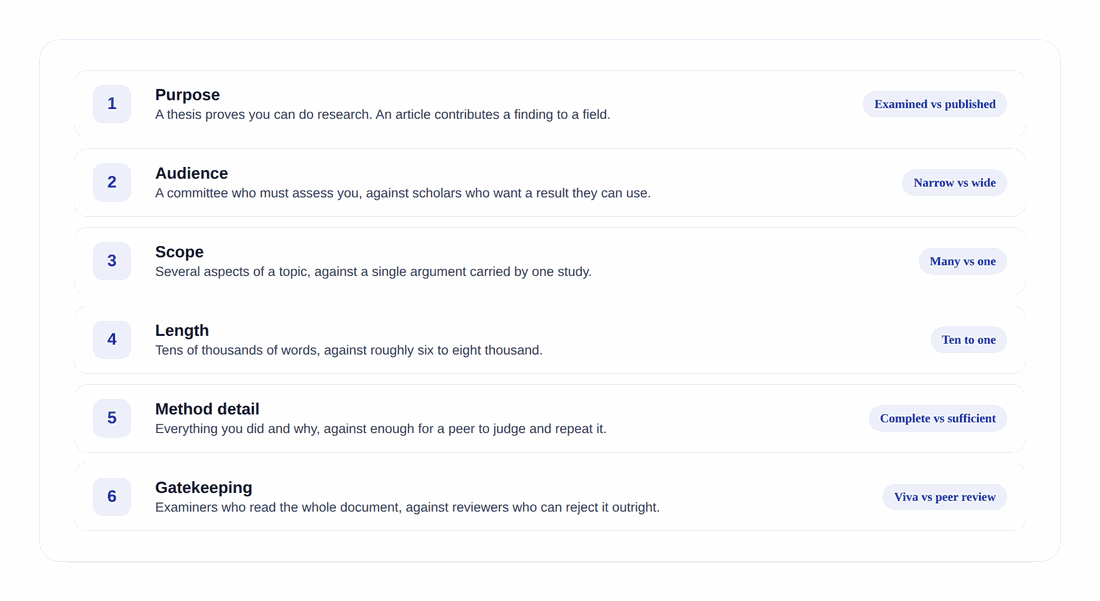
Purpose (Uddeshya). Ek thesis yeh saabit karti hai ki aap ek required standard tak research kar sakte hain. Ek article kisi field mein ek finding contribute karta hai. Pehla aapke baare mein hai, doosra result ke baare mein hai.
Audience (Pathak). Ek committee jo aapka assessment karegi, uske mukable scholars jo aisa result chahte hain jise woh use kar sakein. University of Toronto ki research guide ise seedhe shabdo mein kehti hai: ek thesis ki audience aapki committee hoti hai, jabki ek article ko fellow researchers, professionals, policymakers, educators, ya general audience padh sakti hai, aur aapko apne manuscript ko usi ke anusar modify karna hoga.
Scope (Simayein). Chicago School ki library guide ise is tarah summarize karti hai ki dissertation mein ek topic ke kai aspects discuss hote hain, jabki ek article mein kisi topic ka ek single aspect hota hai. Ek article ek central message ke aaspas organized hota hai.
Length (Lambaee). Lagbhag das se ek ka ratio. Wahi guide ek dissertation ke liye maximum lagbhag 20,000 words aur ek journal article ke liye 8,000 words batati hai; Open University batati hai ki 100,000 words tak ki thesis badal kar lagbhag 6,000 words ka article ban jati hai. Exact figures discipline aur degree ke hisab se badalte hain, par order of magnitude nahi badalta.
Method detail (Prakriya ka vivaran). Ek thesis har us cheez ko explain karti hai jo aapne ki aur aapne use kyun chuna, kyunki aapke judgment ka exam ho raha hota hai. Ek article ek peer (sathi researcher) ko evaluate aur work repeat karne ke liye kaafi detail deta hai. Examiners ko dhyan mein rakh kar likhi gayi justification sabse pehle hatai jati hai.
Gatekeeping (Niyantran). Examiners poora document padhte hain aur corrections ke liye keh sakte hain. Reviewers ise seedhe reject kar sakte hain, aksar abstract aur figures ko pehle padh kar. Power ka yahi difference taye karta hai ki har document ki shuruat kaise honi chahiye.
Side by Side
Thesis ya dissertation | Research article | |
Assessed by | Examiners, aksar viva ke sath | Peer reviewers aur ek editor |
Typical length | Hazaaron words mein | Lagbhag 6,000 se 8,000 words |
Arguments carried | Kai saare, alag chapters mein | Ek |
Literature review | Ek ya usse zyada poore chapters | Kuch paragraphs jo is study ki position batate hain |
Authorship | Aap, akele | Aksar ek team, jisme authorship order par sahmati honi chahiye |
Outcome | Ek degree, aur repository mein deposit | Literature mein ek citable contribution |
Reflection | Aksar expected hota hai | Shayad hi kabhi welcome kiya jata hai |
<ProTip title="👥 Authorship:" description="Agree author order with your supervisor before you write the article, not after. A thesis has one author by definition and an article usually does not, and that conversation is much easier before the work than after it" />
<ProTip title="🔬 Method detail:" description="Ask of every methodological sentence whether it helps a peer repeat the study or whether it was there to prove to an examiner that you had considered the alternatives. Only the first kind belongs in an article" />
The Structural Differences Nobody Warns You About

Abstract alag kaam karta hai. Ek thesis abstract document ko summarize karta hai. Ek article abstract ek screening device hai: yeh taye karta hai ki editor paper ko aage bhejega ya nahi aur koi researcher ise aage padhega ya nahi. Isme finding honi chahiye, na ki sirf study ka description.
Introduction ulta ho jata hai. Ek thesis introduction project ko set up karta hai, aksar kai pages mein. Ek article introduction field se lekar gap aur fir contribution tak narrow hota hai, aamtaur par 800 words ke andar, aur contribution ko pehle hi bta deta hai bajay ise aakhir ke liye bachane ke.
Limitations badal jati hain. Ek thesis mein, gehri limitations self-awareness ko dikhati hain aur credit dilati hain. Ek article mein, yeh zaroori toh hain par short honi chahiye, aur ek aisi limitations section jo contribution ko kamzor karti hai, rejection ko bulawa deti hai. Woh batayein jo claim ko limit karta hai, na ki har woh cheez jo behtar ho sakti thi.
Reflexivity shayad na bache. Field aur journal par depend karte hue, reflective voice jise kai thesis programs zaroori mante hain, uska article mein koi thikana nahi hota.
One Thing They Share
Dono ka examination un logo dwara kiya jata hai jo check karenge. Ek thesis ko un examiners dwara bariki se dekha jata hai jo har page padhte hain, aur ek article ko un reviewers dwara jo aapke cited literature ko jaante hain. Dono mein hi, galat dhang se pesh kiya gaya source ya evidence se zyada bada claim kisi bhi clumsy prose se zyada nuksan pahunchata hai.
<ProTip title="🎯 One message:" description="Write the single sentence your article proves before you draft it. If your thesis produces three such sentences, that is three papers, and trying to fit them into one is the most common reason a converted chapter gets rejected" />
<ProTip title="📰 Abstract first:" description="Rewrite the abstract before anything else when moving to an article. It forces you to name the single finding, and once you have that sentence the rest of the cutting becomes obvious" />
Which One Are You Writing?
Agar jawab thesis hai, toh examiners ke liye likhein: apna judgment dikhayein, apne choices ko defend karein, aur working process ko show karein. Agar yeh ek article hai, toh us reader ke liye likhein jo 30 seconds ke andar taye kar raha hai ki aage padhna hai ya nahi: contribution se shuru karein, ek hi argument rakhein, aur har us cheez ko cut kar dein jo sirf yeh saabit karne ke liye thi ki aap savdhan thhe.
<CTA title="Write the Version the Reader Needs" description="Structure, draft, and cite for the audience that will actually judge the document" buttonLabel="Try Jenni Free" link="https://app.jenni.ai/register" />
Agar aap ek se doosre par shift ho rahe hain, toh thesis ko research paper mein convert karne par hamara companion piece conversion sequence, pehle publication ke sawal, aur apne khud ke text ko reuse karne ke baare mein COPE kya kehta hai, isko cover karta hai. Dono hi ek hi buniyad par tike hain: yeh janna ki document ka har hissa kya kaam karta hai aur har claim ko apne sources ke support ke andar rakhna.