Dwara
Justin Wong
—
Mental Health par 6 Essays ke Udaharan (Writing Tips ke Saath)

Justin Wong
Vikas Prabhari
Graduated kiya Bachelor's me Global Business & Digital Arts, Minor me Entrepreneurship

Mental health life ke har hisse ko touch karti hai. Yeh logo ki sochne, mehsoos karne aur act karne ke tarike ko shape karti hai. Yeh school, kam, dosti aur family ko affect karti hai. Mental health ke baare mein likhna kaafi bada aur heavy feel ho sakta hai. Kya aapko causes explain karne chahiye, treatments describe karne chahiye, ya koi personal story sunani chahiye? Kya aapko facts, examples ya dono ka mix use karna chahiye? Zyadatar essays ko ek clear thesis statement ki bhi zarurat hoti hai taaki readers ko aapka main point pata chal sake.
Examples help karte hain. Real essays dekhne se ek clear rasta milta hai. Woh dikhate hain ki kaise start karein, kya include karein, aur end kaise karein. Agar aap better support ya policy change ke liye argue karne ke liye likh rahe hain, toh humare powerful persuasive essay examples aapko ek evidence-based case banane mein madad kar sakte hain. Niche mental health par six model essays diye gaye hain. Har ek alag angle par focus karta hai. Apni khud ki clear, balanced aur reader-friendly piece likhne ke liye inka use karein.
<ProTip title="📝 Writing Tip:" description="Narrow broad mental health topics into focused essay points to make your structure easier to manage" />
Mental Health ke Examples par 6 Essays
In sample essays ko explore karein jo mental health ko definition se lekar treatment, prevention, policy aur personal experience tak cover karte hain. Har ek example aapke writing ko inspire karne ke liye structure, tone aur clarity ko model karta hai.
Example #1: Mental Health ka Kya Matlab Hai (≈350 words)
Introduction:
Mental health sirf bimar na hone se kahin zyada hai. Isme emotional, psychological aur social well-being shamil hai. Yeh determine karti hai ki hum stress se kaise cope karte hain, dusro se kaise relate karte hain aur choices kaise lete hain. Ek clear definition readers ko yeh dekhne mein madad karti hai ki mental health everyday life ke liye kyun matter karti hai.
Core Idea:
Iske heart mein, mental health mood, thinking aur behavior ko affect karti hai. Yeh time ke sath badal sakti hai. Logo ki mental health zyadatar dino mein strong ho sakti hai aur phir bhi unhe tough events ke baad challenges ka samna karna pad sakta hai. Mental health biological factors, life events aur humare aas-paas ke logo jaise kayi factors se bhi affect hoti hai.
Key Points:
Emotional well-being: Iska matlab hai feelings ko janna aur manage karna. Yeh logo ko stress par calmness ke sath respond karne mein madad karta hai.
Psychological health: Yeh cover karta hai ki ek person kaise sochta hai aur problems solve karta hai. Healthy thinking learning aur work ko support karti hai.
Social well-being: Strong relationships mushkil times mein support dete hain. Yeh life ko safer aur zyada meaningful banate hain.
Why the Distinction Matters:
Mental health aur mental illness ek hi cheez nahi hain. Mental illness un diagnosed conditions ko refer karti hai jaise depression ya schizophrenia. Lekin mental illness wala person bhi sahi care ke sath acche se jee sakta hai. Mental health kehna focus ko wellness aur skills par rakhta hai, labels par nahi.
Practical Example:
Mental health ko fitness ki tarah sochein. Jaise log apni bodies ko train kar sakte hain, waise hi woh apni mental strength ko bhi build kar sakte hain. Stress manage karna aur connected rehna jaise skills mental workouts hain. Choti daily habits bada difference banati hain.
Conclusion:
Ek clear aur simple definition readers ko topic samajhne mein madad karti hai. Yeh causes, prevention aur care ke baare mein janne ke raste kholti hai. Jab aap likhein, toh terms ko jaldi define karein. Everyday examples ka use karein taaki readers relate kar sakein.
<ProTip title="🌟 Pro Tip:" description="Start essays with a clear definition and one short example to make complex ideas feel simple." />
Example #2: Common Mental Health Disorders aur Signs (≈350 words)
Introduction:
Mental health disorders common hain. Main types aur unke signs ko janna logo ko jaldi help lene mein madad karta hai. Yeh essay common disorders aur woh kaise dikhte hain, ispar ek short guide deta hai.
Anxiety disorders: Inme generalized anxiety, panic disorder aur phobias shamil hain. Signs hain constant worry, trouble sleeping aur panic attacks.
Depressive disorders: Symptoms mein long periods of sadness, low energy, change in appetite aur activities mein interest kho dena shamil hain.
Bipolar disorder: Isme low depression se high mania tak mood swings hote hain. Mania mein high energy, kam neend aur risky behavior shamil ho sakte hain.
Schizophrenia aur psychosis: Yeh aawazein sunne, false beliefs aur kya real hai yeh batane mein trouble ka cause ban sakte hain. Early care bohot madad karti hai.
Substance use disorders: Alcohol ya drugs ka misuse aksar dusri mental health problems ke sath co-exist karta hai.
Neurodevelopmental aur eating disorders: ADHD aur eating disorders aksar bachpan ya adolescence mein shuru hote hain aur daily life ko affect karte hain.
How to Spot a Problem:
Behavior ya routine mein changes ko notice karein. Sleep, appetite, school work ya social life mein shifts par dhyan dein. Agar problems do week se zyada rahein aur daily tasks ko affect karein, toh yeh reach out karne ka time hai.
Why Early Help Matters:
Early support long-term harm ko kam karta hai. Therapy aur simple tools symptoms ko badtar hone se rok sakte hain. Friends aur family changes ko notice karne aur help offer karne mein key role play karte hain.
Conclusion:
Jab disorders ke baare mein likhein, toh language ko simple rakhein. Scary ya technical words ko avoid karein. Signs ko plainly explain karein taaki readers ko pata chale ki help kab leni hai. clear next steps offer karein, jaise doctor se baat karna ya local helpline par call karna.
<ProTip title="🔎 Pro Tip:" description="List clear signs and simple next steps to help readers act if they or someone else needs support." />
Example #3: Causes aur Risk Factors (≈350 words)
Introduction:
Mental health kayi parts ke ek sath milkar kaam karne se banti hai. Biology, life events aur environment sabhi ek role play karte hain. Yeh essay common causes ko plain terms mein explain karta hai.
Biological Factors:
Genes aur brain chemistry matter karte hain. Kuch logo ko certain conditions ka higher risk inherit hota hai. Physical illness, injury ya hormonal changes mood aur thinking ko affect kar sakte hain.
Psychological Factors:
Early life experiences coping skills ko shape karti hain. Trauma, loss ya bullying lasting problems ke risk ko badha sakte hain. Kisi ne stress handle karna kaise sikha, yeh bhi matter karta hai.
Social and Environmental Factors:
Ek person ki community, family aur job mental health ko affect karti hai. Long-term poverty, isolation ya discrimination risk ko badhate hain. Safe housing aur steady work ise kam karte hain.
Life Events and Triggers:
Big changes jaise breakup, job loss ya kisi loved one ki death distress trigger kar sakte hain. Even acche changes, jaise dream job ke liye move karna, stressful ho sakte hain.
Why Causes Interact:
Zyadatar problems kayi chote factors ke combine hone se arise hoti hain. For instance, ek genetic risk plus ek stressful event depression ki taraf le ja sakta hai. Causes ko layers ke roop mein dekhna kisi ek reason ko blame karne se bachata hai.
How to Write This Section:
Short paragraphs aur examples ka use karein. Technical jargon avoid karein. Hope offer karein: kayi causes ko treat ya manage kiya ja sakta hai. Readers ko support aur simple coping steps ki taraf point karein.
Conclusion:
Causes ko explain karna readers ko risk samajhne aur blame kam karne mein madad karta hai. Yeh mental health ke prati ek kinder view aur prevention ke liye clear steps ko support karta.
<ProTip title="🧩 Pro Tip:" description="Use a short list to show biological, psychological, and social causes so readers can follow easily." />
Example #4: Prevention aur Everyday Self-Care (≈350 words)
Introduction:
Prevention ka matlab hai aisi habits aur supports build karna jo mental health ko protect karein. Acche daily routines, safe social ties aur early help bohot kuch karte hain. Yeh essay problems ko prevent karne aur thik rehne ke practical tarike dikhata hai.
Daily Habits That Help:
Sleep: Ek steady sleep routine ka aim rakhein. Sleep ki kami stress aur mood problems ko badhati hai.
Move your body: Exercise mood ko improve karti hai aur worry ko kam karti hai. Short walks bhi help karti hain.
Eat well: Balanced meals brain health ko support karte hain. Fruits aur vegetables add karne jaise chote changes matter karte hain.
Limit screens: Bohot zyada social media anxiety badha sakta hai. Simple screen limits set karein.
Skills to Practice:
Mindfulness aur breathing: Yeh immediate stress ko kam karte hain. Din ke dauran short breathing breaks lein.
Problem solving: Badi problems ko chote tasks mein break karein. Ek chota step complete karna mood ko improve kar sakta hai.
Social support: Friends aur family ke sath touch mein rahein. Jab zarurat ho toh help mangein.
Community and School Programs:
Schools emotional skills seekha sakte hain. Workplaces counseling aur flexible hours offer kar sakte hain. Community centers support groups aur safe spaces host kar sakte hain.
Early Action:
Signs ko jaldi spot karna quick help allow karta hai. Ek counselor ya primary doctor ke sath baat aksar pehla step hota hai. Simple therapy baad mein serious problems ko prevent kar sakti hai.
Conclusion:
Prevention ko perfect hone ki zarurat nahi hai. Choti, steady habits add up hoti hain. Readers ko ek habit pick karne aur use ek month ke liye try karne ke liye encourage karein. Woh change real improvement ki taraf le ja sakta hai.
<ProTip title="🌿 Pro Tip:" description="When writing prevention tips, give readers one small action they can try this week." />
Example #5: Treatment Options aur Support (≈350 words)
Introduction:
Jab kisi ko help ki zarurat hoti hai, toh kayi safe aur effective options exist karte hain. Yeh essay common treatments ko clear language mein outline karta hai. Goal fear ko kam karna aur aage ka rasta dikhana hai.
Talking Therapies:
Cognitive Behavioral Therapy (CBT): Unhelpful thoughts aur actions ko change karne mein madad karti hai. Yeh short term aur practical hai.
Counseling: Ek trained counselor sunta hai aur coping ke tarike dhundhne mein madad karta hai. Yeh stress aur life changes ke liye acchi tarah kaam karta hai.
Family and group therapy: Inme loved ones ya peers shamil hote hain aur yeh support aur understanding ko improve kar sakte hain.
Medication:
Doctors depression, anxiety ya psychosis ke liye medicines prescribe kar sakte hain. Medicines brain chemistry ko balance kar sakti hain. Yeh therapy aur follow-up ke sath best kaam karti hain.
Community and Peer Support:
Support groups aur peer helpers shared experience provide karte hain. Yeh loneliness ko kam karte hain. Peers real recovery steps aur hope dikha sakte hain.
Crisis Care:
Crisis lines, emergency departments aur mobile crisis teams urgent danger ke dauran help karte hain. Local emergency numbers aur hotline details jaanein.
Digital Tools:
Apps aur online counseling help tak pohochne ko aasan bana sakte hain. Yeh kayi logo ke liye kaam karte hain, lekin jab help ki sabse zyada zarurat ho toh yeh in-person care ko replace nahi karte.
Barriers and Solutions:
Barriers mein cost, stigma aur providers ki kami shamil hain. Solutions mein public funding, telehealth aur aur counselors ko train karna shamil hai. Simple policy steps access ko badha sakte hain.
Conclusion:
Jab treatment ke baare mein likhein, toh clear aur calm rahein. Kahein ki therapy aur medicine tools hain, labels nahi. Clinic ko call karne ya kisi trusted doctor ke paas jaane jaise easy next steps provide karein.
<ProTip title="📞 Pro Tip:" description="Mention specific first steps readers can take, such as contacting a local clinic or a helpline." />
Example #6: Personal Stories aur Recovery (≈350 words)
Introduction:
Personal stories mental health ko real banati hain. Recovery ek aisa word hai jise kayi log ek struggle ke baad acche se jeene ko describe karne ke liye use karte hain. Yeh essay dikhata hai ki care aur respect ke sath personal story kaise sunani chahiye.
Why Stories Matter:
Stories stigma ko kam karti hain. Yeh dikhati hain ki help kaam karti hai aur recovery possible hai. Yeh readers ko yeh bhi seekhati hain ki care se kya expect kiya jaye.
How to Structure a Story:
Start with a moment: Ek clear scene ya feeling ke sath open karein—humare descriptive essay examples ki tarah techniques aapko bina overexplain kiye emotions dikhane mein madad kar sakti hain. Yeh reader ko attract karta hai.
Describe the challenge: Kahein ki kya hua aur isne daily life ko kaise affect kiya. Details ko short aur relevant rakhein.
Share the turning point: Us moment ke baare mein baat karein jab help mangi gayi ya koi choti jeet hui.
Explain the path forward: Therapy, habits, support aur setbacks ko describe karein. Recovery shayad hi kabhi ek straight line hoti hai.
End with hope and a simple lesson: Ek practical tip ka naam lekar close karein jisne help ki.
Tips for Safe Sharing:
Self-harm ke baare mein graphic detail avoid karein.
Agar zarurat ho toh trigger warnings ka use karein.
Coping skills aur resources par focus karein.
Dusre log jinka aap zikr karte hain, unki privacy ki respect karein.
Example (Short):
“Mere panic attacks shuru hone ke baad main do weeks tak school nahi ja paya. Ek dost ne mujhe counselor ko call karne mein madad ki. Maine breathing exercises aur apne din ko sahi pace par rakhna sikha. Mere abhi bhi tough days hote hain, lekin ab mujhe pata hai ki kis taraf mudna hai.”
Conclusion:
Personal essays ko honesty aur safety ke beech balance banana chahiye. Readers ko inform aur inspire karne ka aim rakhein taaki agar unhe zarurat ho toh woh help le sakein.
<ProTip title="🧡 Pro Tip:" description="When sharing recovery stories include a brief resource list or helpline in the ending to help readers take action." />
Jenni ke Sath Mental Health Essay Kaise Likhein
Mental health ke baare mein likhna mushkil nahi hona chahiye. Jenni aapko ideas ko ek clear essay mein jaldi shape karne mein madad karti hai. In steps ko follow karein:
Step 1: Ek Naya Document Start Karein
Jenni.ai par jayein aur homepage par Start Writing par click karein. Agar aap pehle se logged in hain, toh blank workspace kholne ke liye New Document choose karein.

Step 2: Prompt ke Sath Start Karein
Apne naye document ke andar, Start with a Prompt par click karein.
Ek focused outline-only prompt ka use karein jaise:
“Create an outline that explains the main causes of depression in teenagers and suggests school-based prevention steps.”
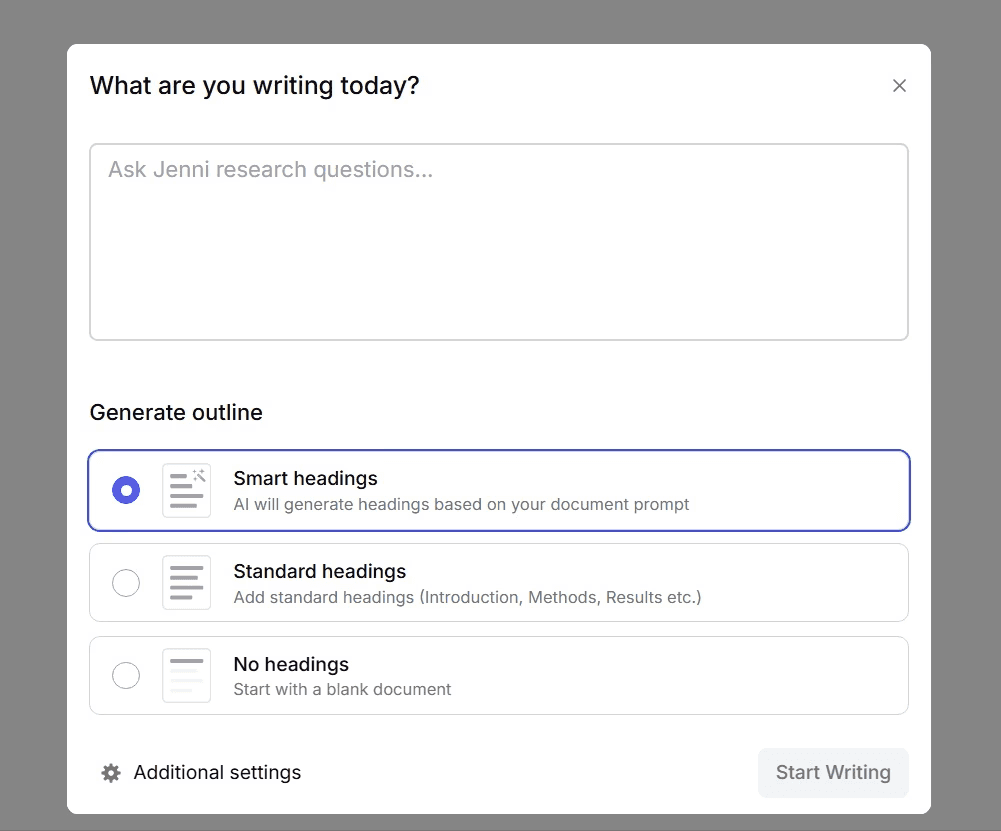
Jenni clear headings aur transitions ke sath ek structured outline generate karegi.
Ek strong outline prompt choose karna aapko help karta hai:
Ek clear direction set karne mein
Overwhelming topics se bachne mein
Ek clean, logical flow build karne mein
Step 3: Jenni ko Writing Start Karne Dein
Start Writing par click karein.
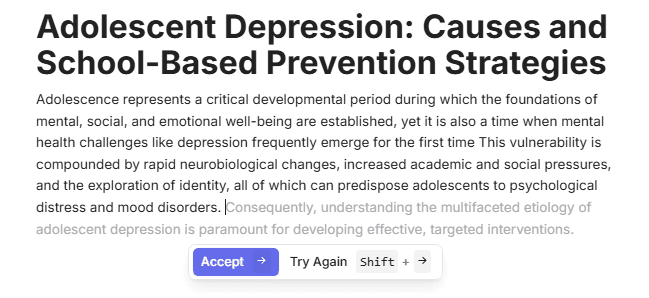
Jenni aapki structure ke bases par paragraphs, explanations, aur transitions ke sath aapke outline ko fill karna shuru kar degi.
Is stage ka use karein:
Personal examples ya research add karne ke liye
Sections ko expand ya rearrange karne ke liye
Outline ko apni voice ke according adjust karne ke liye
Step 4: Momentum Banaye Rakhein
Editor ke andar suggestions ko review karein. Kisi suggestion ko rakhne ke liye Accept par click karein ya dusre version ke liye Try Again par click karein.
Aap kisi bhi samay apni voice mein likhna continue kar sakte hain.
Mental Health Awareness
Mental health ek bada topic hai. Yeh six essay examples is tak pohochne ke alag tarike dete hain. Har model ek clear intro, tight body aur hopeful close dikhata hai. Short sections, simple words aur readers ke liye ek practical action ka use karein.
<CTA title="Start Your Mental Health Essay Now" description="Create a clear compassionate mental health essay with Jenni in minutes." buttonLabel="Try Jenni Free" link="https://app.jenni.ai/register" />
Mental health ke baare mein likhna clear aur kind hona chahiye. Inform aur guide karne ka aim rakhein. Resources aur chote steps offer karein jo log turant le sakein. Is approach ke sath, aapka essay readers ko samajhne aur act karne mein madad karega.