Dwara
Justin Wong
—
Inductive Reasoning Samjhayein: Patterns, Examples, aur Uses

Justin Wong
Vikas Prabhari
Graduated kiya Bachelor's me Global Business & Digital Arts, Minor me Entrepreneurship

Inductive reasoning specific facts se shuru hota hai aur ek general idea banata hai. Aap ise rozana istemal karte hain, jaise alag-alag sadkon ko aazmane ke baad kaam par jaane ka ek tezi se rasta dhoondna. Yeh science ke kaam karne ka bhi ek core hissa hai, jaisa ki Stanford Encyclopedia of Philosophy explains karta hai.
Yeh article cover karta hai ki inductive reasoning ka kya matlab hai, clear examples dikhata hai, aur iska deduction ke saath contrast karta hai. Hum research mein iske use ko dekhenge, typical mistakes ko point out karenge, aur aapki apni reasoning ko stronger banane ke liye tips denge.
<CTA title="Master Inductive Reasoning Faster" description="Turn observations into clear logical conclusions using structured prompts and guided thinking tools." buttonLabel="Try Jenni Free" link="https://app.jenni.ai/register" />
Inductive Reasoning Kya Hai aur Yeh Kyun Matter Karta Hai
Inductive reasoning sochne ka ek tarika hai jo specific examples se ek general rule banata hai. Iske results likely hote hain, lekin guaranteed nahi. Yeh ek "bottom-up" process hai, jahan aap theory se shuru karne ke bajaye facts ko pattern suggest karne dete hain.
Aasan shabdon mein, yeh sirf pehle das minute dekhne ke baad film ke baare mein guess karne ki koshish karne jaisa hai. Aapne jo scenes dekhe hain unse aap ek badi kahani ko aapas mein jod rahe hain.
Un logon ke liye jo is logic ke formal mechanics mein gehra utarna chahte hain, the logic inductive entry ek comprehensive philosophical breakdown provide karta hai.
Is everyday case ko lein: aap dekhte hain ki aapki bus ek hafte mein teen baar late aati hai. Aap decide kar sakte hain ki bus schedule unreliable hai. Yeh ek inductive conclusion hai. Yeh sahi ho sakta hai, lekin us hafte kisi holiday ya kharab weather ki wajah se delays ho sakte the.
Is tarah ka logic har jagah use hota hai, kyunki isi tarah se hum experience se seekhte hain.
Science mein, researchers aksar raw data se initial hypotheses banane ke liye iska use karte hain.
Medicine mein, ek doctor patient mein symptoms ke ek cluster ko recognize karke ek probable illness ko identify karta hai.
Business mein, analysts past quarterly reports mein trends spot karke sales forecast karte hain.
Learning mein, ek student several similar problems ko work through karke math concept ko samajhta hai.
National Science Foundation is baat par emphasize karta hai ki inductive reasoning science ke 'discovery' phase ke liye fundamental hai, jahan researchers initial observations se hypotheses banate hain.
<ProTip title="💡 Pro Tip:" description="Always treat inductive conclusions as flexible hypotheses not fixed truths." />
The Bottom Up Reasoning Process Step by Step
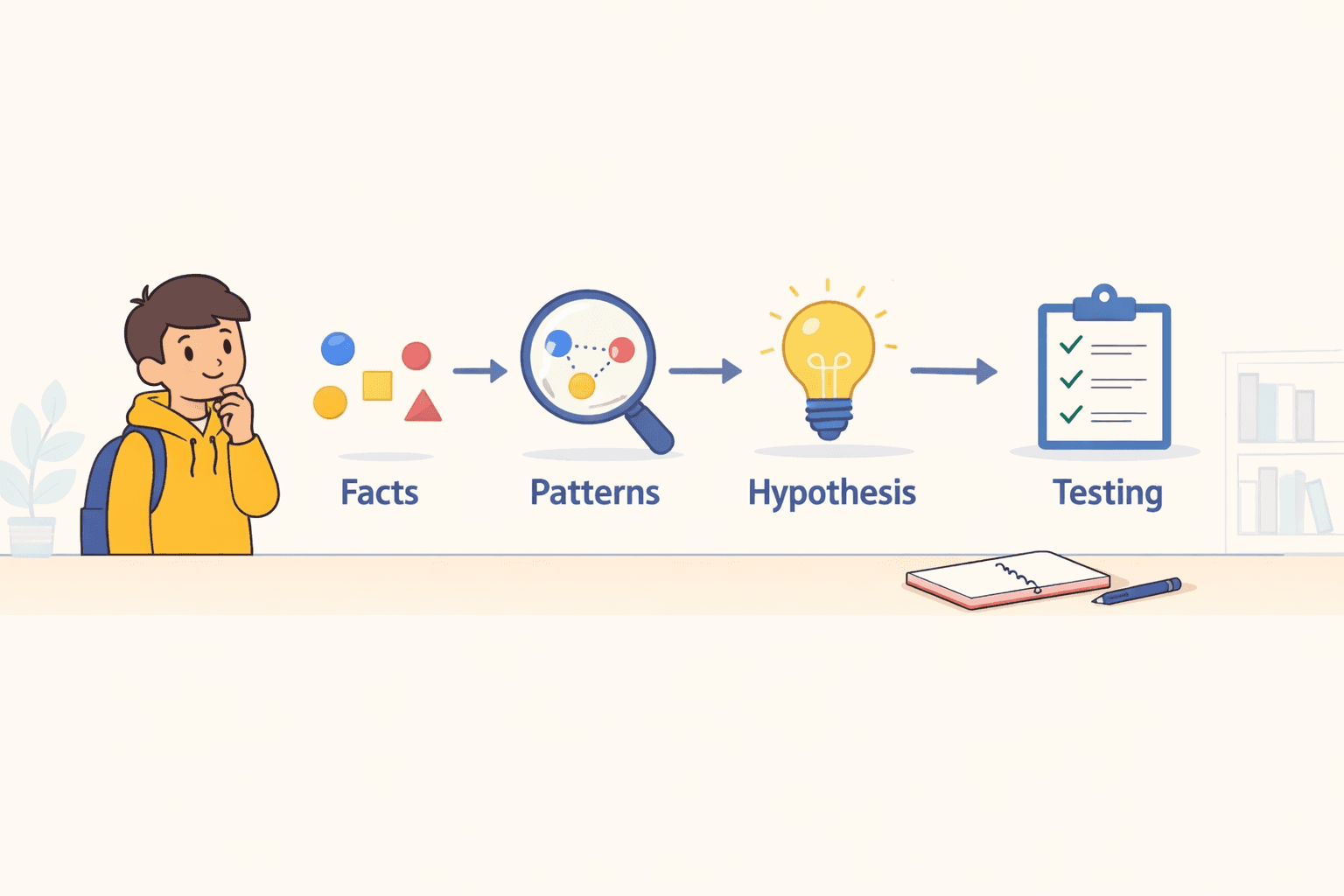
Inductive reasoning koi jadu nahi hai; yeh ek method hai. Aap details se shuru karte hain aur ek big idea tak apna rasta banate hain. Yeh aam taur par is tarah se unfold hota hai.
Step 1: Facts Gather Karein
Aap real situations se specific information collect karke shuru karte hain, jaise surveys, observations, ya experiments. Is data ki quality aur variety matter karti hai kyunki yeh aapki reasoning ka base banate hain.
Step 2: Patterns Identify Karein
Next, aap data ko look through karte hain taaki yeh dhoond sakein ki kya repeat hota hai ya consistent rehta hai. Yeh step alag-alag cases mein connections, similarities, ya trends ko notice karne ke baare mein hai.
Step 3: Ek Tentative Conclusion Banayein
Jo patterns aapne dhoondhe hain unka use karke, aap ek possible explanation ya general rule banate hain. Yeh final nahi hai, yeh limited evidence par based ek likely conclusion hai.
Example: Agar yadatar customers ek product display ko ignore karte hain, toh aap suggest kar sakte hain ki display ineffective hai.
Jab koi study shuru karte hain, toh yeh janna kihow to write research questions effectively aksar in initial inductive observations par depend karta hai.
Step 4: Test aur Refine Karein
Finally, aap apne conclusion ko naye evidence ke saath compare karte hain. Agar naya data ise support karta hai, toh idea aur strong ho jata hai. Agar nahi, toh aap ise revise ya reject karte hain. Yeh reasoning ko flexible aur improvement ke liye open rakhta hai.
Inductive reasoning evidence se step by step ideas banata hai, lekin conclusions change ke liye open rehte hain jaise-jaise aur information samne aati hai.
<ProTip title="📌 Reminder:" description="Stronger inductive arguments rely on larger and more diverse data sets." />
Types of Inductive Reasoning Explained
Inductive thinking koi ek single cheez nahi hai. Yeh kuch distinct styles mein dikhai deti hai, jismein se har ek ka evidence se case banane ka apna tarika hota.
Generalization (Enumerative Induction)
Aap jo ek chhote group se seekhte hain use ek bade group par apply karte hain. Polls aur surveys is method ka constantly use karte hain. Conclusion ki strength is baat par heavily depend karti hai ki aapka sample poori population ko kitne acche se represent karta hai.
Example: 200 voters ka ek survey suggest karta hai ki yadatar residents ek project ko support karte hain.
Causal Reasoning
Ismein events ke beech consistent patterns ko observe karke cause-and-effect relationships ko identify karna shamil hai. Jab ek factor repeatedly dusre se pehle aata hai, toh use cause ke roop mein suggest kiya jata hai. Halanki, false assumptions se bachne ke liye abhi bhi careful testing ki zaroorat hoti hai.
Example: Research jo smoking aur lung cancer ke beech ek strong link dikhati hai.
Analogical Reasoning
Yeh do similar situations ko compare karke aur assume karke conclusions draw karta hai ki jo ek mein kaam karta hai woh dusre mein bhi kaam kar sakta hai. Yeh problem-solving aur teaching mein helpful hai, lekin unreliable ho sakta hai agar situations important ways mein truly similar na hon.
Example: History class se ek successful teaching method ko biology lesson par apply karna.
Statistical Induction
Yeh large datasets se conclusions draw karne ke liye mathematical data aur probability ka use karta hai. Yeh simple generalization se zyada precise aur formal hai aur science, economics, aur technology mein widely use hota hai.
Example: Machine learning systems jo large datasets ke base par outcomes predict karte hain.
Ek quick overview:
Type | Yeh kya karta hai | Real-world case |
Generalization | Ek sample ke traits ko poore group par extend karta hai | Ek poll se election results predict karna |
Causal Reasoning | Repeated correlation se ek cause propose karta hai | Sugary drinks ko weight gain se link karna |
Analogical Reasoning | Similarity ke base par ek solution transfer karta hai | Ek store se dusre store mein ek successful business tactic apply karna |
Statistical Induction | Patterns infer karne ke liye probability models ka use karta hai | Ek weather forecast model jo next week ki rain predict karta hai |
<ProTip title="💡 Pro Tip:" description="Use multiple types of inductive reasoning to strengthen your conclusions." />
Inductive vs Deductive Reasoning: Key Differences
In do tarah ke logic ka zikr aksar ek saath kiya jata hai, lekin yeh opposite directions mein kaam karte hain aur aapko alag-alag tarah ke answers dete hain.
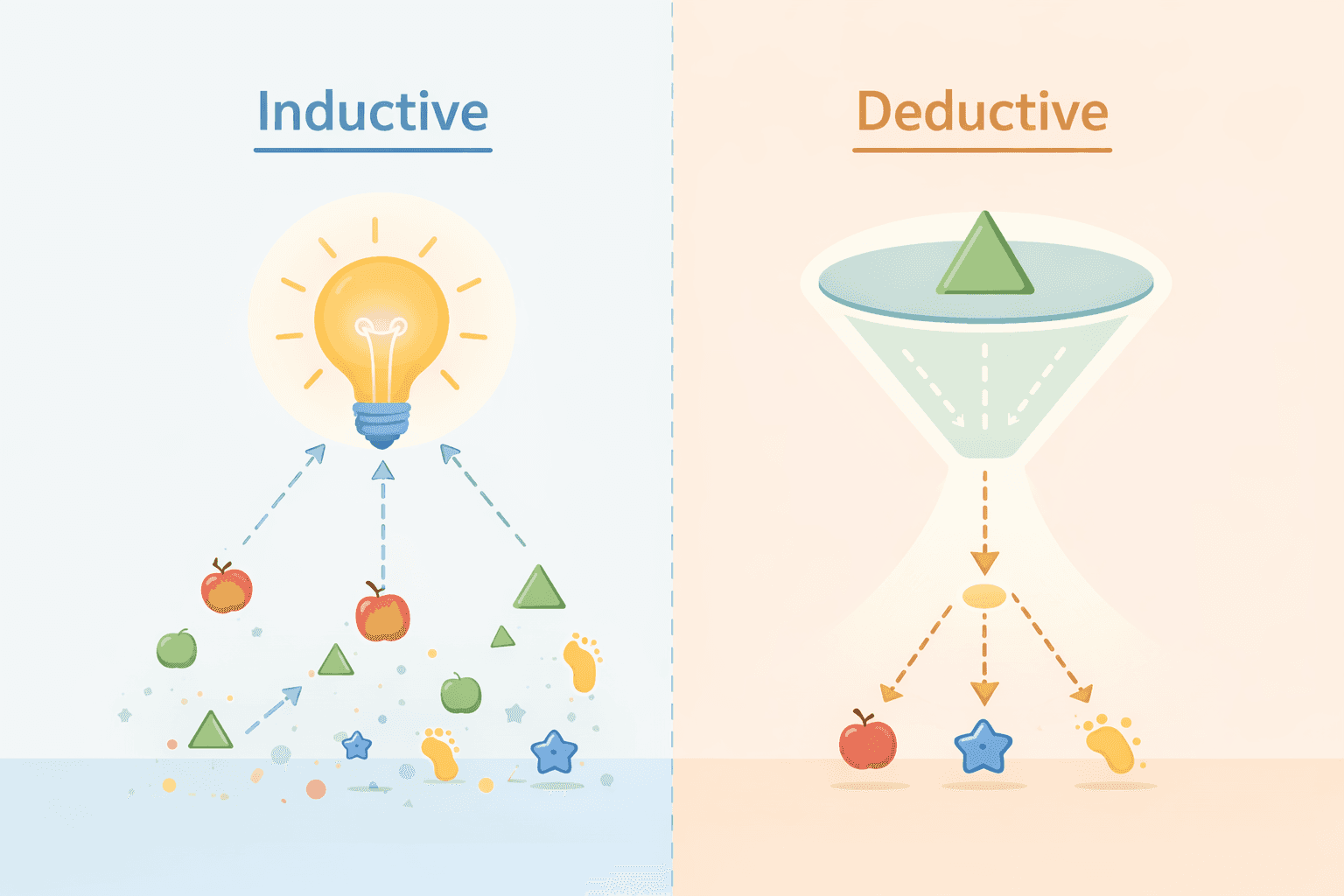
Inductive reasoning details se shuru hota hai aur ek broad idea tak build up hota hai. Deductive reasoning ek general rule se shuru hota hai aur use ek specific case par apply karta hai.
Yahan ek side-by-side look hai:
Feature | Inductive Reasoning | Deductive Reasoning |
Direction | Specific facts → General conclusion | General principle → Specific conclusion |
Certainty | Likely, lekin guaranteed nahi | Certain, agar logic valid ho |
Purpose | Naye patterns ya theories dhoondna | Kisi existing idea ya rule ko test karna |
Example | Kai ads ke baad sales ko badhte dekhkar, aap conclude karte hain ki advertising kaam karti hai. | Yeh jaante hue ki ads ke baad sabhi store sales badhti hain, aap predict karte hain ki yeh ad sales boost karega. |
Aap dekh sakte hain ki yeh ek single scenario mein kaise play out hote hain. Ek inductive approach note kar sakta hai ki naye treatment ke baad kai patients behtar ho gaye, jo suggest karta hai ki yeh effective hai.
Induction: Specific cases ko dekhta hai (e.g., treatment ke baad patients ka improve hona) aur ek possible pattern ya rule suggest karta hai (treatment effective ho sakta hai). Yeh flexible hai aur naye evidence ke saath change ho sakta hai.
Deduction: Ek known rule se shuru hota hai (treatment sabhi patients ke liye kaam karta hai) aur use ek case par apply karta hai, jisse agar logic sahi ho toh ek certain conclusion produce hota hai. Yeh zyada fixed aur definite hai.
Yeh ek saath kaise kaam karte hain: Induction aksar naye ideas ya hypotheses create karta hai, jabki deduction unhe test karta hai.
Yeh interplay alag-alag research paradigms ka ek hallmark hai jo dictate karte hain ki hum knowledge kaise acquire karte hain. Mix-up isliye hota hai kyunki dono hi logical processes hain.
Real separator woh certainty ka level hai jo yeh provide karte hain. Induction flexible hai aur naye facts ke saath revision ke liye open hai. Deduction definitive hai; agar aapka starting rule sach hai aur aapka logic sound hai, toh conclusion locked in hai.
<ProTip title="📌 Reminder:" description="Use induction to generate ideas and deduction to test them." />
Research aur Real Life mein Inductive Reasoning
Sochne ka yeh tarika sirf ek academic concept nahi hai. Yeh formal research mein ek practical tool hai aur countless daily choices ke peeche ek quiet force hai.
Formal Research mein
Inductive logic qualitative research ke liye fundamental hai. Prove karne ke liye ek theory se shuru karne ke bajaye, researchers raw data collect karke shuru karte hain. Woh us information ke andar themes aur repeated ideas ko dekhte hain.
Yeh ek common strategy hai jab aap qualitative vs quantitative research ke nuances ko navigate kar rahe hote hain, kyunki inductive approach theory ko data se hi emerge hone deta hai.
Woh patterns gradually ek nayi theory ya framework suggest karte hain. Yeh method, jise grounded theory ke roop mein jana jata hai, literally apne conclusions ko observed evidence mein ground karta hai.
Daily Life mein
Aap har samay inductive reasoning ka use karte hain, aksar ise bina kisi naam ke.
Aap teen baar ek alag commute route try karte hain aur paate hain ki yeh tez hai, isliye aap ise apne naye regular path ke roop mein adopt kar lete hain.
Do occasions par red wine peene ke baad aapko headache hota hai, isliye aap ise avoid karne ka decide karte hain.
Aap aasmaan ko kaala hote aur hawa ko ek specific tarike se chalte hue notice karte hain, aur aap predict karte hain ki jald hi baarish aane wali hai. Yeh sab personal experience se reasoning ke chhote acts hain, jo kuch specific events se ek personal rule banate hain.
Technology aur AI mein
Inductive processes modern artificial intelligence ke engine hain, khaskar machine learning mein. Ek system ko massive amount mein data feed kiya jata hai, jaise, millions of labeled images. Yeh is data ko analyze karta hai taaki patterns ko identify kar sake (e.g., kaun se features ek "cat" ko define karte hain).
Yeh phir un patterns ka use naye, unlabeled images ke baare mein predictions karne ke liye karta hai. Examples se seekhne aur generalize karne ki system ki ability inductive bias ka ek form hai.
Recent scientific studies on cognitive processing suggest karte hain ki hamara brain in patterns ko un tarikon se handle kar sakta hai jise AI developers constantly replicate karne ki koshish kar rahe hain.
Inductive Reasoning ki Strengths aur Limitations
Inductive reasoning ek useful tool hai, lekin ismein built-in flaws hain. Yeh janna ki yeh kya kar sakta hai aur kya nahi, aapko ise aur effectively use karne mein help karta hai.
Yahan Yeh Excel Karta Hai
Iska main strength iski openness hai. Ise kaam shuru karne ke liye ek complete picture ki zaroorat nahi hoti.
Yeh discovery ke liye excellent hai. Raw data ko dekhkar, yeh bilkul naye ideas ya theories suggest kar sakta hai jinka pehle consideration nahi kiya gaya tha.
Yeh partial information ke saath operate kar sakta hai. Ek potential pattern ko spot karna shuru karne ke liye aapko sabhi facts ki zaroorat nahi hai.
Yeh natural feel hota hai. Log aksar duniya ke baare mein isi tarah seekhte hain, yeh notice karke ki kya hota hai aur usse ek rough rule banakar.
Yeh ise initial hypotheses generate karne aur un problems ko tackle karne ke liye go-to method banata hai jahan koi obvious established answer nahi hota.
Yahan Yeh Fall Short Karta Hai
Sabse bada issue iski certainty ki kami hai. Ek inductive conclusion hamesha ek bet hota hai, guarantee nahi.
Results probable hote hain, proven nahi. Naya evidence hamesha unhe overturn kar sakta hai.
Yeh easily bias se skew ho jata hai. Agar aap sirf us data ko dekhte hain jo aapke initial hunch ko support karta hai, toh aap ise confirm kar denge, bhale hi yeh galat ho.
Yeh bad generalizations produce kar sakta hai. Sirf kuch examples ke base par ek broad conclusion par jump karna ek common mistake hai, jise hasty generalization fallacy ke roop mein jana jata hai.
Is baat par closer look ke liye ki yeh academic inquiry par kaise apply hota hai, exploring inductive reasoning in research reveal kar sakta hai ki kaise scholars specific observations se broader generalizations ki taraf move karte hain.
Ek Stronger Case Banana
Aap iske foundation ko strengthen karke ek inductive argument ko aur reliable bana sakte hain. Ek strong argument typically use karta hai:
Data ka ek bada aur representative set.
Varied situations se examples.
Us data mein ek clear, consistent pattern.
Ek weak argument aksar suffer karta hai:
Ek bahut hi chhota ya narrow sample size.
Us data ko ignore karna jo preferred pattern mein fit nahi baithta.
Bahut jaldi ek conclusion par leap karna.
<ProTip title="💡 Pro Tip:" description="Actively look for counterexamples to test your inductive conclusions." />
Induction ka Use Karne aur Ise Acche se Use Karne ke Beech ka Gap
Yeh kehna aasan hai ki har koi inductive reasoning ka use karta hai. Harder truth yeh hai ki bahut se log ise effectively nahi karte.
Aap ise online ya offline everyday arguments mein dekh sakte hain. Koi do similar events ko notice karta hai aur ek universal rule declare kar deta hai. Dusra insaan ek clear pattern ko ignore karta hai kyunki yeh uske belief ke contradict karta hai jo woh pehle se maanta hai. Yeh inductive logic ke failures hain.
Sahi Reasoning ko Sahi Mein Kis Cheez ki Zaroorat Hoti Hai
Cognitive science mein studies ke according, evidence se ek conclusion ko successfully build karna automatic nahi hai. Yeh several factors par depend karta hai:
Draw karne ke liye enough relevant experience hona.
Us experience mein potential patterns par active attention dena.
Naye facts aane par apne initial conclusion ko revise karne ke liye willing hona.
Bahut se log stuck ho jate hain, khaskar jab naya evidence ek pre-existing belief ke saath clash karta hai. Woh us data ko cherry-pick kar sakte hain jo unke view ko support karta hai ya contradicting information ko dismiss kar sakte hain, jo biased reasoning ke classic examples hain.
Skill ko Build Karna
Apni inductive thinking ko improve karna deliberate practice ka mamla hai, na ki sirf passive observation ka. Yeh critical thinking ka ek core part hai. Aapko actively:
Apne starting assumptions par question karna hoga. Aap jo maante hain uspar kyun maante hain?
Evidence ko scrutinize karna hoga. Kya aapka sample bada aur varied hai? Kya pattern consistent hai?
Adjust karne ke liye ready rehna hoga. Apne conclusion ko ek temporary draft ki tarah treat karein, final verdict ki tarah nahi.
American Psychological Association ki research isko support karti hai. Unki findings indicate karti hain ki jo log structured reasoning techniques mein training receive karte hain, jismein yeh steps shamil hain, woh zyada accurate decisions lete hain aur evidence ko evaluate karne mein behtar hote hain.
Apni Inductive Reasoning Skills ko Kaise Improve Karein
Aap inductive reasoning mein behtar ho sakte hain. Ismein conscious effort aur kuch straightforward habits lagte hain.
In Exercises ko Try Karein
Apne aas-paas ke patterns par closer attention dekar shuru karein.
Apne daily routines ko dekhein. Kaun se chhote events ek productive day, ya ek frustrating day ki taraf lead karte hain?
Sirf ek ya do examples ke baad conclusion banane se resist karein. Apne aap ko kam se kam teen ya chaar similar situations ko compare karne ke liye force karein.
Simple data sets mein trend ko spot karne ki practice karein, jaise ek hafte ki weather forecasts versus actual conditions, ya aapke monthly spending totals.
Ek Simple Four-Step Checklist
Jab aap specific facts se ek general idea banane ki koshish kar rahe hon, toh is process se guzrein:
Sufficient evidence collect karein. Kuch cases kafi nahi hain. Jitne ho sakein utne relevant observations gather karein.
Real pattern ko dhoondhein. Kya events ke beech connection consistent aur clear hai, ya yeh fuzzy aur occasional hai?
Dusri possibilities ke baare mein sochein. Aap jo dekh rahe hain uski kya koi alag explanation ho sakti hai? Kaun sa evidence aapke initial hunch ko contradict kar sakta hai?
Apne idea ko test par put karein. Apne conclusion ko ek working hypothesis ki tarah treat karein. Nayi situations ko seek out karein taaki dekh sakein ki yeh hold up karta hai ya fall apart ho jata hai.
Ek Quick Practice Scenario
Maan lein aap notice karte hain ki teams ke beech miscommunication ki wajah se kaam par teen alag projects stall ho gaye. Aapka inductive conclusion ho sakta hai: Poor communication aksar project delays ki taraf lead karta hai. Yeh ek reasonable start hai. Agla, crucial step ise test karna hai.
Dusre projects ko dekhein, successful aur failed dono ko. Kya communication sach mein main factor tha? Aapka initial rule confirm, refine, ya completely overturn ho sakta hai.
<ProTip title="📌 Reminder:" description="Write down your reasoning steps to make patterns clearer and easier to evaluate." />
Observations ko Clear Reasoning mein Badlein
Aap patterns notice karte hain lekin unhe solid conclusions mein badalne ke liye struggle karte hain jo paper par sense banayein. Yeh frustrating hota hai jab aapke ideas loose feel hote hain aur unhe clearly explain karna mushkil hota hai. Woh uncertainty aapki writing mein dikhati hai.
<CTA title="Sharpen Your Reasoning Skills" description="Structure your ideas clearly and turn observations into strong arguments using guided writing support." buttonLabel="Try Jenni Free" link="https://app.jenni.ai/register" />
Inductive reasoning perfect certainty ke baare mein nahi hai - yeh available evidence se strongest possible case banane ke baare mein hai. Sufficient data gather karein, real patterns spot karein, alternatives consider karein, aur apne conclusions ko test karein. Yeh deliberate process scattered observations ko un arguments mein badal deta hai jinpar aap trust kar sakte hain.