Dwara
Justin Wong
—
Peer Review Report Kaise Likhein: Examples Ke Saath Ek Step-by-Step Guide

Justin Wong
Vikas Prabhari
Graduated kiya Bachelor's me Global Business & Digital Arts, Minor me Entrepreneurship

Peer review ke liye invite hona ek sign of respect hai. Aapke field me koi aapke judgment par bharosa karta hai. Lekin sach me review likhne ke liye baithna ek alag hi challenge hai. Zyadatar reviewers, khaaskar early-career researchers, ko ise karne ki koi formal training nahi milti.
Yeh guide aapko step-by-step sikhayegi ki peer review report kaise likhni hai: kaun se sections shamil karne hain, feedback ko kaise word karna hai, aur editors sach me kya dhoondhte hain. Aakhir me ek Jenni section bhi hai agar aap review likhne se pehle apna structure plan karne me help chahte hain.
<CTA title="Review Smarter, Not Harder" description="Apni review likhne se pehle manuscripts me claims aur citations ko analyse karne ke liye Jenni ka use karein. Dusro se adhe time me un galtiyon ko pakdein jo chhoot jati hain." buttonLabel="Try Jenni Free" link="https://app.jenni.ai/register" />
Ek Peer Review Report Me Kya Shamil Hota Hai?
Har peer review report ka core structure same hota hai, chahe journal koi formal form use kare ya free-text comments mange. Yeh format peer review ke main types: single-blind, double-blind, aur open review sabhi par apply hota hai. Yeh char components sabhi disciplines me standard hain:
Summary: Apne shabdon me paper ke main argument, method, aur findings ka ek chhota overview.
Major Comments: Bade issues jo paper ki validity, logic, ya publishability ko affect kar sakte hain.
Minor Comments: Chhote issues jaise unclear wording, formatting errors, ya missing references.
Recommendation: Aapka overall verdict: accept, minor revision, major revision, ya reject.
<ProTip title="📌 Note:" description="Zyadatar journals set fields ke sath ek reviewer form provide karte hain. Iske bawajood, editors free-text comments ko sabse dhyan se padhte hain. Form ek structure hai, koi ceiling nahi." />
Peer Review Report Kaise Likhein, Step by Step

Niche diye gaye steps kisi bhi manuscript review par apply hote hain, chahe discipline ya journal koi bhi ho. Inhe order me follow karein aur aapke paas ek complete, credible report tayar hogi.
Step 1 — Pehli Baar Bina Notes Liye Padhein
Pehli baar padhte waqt notes lene ki jaldi na karein. Manuscript ko shuru se aakhir tak pura padhein aur ek overall impression banayein.
Khud se ek sawal puchein: “Kya yeh paper koi meaningful contribution de raha hai, aur kya iska core argument samajh aata hai?”
Baki sab kuch iske baad aata hai.
Step 2 — Apna Summary Paragraph Likhein
Aapki summary editor ko dikhati hai ki aapne paper ko samjha hai. Yeh abstract ka repetition nahi hai. Ise is tarah likhein jo aapka apna interpretation dikhaye ki paper sach me kya argue karta hai aur kya method conclusions ko genuinely support karta hai.
"This paper examines the relationship between sleep deprivation and working memory in undergraduate students using a within-subjects design. The authors argue that even moderate sleep restriction produces measurable deficits comparable to total sleep loss. The methodology is sound, but the conclusions extend beyond what the sample size can support."
Step 3 — Apne Major Concerns List Karein
Major concerns woh sab kuch hain jo paper ki validity, logic, ya core contribution ko affect karte hain. Specific rahein. Vague feedback authors ya editors ke liye useful nahi hota, aur editors confident decisions lene ke liye specific, actionable reviewer comments par rely karte hain.
Yahan achhe se phrase kiye gaye major comments ke kuch examples hain:
"The sample size (n=12) is insufficient to support the population-level claim made in the conclusion."
"The control condition is not described with enough detail to assess whether confounding was adequately controlled."
"The literature review omits several key studies from 2019 to 2022 that directly contradict the central hypothesis."
<ProTip title="💡 Pro Tip:" description="Apne major comments ko number karein aur manuscript me line number ke sath unka reference dein. Isse authors ke liye aapki baat ko dhoondhna aur point-by-point respond karna bahut aasan ho jata hai." />
Step 4 — Minor Issues List Karein
Minor issues paper ke contribution ko khatre me nahi dalte, lekin publication se pehle inhe theek kiya jana chahiye.
Common examples me shamil hain:
Typographical errors ya grammatical issues
Alag-alag sections me inconsistent terminology
References jo galat formatted hain ya missing hain
Figures ya tables jinme clear labels nahi hain
Aise sentences jo technically sahi hain par samajhne me mushkil hain
Step 5 — Apni Recommendation Likhein
Aapki recommendation aapke comments se naturally nikalni chahiye. Agar aapke major concerns bade hain, toh recommendation me woh dikhna chahiye. Agar issues chhote aur fixable hain, toh minor revision appropriate hai. Is table ko ek guide ki tarah use karein:
Recommendation | Kab Use Karein |
Accept | Paper bina kisi change ke ya bahut chhote changes ke sath publish hone ke liye ready hai |
Minor Revision | Chhote, fixable issues jin ke liye naye data ya analysis ki zaroorat nahi hai |
Major Revision | Bade problems jo fixable hain lekin jinhe kaafi kaam ki zaroorat hai |
Reject | Fundamental flaws jinhe ek revision cycle me theek nahi kiya ja sakta |
<ProTip title="📝 Note:" description="Major revision recommend karte waqt, authors ko aage badhne ka ek clear rasta dikhayein. Ek aisi review jo sirf major revision mangti hai par yeh nahi batati ki successful revision kaisa lagega, woh sabhi ke liye, including editor, frustrating aur unhelpful hoti hai." />
Peer Review Language aur Tone
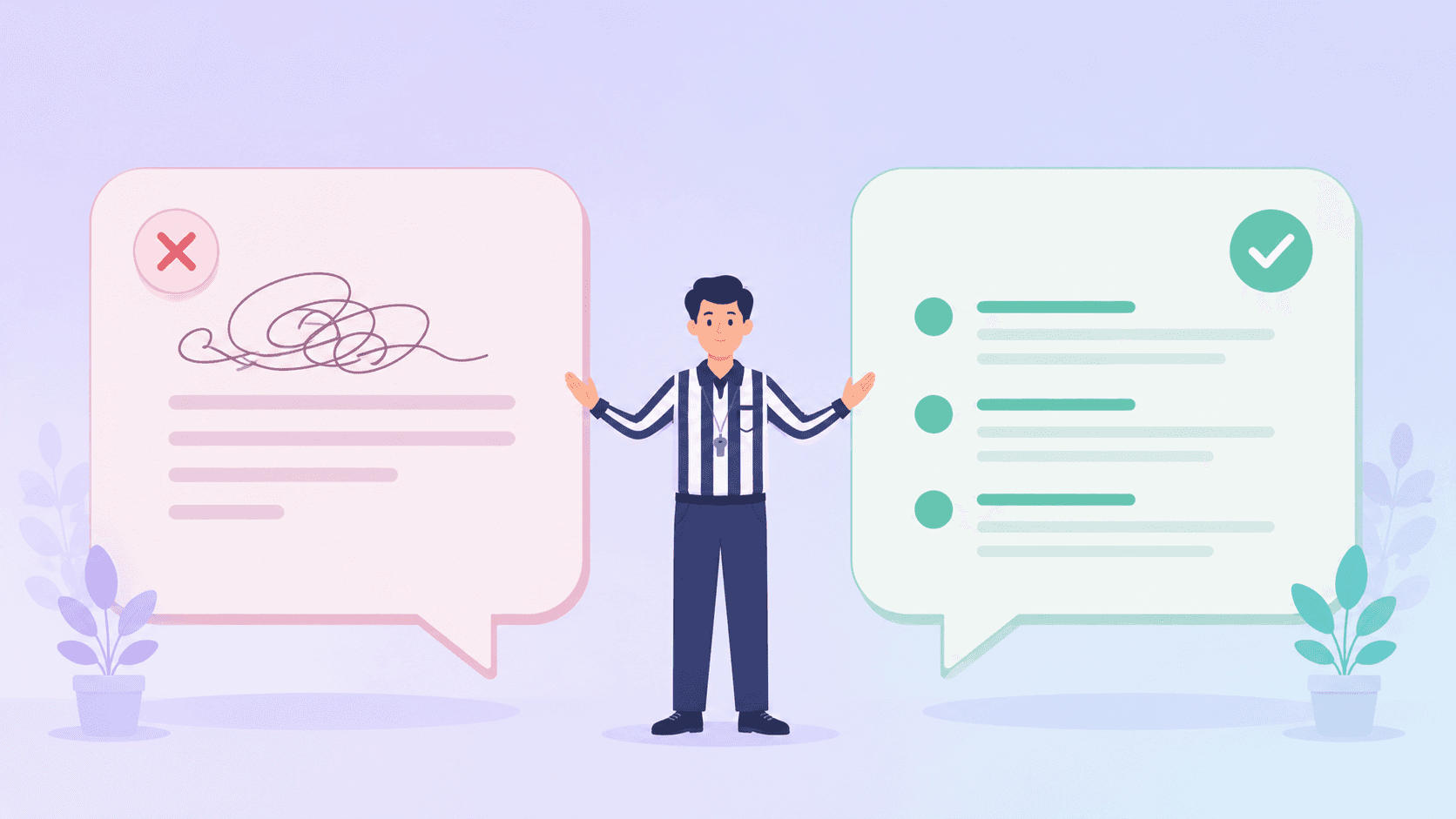
Aap apna feedback kaise phrase karte hain, yeh utna hi important hai jitna ki aap kya keh rahe hain. Jo reviewers precision aur professionalism ke sath likhte hain, woh editors ke liye zyada credible aur authors ke liye zyada useful hote hain.
Yeh likhein:
"The analysis in Section 3 would benefit from..."
"The authors should consider whether..."
"This claim requires a citation or empirical support"
Yeh na likhein:
"This paper is poorly written and should be rejected" (vague, harsh, koi actionable rasta nahi)
"I loved this paper, brilliant work throughout" (editor ke liye decision lene me useful nahi hai)
"The authors clearly do not understand this field" (unprofessional aur unconstructive)
Research confirm karti hai ki constructive criticism standard hai chahe rejection recommend kiya ja raha ho. Ek reviewer ke roop me aapka role sirf ek judgment call dene se kahin zyada hai. Isme authors ki yeh samajhne me help karna shamil hai ki unka kaam kis tarah publishable ban sakta hai.
Jenni Ka Use Karke Peer Review Kaise Likhein
Review likhne ke liye baithne se pehle, Jenni aapko manuscript ke claims aur citations ka analysis karne me help kar sakti hai, jisse aapko blank page ke bajaye ek structured starting point milta hai.
Step 1: Manuscript PDF ko apni Jenni library me upload karein
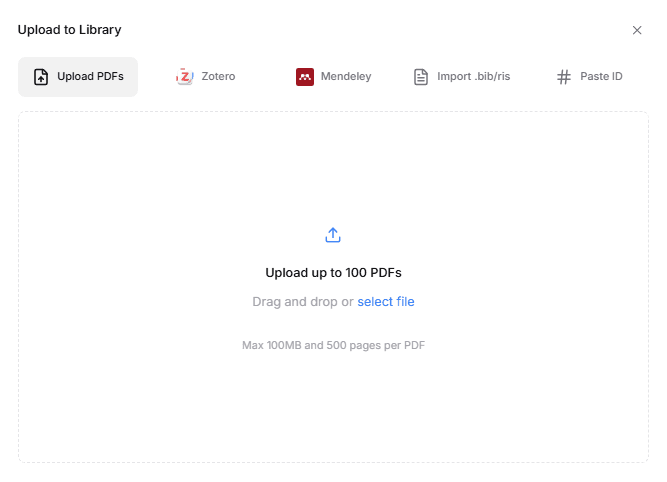
Paper ko drag aur drop karke apni Jenni document library me dalein. Yeh aapke review process ke dauran accessible rahega aur chat panel me iska direct reference diya ja sakta hai.
Step 2: Unsupported claims ko samne laane ke liye Jenni ke chat ka use karein
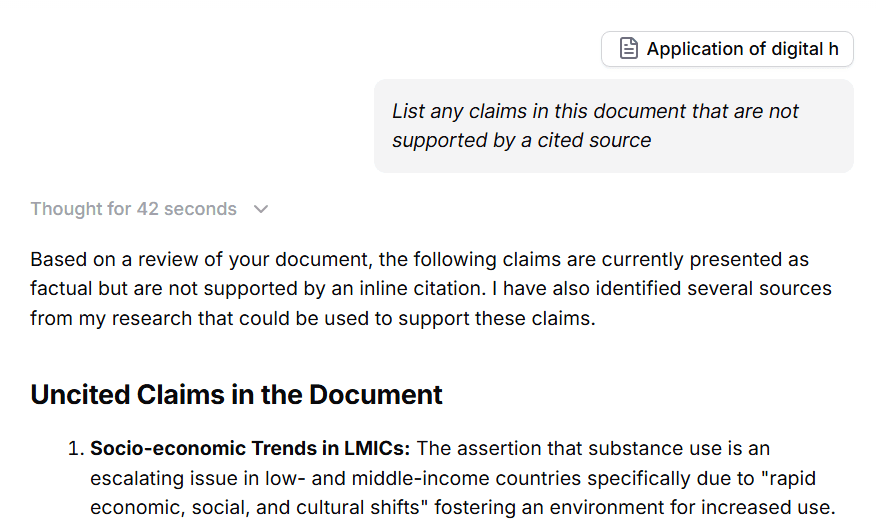
Chat panel kholein aur Jenni ko document analyse karne ke liye kahein. Shuru karne ke liye ek useful prompt:
"List any claims in this document that are not supported by a cited source"
Isse citation gaps jaldi samne aa jate hain taaki aapko pata ho ki ek bhi comment likhne se pehle kahan focus karna hai.
Step 3: Document-level analysis ke liye Jenni ka Reviews feature run karein
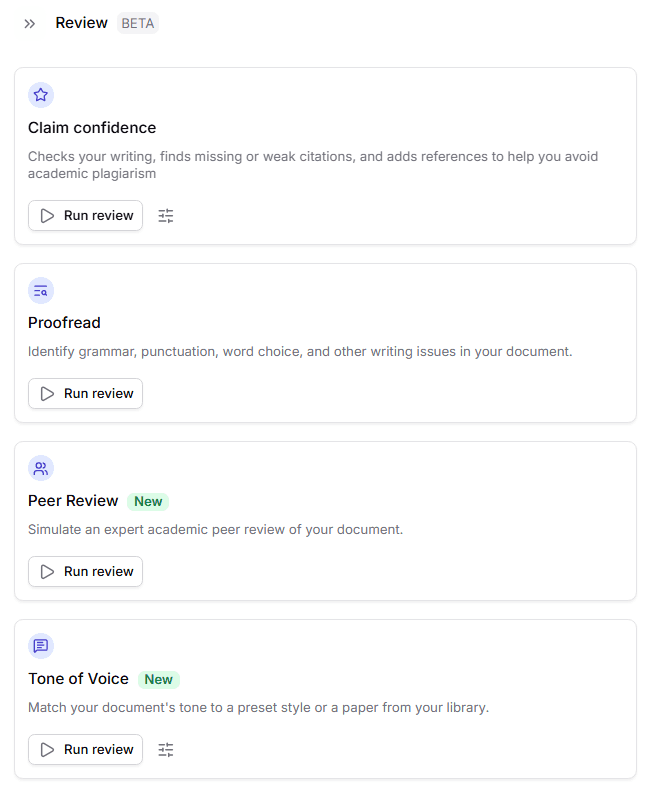
Jenni ka Reviews feature common manuscript problems ki cheh categories me issues ko flag karta hai. Yeh inline annotations return karta hai jin par aap systematically kaam kar sakte hain.
Jenni Reviews kaise kaam karta hai aur har flagging category me kya aata hai, iske baare me aur padhein.
Step 4: Output ko apne structured starting point ki tarah use karein Aap expert hain. Jenni aapko un cheezon ko pakadne me help karti hai jo likhna shuru karne se pehle chhoot sakti hain. Apni review guesswork se nahi, balki comprehensive awareness ke sath shuru karein.
<ProTip title="💡 Pro Tip:" description="Jenni aapke expert judgment ko replace nahi karti. Ise ek first-pass filter ki tarah sochein. Yeh citation gaps aur unsupported claims ko jaldi pakadti hai taaki aap apna time actual science ko evaluate karne me laga sakein." />
Frequently Asked Questions
Ek peer review report kitni lambi honi chahiye?
Zyadatar peer review reports 400 aur 1,000 words ke beech hoti hain, jo journal aur paper ki complexity par depend karta hai. Iska koi universal standard nahi hai, lekin aapki report har important issue ko saaf taur par address karne jitni lambi honi chahiye. Ek focused 600-word ki review ek vague 1,500-word wali review se editor ke liye zyada useful hoti hai.
Mujhe peer review summary me kya shamil karna chahiye?
Aapki summary me paper ke main argument, method, aur findings ka apne shabdon me ek chhota description hona chahiye. Yeh abstract ka repetition nahi hai. Yeh editor ko dikhata hai ki aapne paper ke core contribution ko samjha hai aur ise iske apne terms par evaluate kar sakte hain. Ise teen se paanch sentences tak hi rakhein.
Main pehli baar peer review kaise likhun?
Shuruat full manuscript ko ek baar bina notes liye padhne se karein. Phir apne shabdon me ek short summary likhein. Apne major concerns list karein, uske baad minor issues. Apni recommendation aakhir me likhein taaki yeh aapke comments ke sath logically flow kare. Zyadatar journals ek reviewer form provide karte hain jo aapko har section me guide karta hai.
Aap peer review me constructive criticism ko kaise phrase karte hain?
Aapka focus work par hona chahiye, author par nahi. "the analysis in Section 3 would benefit from..." ya "the authors should consider whether..." jaise phrases ka use karein. "this paper is poorly written" jaise vague statements se bachein. Specific aur actionable comments general criticism ke mukable authors ke liye zyada useful aur editors ke liye zyada credible hote hain.
Kya main peer review likhne ke liye AI ka use kar sakta hun?
Aap review likhne se pehle manuscript ko analyse karne ke liye AI tools ka use kar sakte hain, jaise ki check karna ki claims cited sources dwara supported hain ya nahi. Halanki, ek AI-generated review ko apne expert opinion ke roop me submit karna zyadatar journal ethics policies ke khilaf hai. AI ka use preparation ke liye karein, substitution ke liye nahi. Disclosure requirements bhi journal ke hisab se badalti hain.
Ek Achhi Review Field Ke Liye Ek Contribution Hai
Peer review gatekeeping nahi hai. Yeh ek collaboration hai. Ek thorough aur well-structured review authors ko unka kaam behtar banane me madad karti hai, editors ko behtar decisions lene me help karti hai, aur field ko apne standards maintain rakhne me madad karti hai. Woh researchers jinke kaam ka aap review kar rahe hain, aap par rely kar rahe hain ki aap specific, fair aur constructive rahein.
<CTA title="Analyze a Manuscript Before You Review It" description="Kisi bhi paper ko Jenni par upload karein aur ek bhi comment likhne se pehle, claim aur citation issues ko minutes me samne laane ke liye Reviews feature ka use karein." buttonLabel="Try Jenni Free" link="https://app.jenni.ai/register" />
Agli baar jab aap ek blank reviewer form ka samna karein, toh apni summary se shuru karein. Baki sab kuch wahan se follow karega. Jab aapki review submit ho jaye aur revisions authors ke paas wapas aayein, toh unhe hamari guide dikhayein ki peer review comments ka respond kaise karna hai.