Dwara
Nathan Auyeung
—
Apne Agle Proposal ko Mazboot Banane ke Liye 12 Grant Writing Tips

Nathan Auyeung
Senior Accountant EY mein
Bachelor ka Accounting mein Graduation kiya, aur ek Postgraduate Diploma of Accounting bhi poora kiya

Zyadatar grant writing advice same test mein fail ho jati hai. "Ek compelling story sunao." "Directions follow karo." "Dhyan se proofread karo." Sach hai, par bekar hai, aur dopahar ke chaar baje jab aapke samne ek draft khula ho, toh ispar action lena impossible hota hai.
Isliye niche di gayi har writing tip actual edit ke sath aati hai. Ek kamzor line, fir use rewrite ki gayi line, taaki aap dekh sakein ki kya badla hai, bajaye iske ki aap sirf description padhein ki kya hona chahiye tha. Teen process tips sabse pehle aati hain, kyunki unme se kuch writing shuru hone se pehle hi outcome decide kar deti hain.
<CTA title="Get the First Draft Out of the Way Faster" description="Jenni helps you structure and draft each section so your time goes into the argument, not the blank page" buttonLabel="Try Jenni Free" link="https://app.jenni.ai/register" />
Ek bhi Word Likhne Se Pehle
1. Sabse pehle scoring criteria dhundhein. Zyadatar funders publish karte hain ki reviewers points kaise distribute karte hain, aur zyadatar applicants ise kabhi nahi dekhte. Agar evaluation 100 mein se 30 points ka hai, toh yeh sirf ek closing formality nahi hai. Narrative instructions se pehle rubric ko padhein, fir apne headings ko uske hisab se match karein.
2. Calendar ko char hafte pehle se ulta build karein. USDA National Institute of Food and Agriculture ek aisi timeline recommend karta hai jo submission deadline se kam se kam char hafte pehle khatam ho jaye. Woh buffer sirf padding nahi hai. Wahan writing actually improve hoti hai, aur wahi ek akeli cheez hai jo aapko portal failure se bacha sakti hai.
3. Program officer ko call karein. Ek aisa sawal puchein jiska jawab guidelines mein sach mein na ho. Zyadatar log call attend karenge, zyadatar helpful hote hain, aur pandrah minute aapko unki website par ek dopahar bitane se zyada fit ke bare mein bata denge. Iska matlab yeh bhi hai ki aapka application ek aise naam se pahunchega jise woh pehchante hain.
<ProTip title="⚖️ Balance check:" description="Compare your word count per section against the points available for it. If evaluation is worth 30 percent of the score and 5 percent of your narrative, you have a rebalancing job" />
Jab Aap Draft Kar Rahe Hon
4. Pehle sentence mein hi number dalein. Reviewers openings ko skim karte hain. Paragraph three mein chhupa hua evidence shayad un tak pahunch hi na paye.
Before: "Hamari community ko early literacy mein bade challenges ka samna hai, aur intervention ki zaroorat pehle se kahin zyada hai." After: "Hamare teen partner schools ke third graders mein se thirty-eight percent grade level par padhte hain, jabki district average 61 percent hai."
5. Har figure ke sath ek source aur year attach karein. Bina source ke statistic ka hona, na hone se bhi badtar hai, kyunki yeh reviewer ko yeh sochne par majboor karta hai ki aapne aur kya check nahi kiya hai.
Before: "Studies dikhati hain ki early intervention se reading outcomes improve hote hain." After: "Ek 2026 ke district assessment mein paya gaya ki weekly tutoring paane wale students ne 1.4 reading levels gain kiye, unke mukable jinhone nahi payi, jinka gain 0.7 tha."
6. Adjectives ko measurements se replace karein. Words jaise substantial, significant, aur extensive sirf placeholders hain jo wahan hote hain jahan ek number hona chahiye.
Before: "Hamein bade grants manage karne ka extensive experience hai." After: "Humne 25,000 se 120,000 dollars ke beech ke paanch grants ko closed kiya hai, har ek schedule ke hisab se aur complete reporting ke sath."
Yahi substitution phrases ki ek puri family par kaam karta hai. Yeh cheh phrases lagbhag har pehle draft mein dikhte hain, aur har ek jagah aisi hai jahan ek fact hona chahiye.
Kamzor phrase | Yeh aapko kyun nuksan pahunchata hai | Iske bajaye likhein |
"a significant need" | Koi bhi ek feeling ko score nahi kar sakta | Figure, uska source, aur uska year |
"we hope to" | Yeh signal deta hai ki aap outcome ke liye committed nahi hain | "We will", ek number ke sath |
"various stakeholders" | Reviewers assume kar lete hain ki koi bhi actually agree nahi hua hai | Named partners, unke letters ke sath |
"best practices" | Bina evidence diye authority claim karta hai | Model ka naam aur kisne evaluate kiya hai |
"ongoing" | Timeline ki kami ko chhupata hai | Start date aur frequency |
"leverage" | Hamesha ek chote word ki jagah ek lamba word | Woh verb jo aapka actual matlab hai |
7. Aise objectives likhein jo fail ho sakein. Agar kisi objective ke aaj se barah mahine baad galat hone ka koi tarika nahi hai, toh woh objective nahi hai. Woh bas ek sentiment hai.
Before: "Hamari services ke bare mein community awareness badhana." After: "October 2026 tak teen campuses mein 180 students ko enroll karna, jismein se 65 percent 56 sessions mein se 40 ya usse zyada attend karein."
8. Sentences ko bees words se kam rakhein. Yeh koi stylistic preference nahi hai. NIH ise direct apni grant writing guidance mein state karta hai, aur yeh zyadatar drafts ke liye sabse tez single improvement hai.
Before: "In order to ensure that the program is able to reach the maximum possible number of eligible participants, we will be undertaking a comprehensive outreach effort in collaboration with our partner schools." After: "Hum apne teen partner schools ke through recruit karenge. Har site lead September mein do enrollment sessions conduct karega."
9. Budget narrative ko program ki taraf point karwayein. Har line mein us activity ka naam hona chahiye jiske liye pay kiya ja raha hai. Reviewers budget ko narrative ke sath read karte hain, aur ek mismatch careless lagta hai bhale hi woh ek typo hi kyun na ho.
Before: "Personnel: 29,200 dollars." After: "Program coordinator, 0.5 FTE: 29,200 dollars. Coordinator section four mein describe kiye gaye sabhi 168 sessions ko run karta hai."
<ProTip title="🗂️ Swipe file:" description="Save every sentence a funder has quoted back at you in feedback or an award letter. Those are the lines that landed, and they are worth studying more than any generic example" />
Teen Galtiyan Jo Kisi Ke Padhne Se Pehle Hi Aapko Disqualify Kar Deti Hain
Yeh scoring problems nahi hain. Yeh administrative rejections hain, jiska matlab hai ki aapki writing ki quality conversation mein aati hi nahi hai.
Wrong eligibility category. Entity type, geography, budget size, aur operating years sabhi common barriers hain. Har ek ko apne samne di gayi guidelines se check karein, na ki pichle saal ke version ki memory se.
A missing attachment. Determination letter, audited financials, letters of support, board roster. Attachment list ko pehle din hi taiyar karein aur ise draft ka hissa maanein bajaye iske ki submission ki subah ka koi aakhri kaam.
Page limit se bahar jana. Funders ise strictly enforce karte hain. NSF project description ko pandrah pages par cap karta hai, aur NIH Specific Aims ke liye ek page allow karta hai. Portals aksar oversized file ko trim karne ke bajaye seedhe reject kar dete hain.
Submit Button Dabandne Se Pehle
10. Khatam karne ke baad das percent cut karein. Ise ek regular habit banayein, isliye nahi ki aap limit se upar hain. Sabse pehle transitional sentences cut hote hain jismein koi information nahi hoti, aur draft bina kuch khoye padhne mein tez ho jata hai.
11. Ise apne field se bahar ke kisi vyakti ko dein. Proofread karne ke liye nahi. Unse kahein ki woh aapko ek sentence mein batayein ki aap kya maang rahe hain aur yeh kyun matter karta hai. Agar woh nahi bata sakte, toh ek reviewer jiske paas das se bees dusre proposals hain, woh toh bilkul nahi samajh payega.
12. Do din pehle submit karein. Federal portals aakhri ghanton mein bohot queue ho jate hain, aur institutional sign-off mein aksar ummeed se zyada waqt lagta hai. Ek application jo raat 11:52 baje upload hone mein fail ho jati hai, woh late application nahi hoti. Woh application hi nahi hoti.
<ProTip title="📐 Fit the box:" description="Aim for 90 percent of the page limit rather than 100. A narrative crammed to the last line reads as rushed, and a reviewer working through fifteen of them notices the one that breathes" />
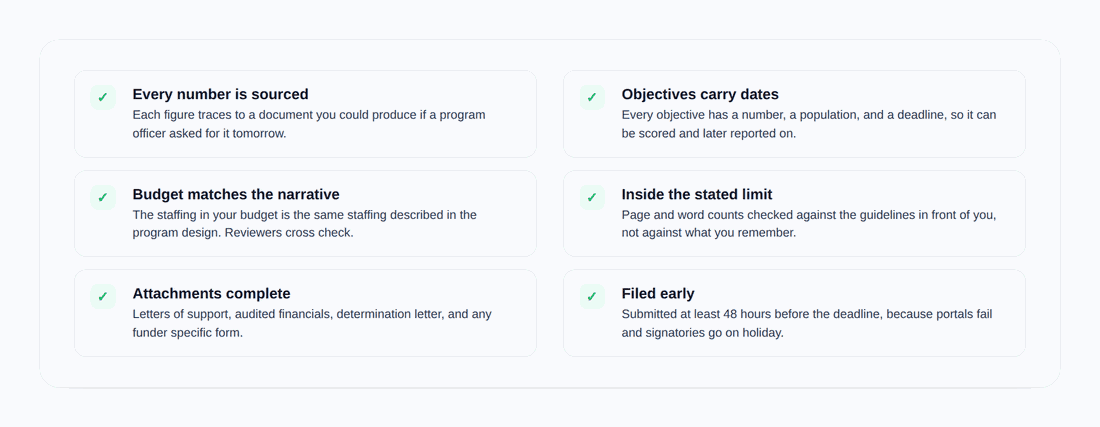
Apne hathon se kuch bhi bhejne se pehle yeh aakhri check run karein.
<ProTip title="🧾 Track it:" description="Log the hours you spend on every application alongside the outcome. After six submissions the pattern tells you which funder types actually pay for your time" />
Jo Tips Sabse Zyada Matter Karti Hain Woh Boring Hain
Agar aap is list se sirf teen cheezein lete hain, toh calendar, scoring criteria, aur apne opening sentence mein ek sourced number dalne ki habit ko lein. Yeh teen outcomes ko badal dete hain. Baki sab craft hai, aur craft behtar hota jata hai: aapka paanchva proposal aapke pehle proposal se behtar dikhega, zyadatar isliye kyunki aap seekh chuke honge ki kya bahar chhodna hai.
<CTA title="Write Your Next Proposal With Less Friction" description="Draft section by section with citations you can check, then tighten it before the deadline arrives" buttonLabel="Try Jenni Free" link="https://app.jenni.ai/register" />
Jab koi proposal decline ho jaye, toh resubmit karne ka decision lene se pehle feedback ko National Institute of Allergy and Infectious Diseases ke fixable aur hard to fix problems ke beech ke difference ke sath padhein. Aur in sabke niche fundamentals par kaam karte rahein: ek consistent formal tone, is baat ka clear sense ki kya ek credible source hai, aur how the parts fit together ke bare mein itna discipline ki reviewer ko kabhi kisi cheez ke liye dhoondhna na pade.