Dwara
Nathan Auyeung
—
Convenience Sampling ke Examples: Uses, Bias aur iska kab Use karein

Nathan Auyeung
Senior Accountant EY mein
Bachelor ka Accounting mein Graduation kiya, aur ek Postgraduate Diploma of Accounting bhi poora kiya
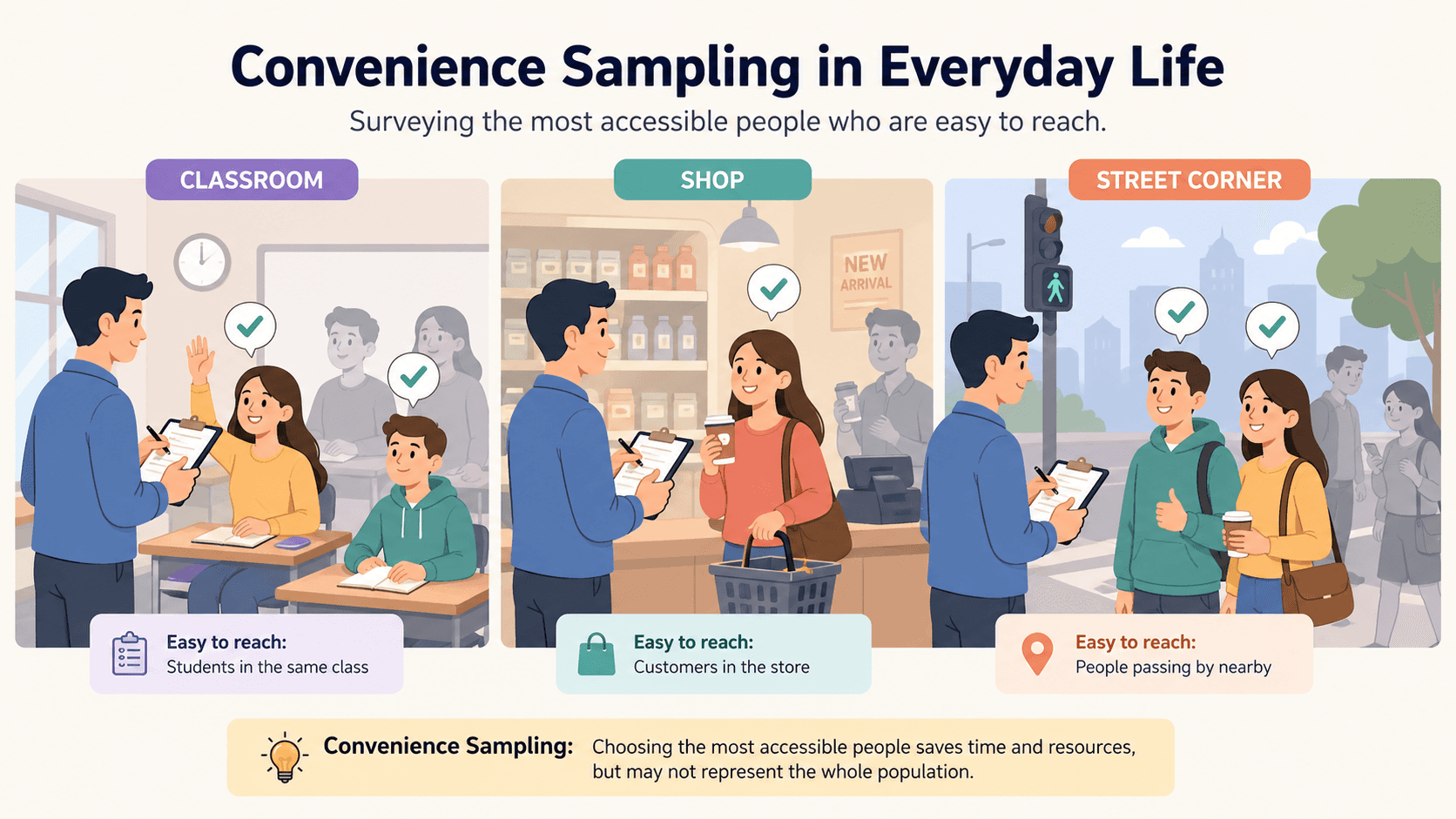
Convenience sampling ka matlab hai kisi study ke liye sabse aasan tareeqe se available logon ko chunna, na ki kisi random group ko. Yeh jaldi aur sasta hota hai, lekin iske results mein aam taur par bias (pakshpaat) hota hai jise aap ignore nahi kar sakte. Aap is method ko har jagah dekh sakte hain, jaise ki ek professor ke classroom survey se lekar kisi company ke internal website par hone wale quick poll tak.
Jab time ya money ki kami hoti hai, toh researchers majboori mein aksar iska sahara lete hain. Aaiye dekhte hain ki iska actual mein kahan use hota hai, yeh kab ek valid choice hai, aur iski limitations ko honestly kaise report kiya jaye. Puri details ke liye padhte rahein.
<CTA title="Plan Smarter Research Designs" description="Structure your sampling approach clearly and avoid bias in research projects" buttonLabel="Try Jenni Free" link="https://app.jenni.ai/register" />
Convenience Sampling Ka Asli Matlab Kya Hai
Convenience sampling bilkul wahi hai jaisa iska naam sunne mein lagta hai: aap us se data collect karte hain jisse poochna sabse aasan ho. Yeh kai academics ke liye ek go-to method hai, jise Scribbr jaise sites ne non-probability sampling ka ek standard type bataya hai.
Iska logic simple hai. Ek researcher apne sabse paas ke logon ka use karta hai: jaise unke lecture hall mein baithe students, unke store ke customers, ya unki website ke visitors.
Yeh process ko bohot fast aur simple bana deta hai. Halanki, is method ko apne broader research paradigms ke sath align karna zaroori hai taaki aap aisa claim na karein jo aapka data actual mein prove nahi kar sakta.
Practice mein, yeh method speed ke liye accuracy ka sauda karta hai. Kyunki sample kaafi narrow hota hai, isliye aapka data sirf us specific, available group ko hi reflect karta hai.
<ProTip title="💡 Pro Tip:" description="Use convenience sampling only for exploratory research or early testing stages" />
Everyday Convenience Sampling Ke Examples
Convenience sampling sirf ek textbook term nahi hai, yeh aapke aas-paas har jagah ho raha hai, aksar bina kisi ke iska naam liye. Yeh common situations dikhati hain ki data mein bias kitni aasani se aa jata hai.
Classroom surveys iska sabse classic case hain. Ek professor apne khud ke students se unki study habits par poll lete hain. Yeh bohot fast hai: aapne ek hi kamre mein 30 logon se pooch liya.
Lekin iske findings sirf us specific class ke baare mein batate hain. Aapko dusre majors, dusre years, ya dusri universities ke students ke baare mein kuch pata nahi chalta. Iski perspective turant limit ho jati hai.
Workplace feedback par dhayan dein. Ek manager apne immediate team se feedback maang sakta hai kyunki wo bilkul wahan maujood hain.
Yeh practical hai, lekin yeh remote employees, night-shift workers, ya dusre departments ke logon ko automatically chhod deta hai. Results un staff members ke experiences ko zyada represent karte hain jo sabse zyada accessible hain, jisse overall morale ki reports kharab ho sakti hain.
Fir aata hai street survey. Aapne mall mein ya sidewalk par researchers ko chalte-phirte logon ko rokte hue dekha hoga. Sample ko chuna nahi jata; bas jo bhi Tuesday ko dopahar 2 baje wahan hota hai, wahi sample ban jata hai.
Agar aap kisi high-end mall mein consumer spending par survey kar rahe hain, toh aap mostly ek specific income group se baat kar rahe hain. Yeh method age, income aur yahan tak ki din ke time ke hisab se results ko heavily skew (ek taraf jhuka) deta hai, jo ki convenience sampling bias ka ek direct roop hai.
Chahe koi bhi example ho, successful data collection ka pehla step yeh janna hai ki research question kaise likha jaye jo limited sample ke scope ke sath fit baithe.
<ProTip title="🧠 Pro Tip:" description="Always describe your sample limitations clearly in your methodology section" />
Business Aur Marketing Mein Convenience Sampling
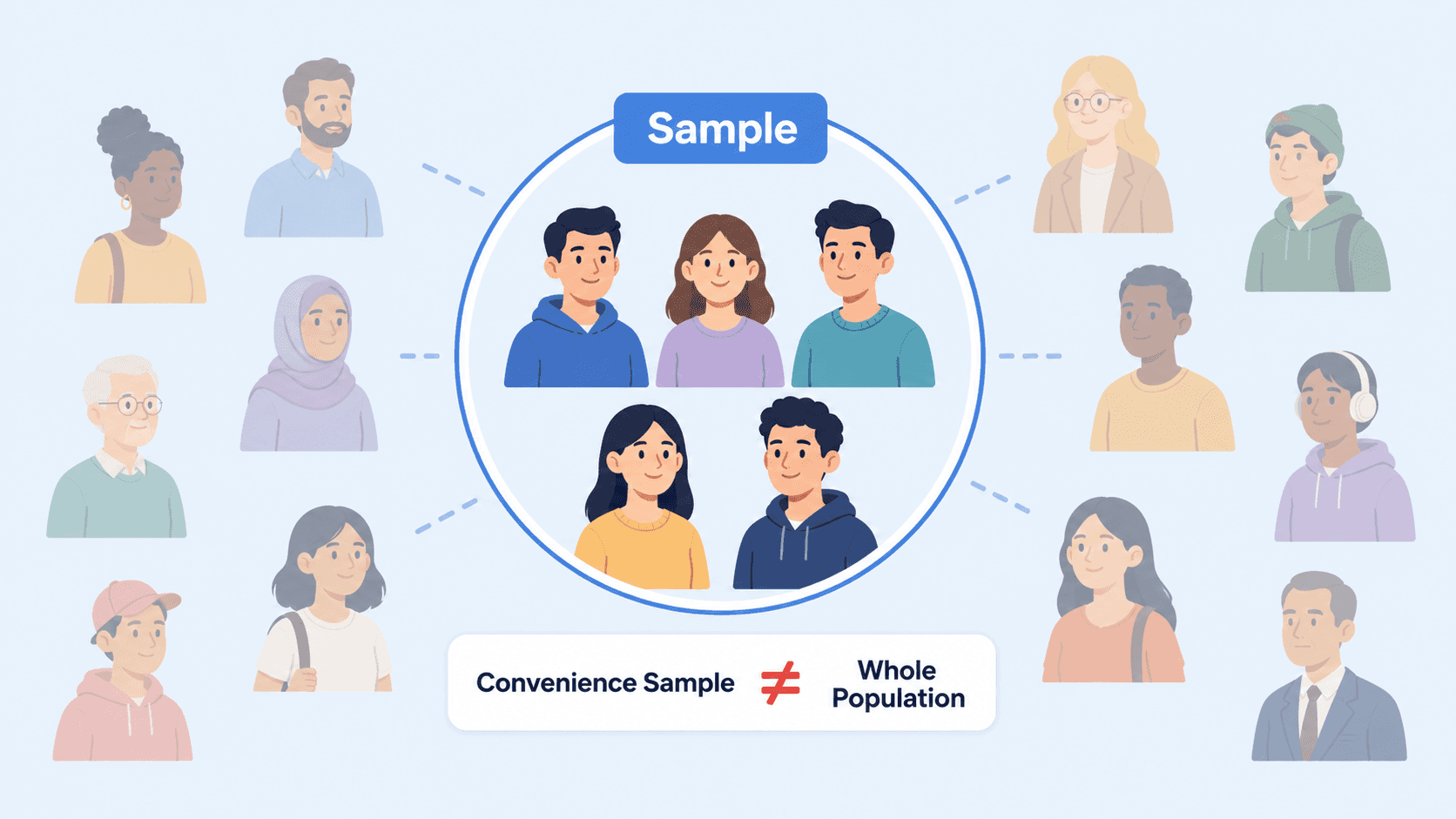
Businesses convenience sampling ka use lagatar karte hain kyunki yeh fast aur cheap hota hai. Market research mein convenience sampling se insights jaldi milte hain, lekin ye lagbhag hamesha incomplete hote hain.
In-store customer surveys iska ek prime example hain. Jab aap bahar nikalte hain toh ek clerk aapko kuch sawalon ke sath tablet pakda deta hai. Yeh un logon se fresh impressions leta hai jinhone abhi-abhi experience kiya hai. Lekin isme kaun chhut jata hai?
Har wo insaan jisne item online kharida ho. Har wo insaan jo jaldi mein ho aur usne tablet lene se mana kar diya ho. Har wo insaan jo subah 9 baje shop karta hai, jabki survey team dopahar 12 se shaam 5 baje tak kaam karti hai. Feedback pool shuru se hi narrow hota hai.
Social media polls bhi ek go-to option hain. Ek company apne Instagram followers se naye logo ya product color par vote karne ko kehti hai. Aapko ek ghante mein highly engaged fans se 500 responses mil sakte hain.
Yeh us core group ke reaction ko samajhne ke liye valuable hai. Lekin yeh aapko un logon ke preferences ke baare mein kuch nahi batata jo brand ko follow nahi karte, ya jo bilkul dusre platforms use karte hain. Aap sirf apni hi audience ki baat sun rahe hain.
Events par product testing mein bhi yahi flaw hai. Feedback un early adopters se aata hai jo aam taur par ek typical, skeptical customer se zyada enthusiastic hote hain.
Chahe yeh aapke measure karne ke tareeqe par depend karte hue qualitative vs quantitative research ke andar aaye, results us specific "event" demographic ki taraf hi skewed rehte hain.
Ye log aam taur par shelf se product uthane wale skeptical customer ke mukable zyada forgiving aur excited hote hain. Isliye testing positivity ki taraf jhuk jati hai, aur average user ka critical perspective chhut jata hai.
<ProTip title="📈 Pro Tip:" description="Use convenience sampling for quick feedback but validate results with broader research later" />
Online Convenience Sampling: Fast Lekin Biased
Online convenience sampling ab har jagah hai. Yeh fast hai, easy hai, aur internet par hone wali studies ke liye aksar default choice hoti hai.
Website Pop-Up Surveys
Un surveys ke baare mein sochein jo tab aate hain jab aap kisi site ko browse kar rahe hote hain. Wo sirf un logon ko target karte hain jo us exact moment par online hote hain aur jo click karne ka kasht uthate hain.
Wo un logon ko bilkul miss kar dete hain jo us waqt visit nahi kar rahe hain, jo pop-ups se nafrat karte hain, ya duniya ke dusre hisson mein baithe users jo survey window ke waqt so rahe hote hain.
Community Aur Forum Sampling
Researchers online forums ya Facebook groups se bhi frequently participants chun lete hain. Wo bas ek survey link post kar dete hain aur jo bhi aas-paas hota hai usse replies collect kar lete hain.
Maano video game habits par ek study mein sirf ek specific forum ke members ka use kiya jata hai. Iske findings aapko sirf us particular group ki habits ke baare mein batayenge, na ki sabhi gamers kya karte hain uske baare mein.
Online Panels Aur Platforms
SurveyMonkey jaisi services fast access ka promise karti hain. Jaise ki Qualtrics note karta hai, UX research mein iski speed ki wajah se yeh kafi popular hai. Bhale hi ye zyada organized hote hain, lekin inme se bohot se panels dil se convenience samples hi hote hain.
Qualtrics point out karta hai ki UX research mein, yeh method sirf isliye popular hai kyunki yeh fast hai aur aap isse lagbhag turant shuru kar sakte hain.
Iske trade-offs par ek quick look:
Online Method | Strength | Limitation |
Pop-up surveys | Answers jaldi milte hain | Current visitors ki taraf biased hota hai |
Social media polls | Bohot saare responses mil sakte hain | Broad audience ko represent nahi karta |
Online panels | Aap bohot saare logon tak pahunch sakte hain | Sirf wahi log join karte hain jinhone opt-in kiya ho |
Bottom line kya hai? Halanki ye online methods bohot convenient hain, lekin jab ek aisa sample lene ki baat aati hai jo sach mein wider population ko represent kare, toh ye aam taur par peeche reh jate hain.
<ProTip title="🌐 Pro Tip:" description="Combine online convenience samples with demographic filters to reduce bias" />
Convenience Sampling vs Random Sampling
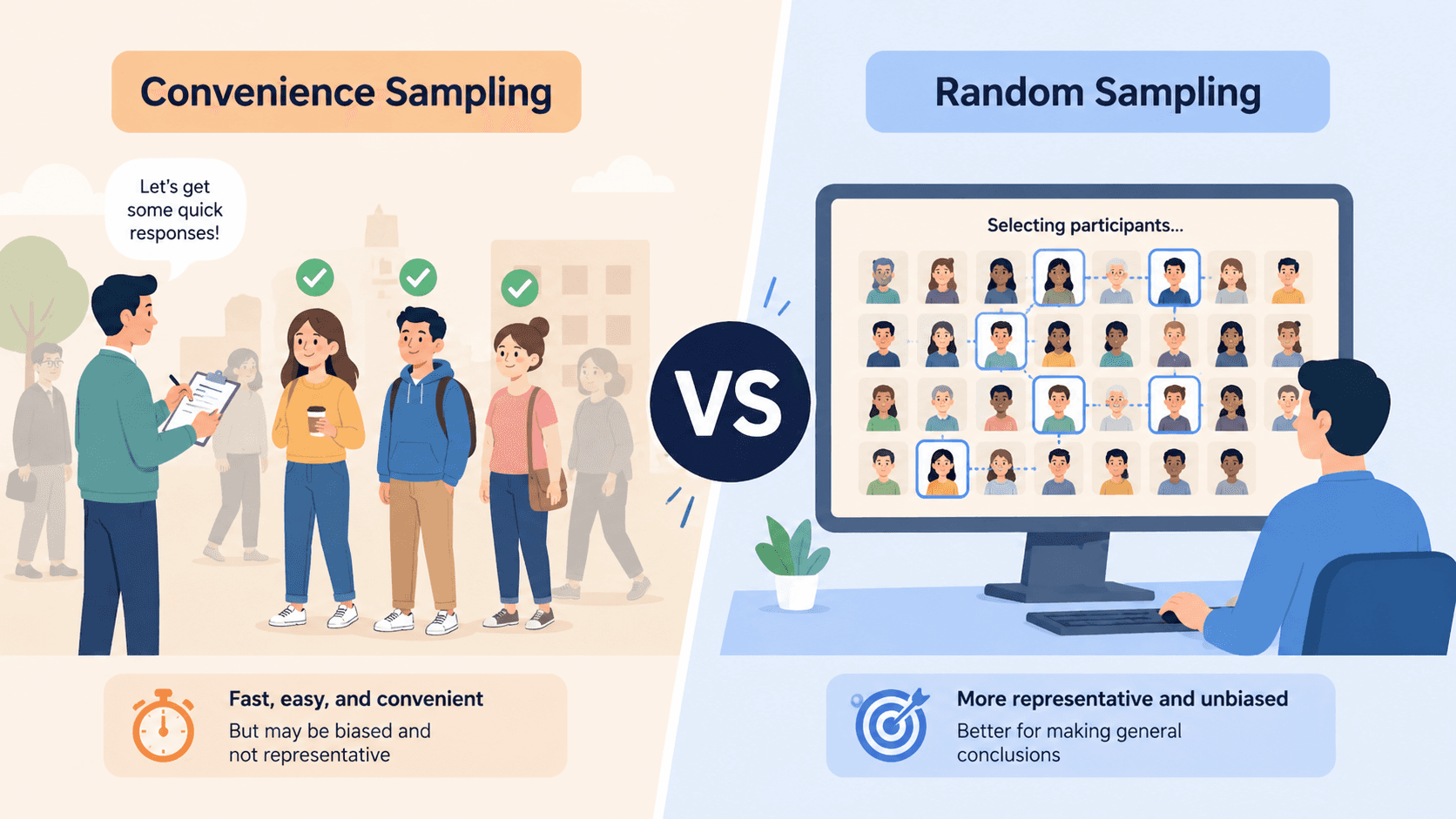
Convenience sampling aur random sampling ke beech ka difference janna ek badi baat hai. Yeh ek quick guess aur ek solid fact ke beech ka difference hai.
Asli Difference Kya Hai?
Feature | Convenience Sampling | Random Sampling |
Logon ko kaise chuna jata hai | Jo bhi milna sabse aasan ho | Pure chance par |
Bias | Aam taur par high | Bohot low rakhne ke liye design kiya jata hai |
Kya aap isse broadly apply kar sakte hain? | Sach mein nahi | Haan, yahi toh point hai |
Kiske liye sabse best hai | Early-stage, exploratory kaam ke liye | Statistical conclusions nikalne ke liye |
Aap convenience sample se mile data par fancy inferential statistics ka use nahi kar sakte. Wo toolbox sirf random sampling ke sath hi kaam karta hai.
Practice Mein Iska Kya Matlab Hai
Ise is tarah sochein: convenience sampling aapko ek fast answer deti hai. Random sampling aapko ek correct answer deti hai.
Apne hi classmates se kisi topic par poochna convenience sampling hai.
Apne state ke har high school se students ko randomly chunne ke liye computer ka use karna random sampling hai.
Dono hi useful tools hain, lekin dono bilkul alag kaamon ke liye hain. Ek quick sketch ke liye hai; dusra ek precise blueprint ke liye hai.
Convenience Sampling Actual Mein Kab Useful Hoti Hai
Convenience sampling ki badnami hai, aur sahi wajah se bhi, kyunki yeh aksar biased hoti hai. Lekin ise poori tarah se kharij kar dena ek galti hogi. Aise times aate hain jab yeh na sirf acceptable hai, balki sabse smartest choice hoti hai.
Pilot Studies Aur Early Exploration
- Kisi badi aur mehengi study mein haath dalne se pehle, researchers ko ground reality check karni hoti hai. Kya yeh questionnaire confusing hai? Kya yeh prototype bilkul kaam karta hai?
Iske liye ek chhota, easy-to-gather convenience sample perfect hota hai. Ek tech startup, example ke liye, thousands ka survey karne se pehle bugs ko theek karne ke liye apne pehle 20 users se feedback le sakta hai.
Hard-to-Find Groups Ki Study Karna
- Kabhi-kabhi, jin logon par aapko study karni hoti hai unhe random methods ke zariye dundhna bohot mushkil hota hai. Jaise rare disease ke patients, niche hobbyists, ya undocumented workers.
In cases mein, support groups, online forums, ya community networks ke zariye participants dundhna, yaani ek convenience sample hi kisi bhi tarah ka data collect karne ka ekmatra realistic tareeqa ho sakta hai.
Jab Time Sabse Badi Limitation Ho
- Har project ke paas data collection ke liye mahino ka waqt nahi hota. Tight deadlines ke liye, convenience sampling hi go-to option hoti hai.
Yeh quick internal reports, last-minute classroom projects, ya kisi product ke development sprint ke dauran rapid feedback cycles ka backbone hai.
Jaise ki Qualtrics note karta hai, UX testing mein, kisi design ko iterate karne ke liye abhi fast feedback lena aksar us perfectly representative data se zyada valuable hota hai jo aapko kafi der baad milega.
Yeh specific jobs ke liye ek tool hai: ek initial idea ko sketch karne ke liye, kisi mushkil group tak pahunchne ke liye, ya time limit ko beat karne ke liye. Yeh sabhi ke baare mein final conclusions nikalne ke liye nahi hai.
<ProTip title="⚡ Pro Tip:" description="Treat convenience samples as hypothesis generators not final conclusions" />
Common Mistakes Aur Unse Kaise Bachein
Convenience sampling par bohot si research isliye fail ho jati hai kyunki method galat nahi hota, balki iska application galat hota hai. Sabse badi galtiyan yeh bhoolne se hoti hain ki yeh kya hai - ek shortcut.
Galti 1: Ise Representative Maan Lena
Yeh sabse common aur dangerous galti hai. Aapne ek single university forum se 100 logon ka survey kiya aur paya ki 80% online classes prefer karte hain.
Yeh us forum ke baare mein ek finding hai, na ki sabhi students ke baare mein, ya us university ke bhi sabhi students ke baare mein. Sample lagbhag kabhi bhi wider population ka true mirror nahi hota. Isse broad conclusions nikalna flawed results ka ek fast track hai.
Galti 2: Aise Act Karna Jaise Bias Hai Hi Nahi
Convenience sampling ke sath, bias ho sakta hai aisa nahi hai; bias ka hona guarantee hai. Sample un logon ki taraf biased hota hai jo available hain, willing hain, aur jinhe aap dundh sakte hain.
Is baat ko ignore karna, ya ise sirf ek footnote mein mention kar dena, iska matlab hai ki aap ek skewed picture ko aise present kar rahe hain jaise ki wo bilkul clear ho. Aapko actively poochna hoga: "Kaun mere sample mein nahi hai kyunki maine data is tarah se collect kiya?"
Galti 3: Process Ko Ek Black Box Rakhna
Agar aap poore process ko document nahi karte ki aapne apne participants ko kaise dundha, toh aapka kaam credibility kho deta hai. Yeh kehna ki aapne "users ka survey kiya" kafi vague hai.
Kya aapne Twitter par post kiya tha? Kisi panel ka use kiya? Ek coffee shop mein forms baante? Readers ko findings ko khud judge karne ke liye limitations dekhne ki zaroorat hoti hai.
Ise Handle Karne Ka Ek Behtar Tareeqa
Aap convenience sampling ke flaws ko poori tarah khatam nahi kar sakte, lekin aap unhe honestly manage kar sakte hain. Yahan ek practical checklist hai:
Apni Actual Population Ko Define Karein: Bohot zyada specific banein. Kya yeh "online gamers" hain ya "March 2024 ke hisab se GameX subreddit ke active members"? Baad wala accurate hai.
Method Ko Clearly State Karein: Methods section mein "convenience sampling" ko chhupayein nahi. Ise upfront name dein.
Limitations Ko Khulkar Explain Karein: Sirf unhe list na karein; discuss karein ki unhone aapke data ko kaise skew kiya hoga. Kaun missing ho sakta hai, aur usse results kaise badal sakte hain?
Overgeneralizations Ko Lock Down Karein: Apne conclusions ko apne sample ke hisab se frame karein. "Hamare participants ke beech..." ya "yeh is specific group mein ek trend suggest karta hai..." jaise phrases ka use karein.
Jab Ho Sake Triangulate Karein: Agar resources allow karein, toh methods ko combine karein. Ek initial finding ke liye apne convenience sample ka use karein, fir ise dusre group par ek zyada rigorous method ke sath test karein.
In steps ko follow karne se convenience sample rigorous nahi ban jata, lekin isse aapka iska use transparent aur responsible ho jata hai. Yeh jhuthi certainty claim karne ke bajaye ek bade puzzle ka ek honest, useful hissa provide karne mein madad karta hai.
Apni Research Ko Kamzor Kiye Bina Convenience Sampling Ka Use Kaise Karein
Aap tab stuck feel kar sakte hain jab aapka data collect karna toh aasan ho lekin use defend karna mushkil ho, khaskar tab jab dusre is baat par sawal uthate hain ki yeh sach mein kitna reliable hai. Yeh aapke results par pressure dalta hai aur aapke kaam ko kam solid dikhata hai jitna use hona chahiye. Wo doubt dikhta hai.
<CTA title="Write Better Research Methodology" description="Structure clear sampling explanations and improve academic writing with guided AI support" buttonLabel="Try Jenni Free" link="https://app.jenni.ai/register" />
Jenni ka use karne se aapko apni sampling ko clearly explain karne mein madad milti hai taaki yeh review ke dauran bani rahe. Yeh guide karta hai ki aap limits ko kaise present karein aur apne choices ko kaise justify karein, taaki aapki research transparent aur credible bani rahe. Yeh ek simple step hai jo aapke kaam par trust karna aasan banata hai.