Dwara
Justin Wong
—
Common Literature Review Mistakes aur Unse Kaise Bachein

Justin Wong
Vikas Prabhari
Graduated kiya Bachelor's me Global Business & Digital Arts, Minor me Entrepreneurship

Bahut se students ghanto lagate hain, ek ke baad ek study padhte hain, lekin aakhir mein unhe ek literature review milta hai jo bikhra hua lagta hai. Problem koshish ki kami nahi hai. Yeh aam taur par kuch structural aur analytical mistakes ki wajah se hota hai jo kaam ki clarity aur force ko khatam kar deti hain.
Yeh guide un aam galtiyo ko outline karti hai, jaise apne sources se ek real argument banane mein fail hona, aur aapko seedhe fixes deti hai. Aap dekhenge ki kaise notes ke dher ko ek coherent, analytical review mein badla jaye jo sach mein aapki apni research ko support kare.
<CTA title="Write a Focused Literature Review" description="Turn scattered research into a clear structured argument without confusion or overload." buttonLabel="Try Jenni Free" link="https://app.jenni.ai/register" />
Literature Review Mistakes Itni Common Kyun Hoti Hain?
Yeh aam taur par ek simple galatfehmi se shuru hota hai: yeh sochna ki ek literature review sirf wahi hai jo aapne padha hai uska ek summary hai. Yeh aisa nahi hai. Iska asli kaam aapke apne kaam ke liye ek solid, evidence-based argument banana hai.
University of Toronto Writing Centre point out karta hai ki ek literature review research ko synthesize karta hai, yeh sirf uski list nahi banata. Lekin is trap mein fasna aasan hai ki "Smith yeh kehta hai, phir Jones woh kehta hai," bina kabhi dots ko connect kiye.
Zyadatar literature review ki galtiyan review ke purpose ke baare mein ek fundamental galatfehmi se judi hoti hain.
Problem ki jadd (root)
Bahut se students isko ek reading log rakhne ki tarah treat karte hain. Isse seedhe taur par ek weak structure aur surface-level analysis milti hai.
Imagine kijiye aap ek bridge bana rahe hain. Har study jo aap padhte hain woh ek steel beam hai. Agar aap sirf riverbank par beams ka dher laga denge bina kisi blueprint ke, toh aap cross nahi kar payenge. Review woh blueprint hai, yeh dikhata hai ki kaise saare pieces ek saath fit hote hain aapke project ko support karne ke liye.
Kuch projects ke liye, ek narrative literature review format ko follow karna in sources ko ek story mein weave karne mein help kar sakta hai, bas shart yeh hai ki aap ek strong analytical focus banaye rakhein.
Common signs ki aap phas gaye hain
Aapne tees papers padhe hain, lekin aap pehle se zyada confused hain jab aapne shuru kiya tha.
Aapka draft sirf paragraphs ki ek series hai jo saare "According to..." se shuru hote hain.
Aap pinpoint nahi kar sakte ki existing research mein se actually kya missing hai.
Yeh sirf mehnat karne ke baare mein nahi hai. Yeh reading ko ek real argument mein badalne ke framework ke miss hone ke baare mein hai.
<ProTip title="💡 Pro Tip:" description="Define your research question before reading more papers to avoid overload and confusion." />
Sabse Common Literature Review Mistakes
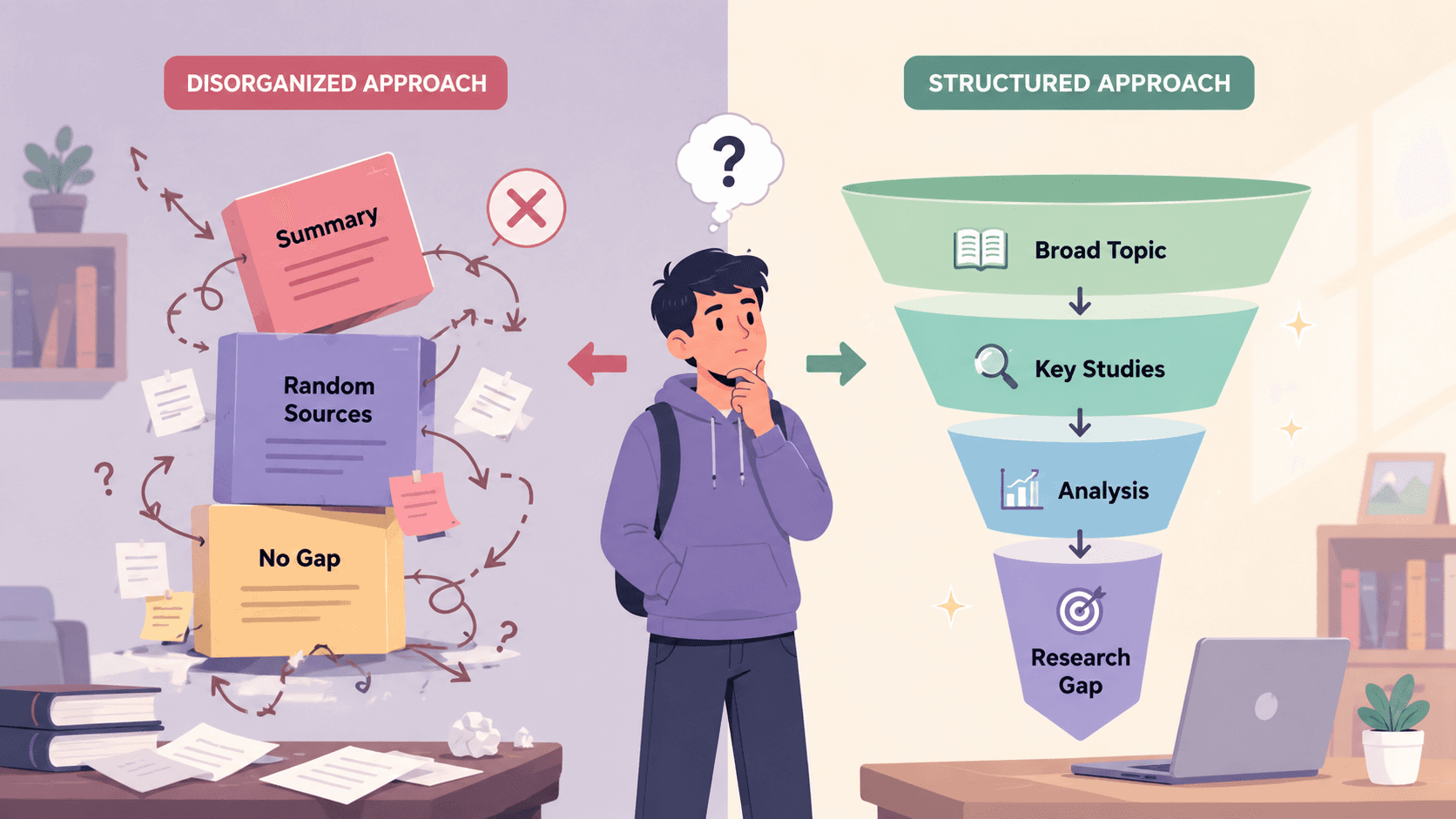
Structure ko galat karna aapke review ke power ko kam kar sakta hai. Yahan teen sabse critical pitfalls diye gaye hain.
1. Ek vague question ke saath shuru karna
Ek fuzzy research question poore process ko kharab kar deta hai. Agar aapko exact nahi pata ki aap kya dhoodh rahe hain, toh har source important lagta hai. Isse information overload aur ek weak, bhatakta hua argument banta hai.
Too broad: "Main social media effects ki study kar raha hoon."
Focused: "Main analyze kar raha hoon ki Instagram ka use college students ke academic performance ko kaise affect karta hai."
Dusra version aapko ek filter deta hai. Yeh aapko exactly batata hai ki kaun si studies ko rakhna hai aur kisko side mein rakhna hai.
2. Analyze karne ke bajaye summarize karna
Yeh classic trap hai. Review ek list ban jata hai: "Author A ne X paya. Author B ne Y paya. Author C ne Z argue kiya." Yeh ek annotated bibliography ki tarah lagta hai, na ki ek coherent narrative.
Goal catalogue karna nahi hai; balki synthesize karna hai. Ek strong review findings ko compare karta hai aur themes ko connect karta hai. Ek simple list se bachne ke liye, aapko critical review structure ko samajhna hoga jo description ke bajaye evaluation ko priority deta hai.
3. Critical evaluation ko skip karna
Bahut se reviews findings ko simple facts ki tarah report karte hain. Lekin academic writing demand karti hai ki aap un par sawal uthayein. Kya sample size reliable tha? Kya method ne bias introduce kiya hoga?
Ek step-by-step literature review guide ko follow karna yeh ensure karne mein help kar sakta hai ki aap in evaluative steps ko miss na karein.
Kya sample size reliable hone ke liye bahut chota tha?
Kya research method bias introduce kar sakta tha?
Kya findings alag-alag contexts mein sahi baithti hain?
Jaise ki Harvard College Writing Center note karta hai, yeh critical analysis hi hai jo advanced academic work ko ek basic summary se alag karta hai. Iske bina, aapke review mein credibility ki kami hoti hai.
<ProTip title="💡 Pro Tip:" description="Always ask what are the strengths and limits of each study before including it in your review." />
4. Poor sources par rely karna
Aapke sources ki quality aapke review ki credibility ko directly shape karti hai. Weak ya irrelevant material ka use shuruat se hi aapke poore argument ko kharab kar deta hai.
Common problems mein non-academic blogs par case banana, sirf pehle kuch search results ka use karna, ya hard-to-access journal articles se bachna shamil hai.
Ek strong review ko ek solid foundation ki zaroorat hoti hai. Isme field ke key, established studies (seminal works) ke sath-sath current research ka reference hona chahiye taaki yeh dikhe ki aap poori conversation ko samajhte hain.
5. Gap ko miss karna
Yeh sabse crucial error ho sakta hai. Ek literature review ko usse kahin zyada karna chahiye jo pehle se jana jata hai; use pinpoint karna hoga ki kya nahi jana jata.
Agar aap apna review bina clear bataye khatam karte hain ki kaun sa question unanswered reh gaya hai ya kaun si problem solve nahi hui hai, toh aapka apna research project unnecessary lagta hai. Aapko explicitly us gap ko identify karna hoga jisko aapka kaam address karega.
Key Literature Review Errors Ki Quick Summary
Galti (Mistake) | Actually kya hota hai | Result |
Vague research question | Aapke paas sources ke liye koi clear filter nahi hota. | Ek bikhra hua, weak argument. |
Summary-based writing | Aap sirf list karte hain ki har author ne kya kaha. | Koi real synthesis ya analysis nahi. |
Weak source evaluation | Aap findings ko bina sawal kiye report karte hain. | Review mein critical credibility ki kami hoti hai. |
Key studies ka miss hona | Aapka review ek incomplete picture par bana hota hai. | Yeh obvious academic gaps chhod deta hai. |
No research gap | Aap nahi batate ki kya missing hai. | Aapka apna kaam unnecessary lagta hai. |
Yeh problems ek dusre par build hoti hain. Ek vague question poor source selection ki taraf le jata hai, jiska result ek summary list hoti hai jo kabhi gap nahi dhoodh paati. Yeh ek chain reaction hai jo poore project ko weak bana deti hai.
Structural Problems Jo Aapke Literature Review Ko Todti Hain
Aapke paas saare sahi sources ho sakte hain aur phir bhi ek confusing mess ban sakta hai agar structure fail ho jaye. Isse bachne ka ek tareeka drafting process shuru karne se pehle ek detailed how to write literature review outline banana hai.
"Messy funnel"
Ek well-structured review aam taur par ek funnel ko follow karta hai. Yeh aapke topic ke broad context se shuru hota hai.
Specific theories aur key debates tak narrow down hota hai, aur aakhir mein us precise gap par pahunchta hai jise aapki research fill karegi. Jab yeh logical flow missing hota hai, toh review disorganized aur aimless lagta.
Sab kuch ek hi pot mein mix karna
Ek aam error ek hi section mein alag-alag tarah ki information ko blend karna hai. Aap general background, theoretical concepts, aur specific study findings ko ek sath combine kar sakte hain. Yeh reader ko constantly mental gears switch karne par majboor karta hai.
Har section ko ek dedicated role dena zyada clear hai: yahan theory hai, yahan empirical studies hain jinhone isko test kiya, yahan woh disagree karte hain.
Jab flow break ho jata hai
Ideas ke beech abrupt jumps coherence ko destroy kar dete hain. Aapko reflective literature review techniques ka use karna hoga yeh ensure karne ke liye ki aap reader ke liye dots ko connect kar rahe hain.
For instance, ek paragraph mein sociological theory discuss karna aur phir, bina transition ke, agle paragraph mein psychology experiment ke findings ko list karna. Reader yeh sochta reh jata hai ki dono kaise connect hote hain.
Logical flow ki yeh kami sabse frequent aur damaging errors mein se ek hai, jo ek potential argument ko sirf points ke collection mein badal deti hai.
<ProTip title="💡 Pro Tip:" description="Use clear transitions to show how one idea leads to the next in your argument." />
Research Strategy Mistakes Jo Aapke Review Ko Weak Karti Hain
Ek solid literature review ek solid search par bana hota hai. Agar aapki strategy shuru se hi weak hai, toh final work bhi waisa hi hoga.
Shallow searching
Ek limited search pattern mein fasna aasan hai. Shayad aap sirf Google Scholar ka use karte hain, ya aap ek ya do basic keywords ke sath stick karte hain aur sirf pehle bees results le lete hain.
Yeh almost guarantee karta hai ki aap important, foundational studies ko miss kar denge. Key papers hamesha sabse cited ya dhoodhne mein sabse aasan nahi hote.
Apne process ko track na karna
Ek review jo yeh explain nahi karta ki aapne apne sources kaise dhoodhe, usme transparency ki kami hoti hai. Credible hone ke liye, aur dusron ko aapke kaam ko check karne ya uspar build karne dene ke liye, aapko apna method document karna hoga. Aapne kaun se databases search kiye?
Aapne kaun se specific keywords aur combinations try kiye? Aapne yeh decide karne ke liye kaun se rules use kiye ki koi source relevant tha ya nahi? Isko spell out karna acchi academic practice hai.
Scope ko galat samajhna
Yeh ek balancing act hai. Ek scope jo bahut broad hai ("the history of education") ek superficial review ki taraf le jata hai jo kisi bhi cheez ko depth mein cover nahi kar sakta.
Ek scope jo bahut narrow hai ("math test scores in one Ohio high school in 2018") wider context aur theoretical debates ko miss kar sakta hai. Sahi scope deep analysis ke liye kafi focused hota hai lekin itna wide hota hai ki yeh dikha sake ki aapka specific topic kahan fit baithta hai.
Writing aur Citation Mistakes Jise Aap Ignore Nahi Kar Sakte
Bhale hi aapki research solid ho, sloppy writing isko duba sakti hai. Kuch aam pitfalls hain jo students ko pareshan karte hain, aur aap unhe ignore karna afford nahi kar sakte.
Plagiarism aur Patchwriting
Yeh sirf poore paragraph ko copy karne ke baare mein nahi hai. Isme kisi aur ke sentence mein kuch words ko tweak karna aur use apna kehna, ya bina clear attribution ke alag-alag sources ke bits ko ek sath jodna shamil hai.
Dono hi serious academic offenses hain. Aam slip-ups hain:
Paraphrasing jo original text ke bahut close hai.
Sirf citation add karna bhool jana jahan uski zaroorat hai.
Galat source ko cite karna, jaise kisi textbook ko reference karna jisne study ko summarize kiya, bajaye original study ke.
Inconsistent Referencing
Citation styles ko mix karna professors ke liye ek red flag hai. Yeh dikhata hai ki aap dhyan nahi de rahe the. Aap ek paragraph mein APA format use kar sakte hain, agle mein MLA par switch kar sakte hain, aur aakhir mein ek Harvard-style reference daal sakte hain.
Apne required style guide ke according sab kuch uniform rakhna ek basic, lekin crucial, detail hai.
Clumsy Academic Style
Jab writing khud weak hoti hai, toh aapke acche ideas kho jate hain. Yahan main culprits hain:
Sentences jo bahut lambe aur tangled hote hain, jisse point ko follow karna mushkil ho jata hai.
Same idea ko thode alag words mein repeat karna, jo essay ko pad karta hai lekin kuch add nahi karta.
Informal, conversational tone ka use karna jahan ek formal, precise tone expected hoti hai. Yeh problems aapke argument ko muddle karti hain aur reader ko confuse chhod deti hain ki aap actually kya kehne ki koshish kar rahe hain.
<ProTip title="💡 Pro Tip:" description="Keep sentences short and precise to improve clarity and academic tone." />
Gap Problem: Kyun Bahut Se Reviews Aakhir Mein Fail Ho Jate Hain
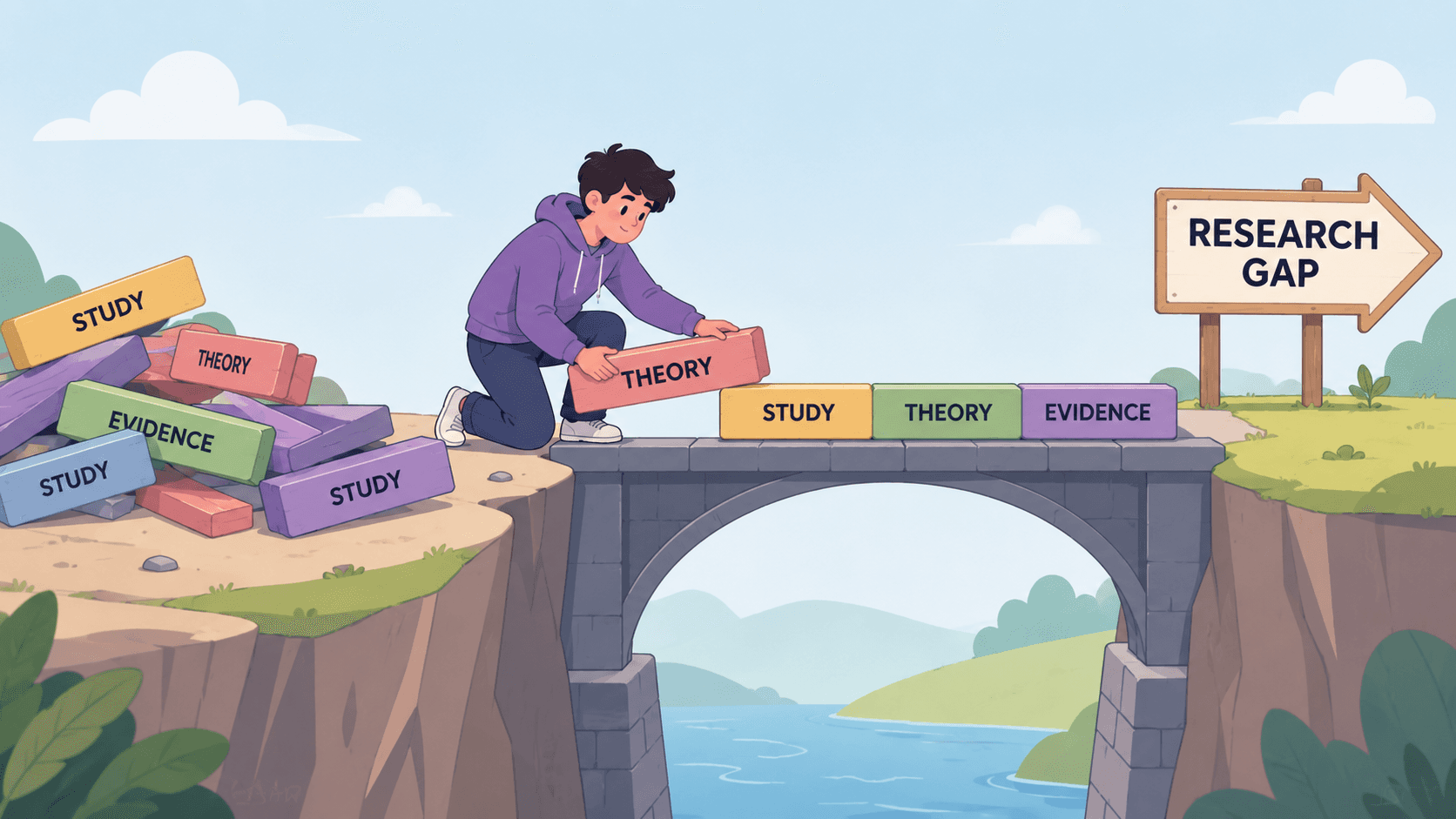
Ek literature review aksar bilkul aakhir mein toot jata hai, jab yeh ek clear research gap ko pinpoint nahi kar pata. Yeh woh jagah hai jahan bahut se students ladkhadate hain.
Ek Real Gap Actually Kya Hota Hai
Ek research gap ka matlab sirf yeh kehna nahi hai ki "bahut se logon ne iski study nahi ki hai." Yeh knowledge ka ek specific, missing piece hai jo humein kisi problem ko poori tarah samajhne se rokta hai. Is example ko lijiye: Is baat par bahut saari studies hain ki social media learning ko kaise affect karta hai.
Lekin agar kisi ne yeh nahi dekha ki kya woh effects, maan lijiye, engineering students aur history students ke beech alag hain, toh woh ek genuine gap hai. Yeh ek aisa question hai jiska answer chahiye isse pehle ki hum koi broader conclusions draw kar sakein.
Yeh Kyun Miss Ho Jata Hai
Students aam taur par kuch reasons se gap ko miss kar dete hain. Woh har study ko jo unhe milti hai sirf summarize kar sakte hain bina actually unhe analyze kiye. Ya woh existing research ko describe karne par itna focus karte hain ki woh findings ko ek dusre se compare karne ke liye kabhi piche nahi hat-te.
Agar aap information ko synthesize nahi karte, usko ek saath rakhkar yeh dekhne ke liye ki kya jana jata hai aur kya nahi, toh gap hidden hi rahega.
Galtiyo Se Mastery Tak: Ek Simple Framework
Aap ek seedhe plan ka use karke common pitfalls se bach sakte hain. Yeh framework aapko sirf information collect karne se ek real argument banane ki taraf le jata hai.
Ek Step-by-Step Method
Ek sharp research question ke sath shuru karein. Baaki sab iske baad aata hai.
Widely search karein. Kayi academic databases ka use karein aur alag-alag keyword combinations try karein.
Jo studies aapko milti hain unhe unke common themes ya ideas ke according organize karein.
Sirf unhe list na karein. Compare karein ki woh kya kehte hain aur unke methods ya conclusions ko critique karein.
Studies mein patterns ko dekhein, aur is baat par dhyan dein ki unke findings kahan ek dusre ko contradict karte hain.
Un patterns aur contradictions ka use karein exactly yeh pinpoint karne ke liye ki kaun sa knowledge missing hai, aapka research gap.
Yeh process aapko analyze karne par force karta hai, sirf summarize karne par nahi. Yeh sources ki list ko aapke apne kaam ke liye ek foundation mein badal deta hai.
Practice Mein Iska Kya Matlab Hai
Apne literature review ko improve karne ka matlab zyada words add karna nahi hai. Yeh is baare mein hai ki aap kaise sochte aur likhte hain usme ek badlav aaye.
Aap kuch key shifts karte hain:
Sirf studies ko list karne se ek coherent argument banane tak.
Sab kuch padhne ki koshish karne se sources ko strategically select karne tak.
Dusron ne kya kaha usko summarize karne se us sab ka kya matlab hai isko analyze karne tak.
Approach mein woh badlav hi hai jo actually aapke academic writing ko improve karta hai. Yeh ek report aur ek contribution ke beech ka difference hai.
Apne Literature Review Ko Tootne Se Rokein
Aapne bahut kuch padha hai, lekin aapke ideas abhi bhi bikhre hue lagte hain. Connections clear nahi hain. Yeh frustrating hota hai jab sab kuch jo aapne gather kiya hai woh ek strong argument mein nahi badalta - aur yeh aapki writing mein dikhta hai.
<CTA title="Turn Research Into Clear Arguments" description="Structure your literature review with clarity and confidence using guided writing support." buttonLabel="Try Jenni Free" link="https://app.jenni.ai/register" />
Apne literature review ko improve karne ka matlab zyada sources add karna nahi hai. Yeh summary se synthesis par shift hone ke baare mein hai. Ek sharp question ke sath shuru karein, themes ke according organize karein, methods ko critique karein, aur gap ko pinpoint karein. Woh shift aapke kaam ko follow karna aasan aur bahut zyada convincing banata hai.